


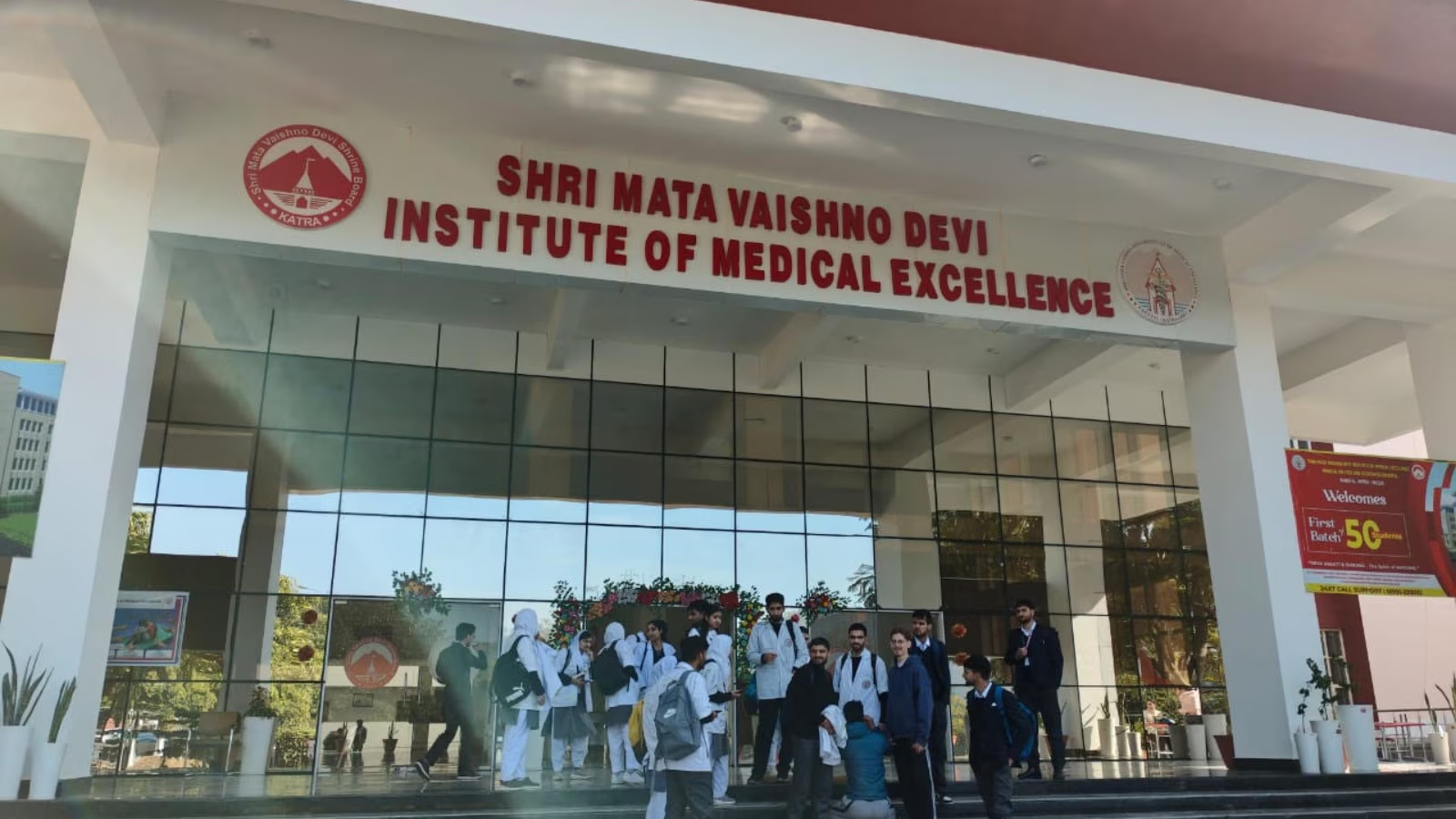
Indian politics continues to struggle with gender inclusion, and the recent shutdown of a medical college in Jammu underscores the ongoing challenges women face in education and professional growth. The incident reflects deeper systemic issues where women’s needs and voices are often overlooked in policy and political decision-making.
The closure of the medical college in Jammu came as a shock to students, especially female students who had enrolled with hopes of pursuing careers in medicine. Many of them now face uncertainty about continuing their education, transferring to other institutions, or meeting regulatory requirements. For women, who often already face additional social and economic barriers, such disruptions have a disproportionately large impact.
Experts say the situation is not unique to Jammu. Across India, women frequently encounter obstacles in accessing higher education, healthcare training, and professional opportunities. Political decisions, administrative lapses, or policy oversights often fail to take into account the gendered consequences of such actions.
In the case of Jammu’s medical college, the lack of prior consultation with students, parents, and educators shows a clear blind spot. Women, who make up a significant portion of medical students in India, are left to bear the brunt of institutional failures. Delays in admission transfers, scholarship processing, and relocation logistics hit female students hardest due to societal expectations and family responsibilities.
Civil society groups and women’s rights advocates have raised concerns over the lack of gender-sensitive planning in education policies. They argue that political institutions often underestimate how administrative decisions can reinforce existing inequalities. When educational disruptions occur, women’s participation in professional fields may decline, setting back broader goals of gender equality.
The Jammu medical college closure also highlights a larger issue: the need for representation of women in decision-making roles. When women are underrepresented in political bodies, committees, and regulatory authorities, policies rarely reflect the challenges female citizens face. Increased participation of women in politics and governance could help ensure that such blind spots are addressed proactively.
In addition, there is a pressing need for mechanisms that protect students’ rights, especially in critical fields like medical education. Ensuring transparent communication, support systems for transfers, and gender-inclusive policies could prevent similar setbacks in the future.
As India seeks to modernize its educational institutions and expand opportunities for women, incidents like the Jammu college shutdown serve as a reminder that policy decisions cannot be gender-neutral in practice. Political systems must consciously integrate women’s voices to ensure that growth, development, and opportunities are truly inclusive.
Unless such blind spots are addressed, women will continue to face disproportionate obstacles in education and professional fields, undermining India’s broader goals of equality, empowerment, and social progress.

