


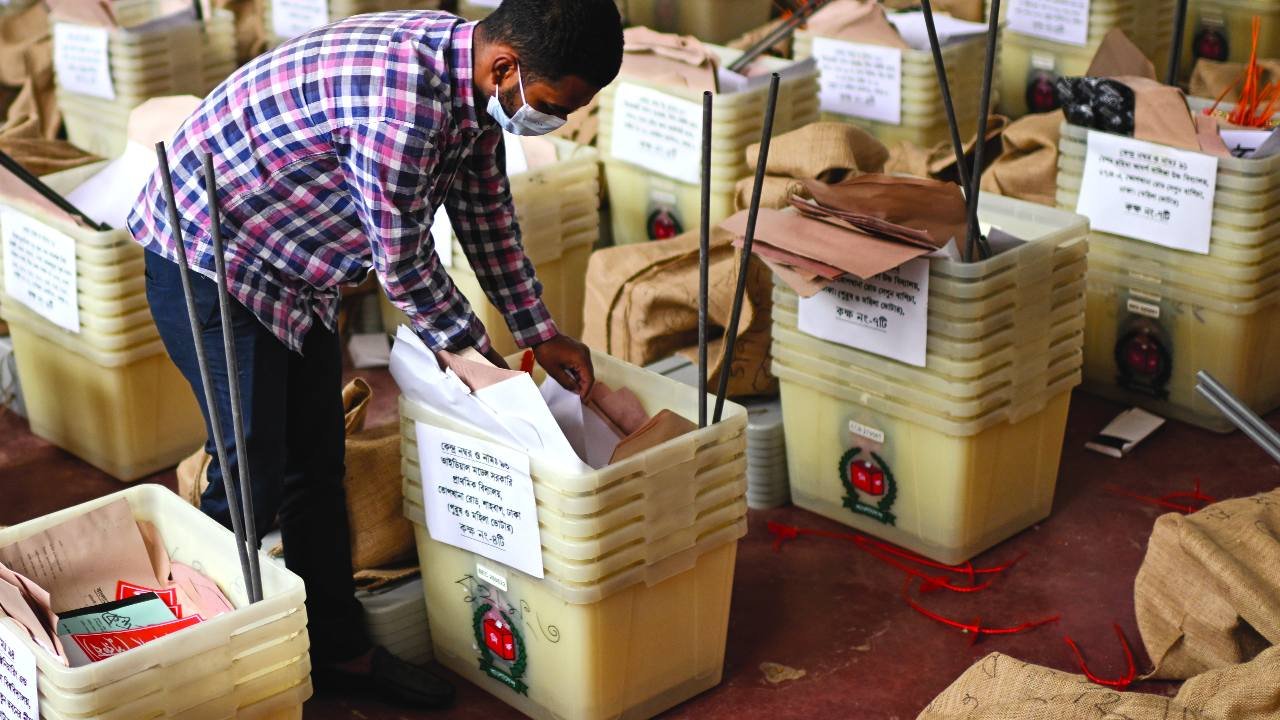
As Bangladesh votes amid a period of intense political transition, the country’s minority communities have sent out a clear message, participation in the democratic process depends on security.
“Minorities will come out to vote only if they feel safe,” said Monindra Kumar Nath, acting general secretary of the Bangladesh Hindu, Buddhist and Christian Unity Council. “If there is an atmosphere of peace and protection, our people will exercise their democratic rights. But without security, many will remain indoors.”
The remarks come as the nation holds elections following the fall of the Awami League Government. The political upheaval has heightened anxiety among minority groups, particularly Hindus, who constitute roughly 9 percent of the population.
Speaking to The Pioneer, Nath said minority communities often feel politically isolated and vulnerable during election cycles. “We are repeatedly treated as a vote bank. Parties approach us during elections, but genuine steps to ensure our long-term safety and equal rights are missing,” he said. “We urge the administration to take strict measures so minorities can vote without fear.”
Several Hindu voters echoed similar concerns. In parts of Dhaka and other districts, families said they were closely watching the law-and-order situation before deciding whether to cast their ballots. “We want to vote. It is our constitutional right,” said Prosenjit Haldar, a resident of Bangladesh. “But there is always fear. If we are seen as supporting one party, another may target us. We often feel caught in between political rivalries.
“We are not second-class citizens of this country. We need respect and protection in Bangladesh. Stop treating us as inferior,” Haldar told The Pioneer.However, the Election Commission of Bangladesh has given full assurance to all voters that adequate protection and security arrangements will be in place to ensure maximum voter turnout. Between fear and the ballot: Minorities in Bangladesh hold their breath However, the Election Commission of Bangladesh has given full assurance to all voters that adequate protection and security arrangements will be in place to ensure maximum voter turnout.
Minority General Secretary Nath also pointed to demographic changes over decades. According to community representatives, minorities accounted for nearly 19 percent of the population at the time of Liberation in 1971. Today, that figure has declined to around 10 percent, with Hindus making up the largest share among minority groups.“Our appeal is simple, Ensure security, ensure equal treatment, and minorities will participate fully in democracy,” Nath told The Pioneer.
As polling unfolds across the country, the response of minority voters may well serve as a measure of how secure and inclusive Bangladesh’s electoral process truly is.Bangladesh will hold its 13th National Parliamentary Elections and Referendum-2026 tomorrow, with voting scheduled from 7:30 am to 4:30 pm across 299 constituencies. Polling in Sherpur-3 has been cancelled following the death of a candidate.
The Election Commission (EC) said extensive preparations have been completed to ensure free, fair and peaceful polls. Nearly 9.5 lakh law enforcement personnel, including over 1 lakh army troops, have been deployed nationwide. Drones, UAVs and body-worn cameras will be used for the first time to enhance security.
Voting will take place at 42,779 polling centres with over 2,47,000 booths. Around 12.77 crore voters — including 6.48 crore men, 6.28 crore women and 1,232 third-gender voters – are eligible to cast their ballots.A total of 50 political parties and 2,028 candidates, including 83 women, are contesting the polls. The EC has appointed executive and judicial magistrates across the country to enforce electoral laws and maintain order.More than 55,000 local observers, along with 394 international observers and 197 foreign journalists, will monitor the elections, making it one of the most closely watched polls in recent years.

