



On the day Bangladesh stands at a historic crossroads, voting to determine the future direction of the nation, former Prime Minister Sheikh Hasina speaks in an exclusive interview with Dr. Waeil Awwad, Senior Journalist and President of the Foreign Correspondents’ Club (FCC) in India. In this candid and high-stakes conversation, Sheikh Hasina reflects on democracy, development, regional stability, and the defining choices before the Bangladeshi people as the country shapes its next chapter.
This interview comes as Bangladesh prepares for elections on February 12, 2026, under the interim government led by Nobel laureate Dr. Muhammad Yunus. The Awami League, which governed Bangladesh for 15 years under Hasina’s leadership until August 2024, has been banned from participating. Hasina has been living outside Bangladesh since fleeing in August 2024 amid mass protests that left over 1,400 people dead, according to some estimates.
The elections have drawn international scrutiny, with questions about their legitimacy given the exclusion of the country’s historically largest political party. Human rights organizations have documented arrests of thousands of Awami League members and supporters, while concerns have grown about the rise of Jamaat-e-Islami and other Islamist forces in Bangladesh’s political landscape.
Read excerpts of an Exclusive Interview:
Madam Prime Minister, since August 2024, Bangladesh has been governed by an administration that critics describe as unconstitutional and lacking an electoral mandate. Do you consider the current regime legitimate? And if not, at what point, in your view, did constitutional order collapse?
Sheikh Hasina: The interim government lacks any electoral mandate. Do not forget that no Bangladeshi has ever cast a vote for Dr. Yunus. This is a government that has been foisted on the people of Bangladesh, bypassing any democratic process, through a meticulously designed plan to seize power from the democratically elected government.
This same unelected administration has rewritten our country’s constitution and unilaterally appointed itself the authority to amend pieces of legislation and ban the nation’s largest political party, the party that won the last elections and has been elected nine times throughout our country’s history.
In doing so, Yunus has knowingly disenfranchised over half of the electorate, who have unwavering confidence in the Awami League, and simply will not vote if they cannot vote for us in the February elections. No unelected administration has the legal or moral authority to rewrite our country’s constitution and dictate the parameters of democratic participation to our people.
No legitimate regime would condone the mass detention of over 152,000 citizens on the grounds of their political affiliation or watch in silence while religious minorities and media institutions are freely attacked. An unelected regime that bans its opposition, quashes any dissenting voice, and rewrites the foundational document of the state is an enemy of democracy.
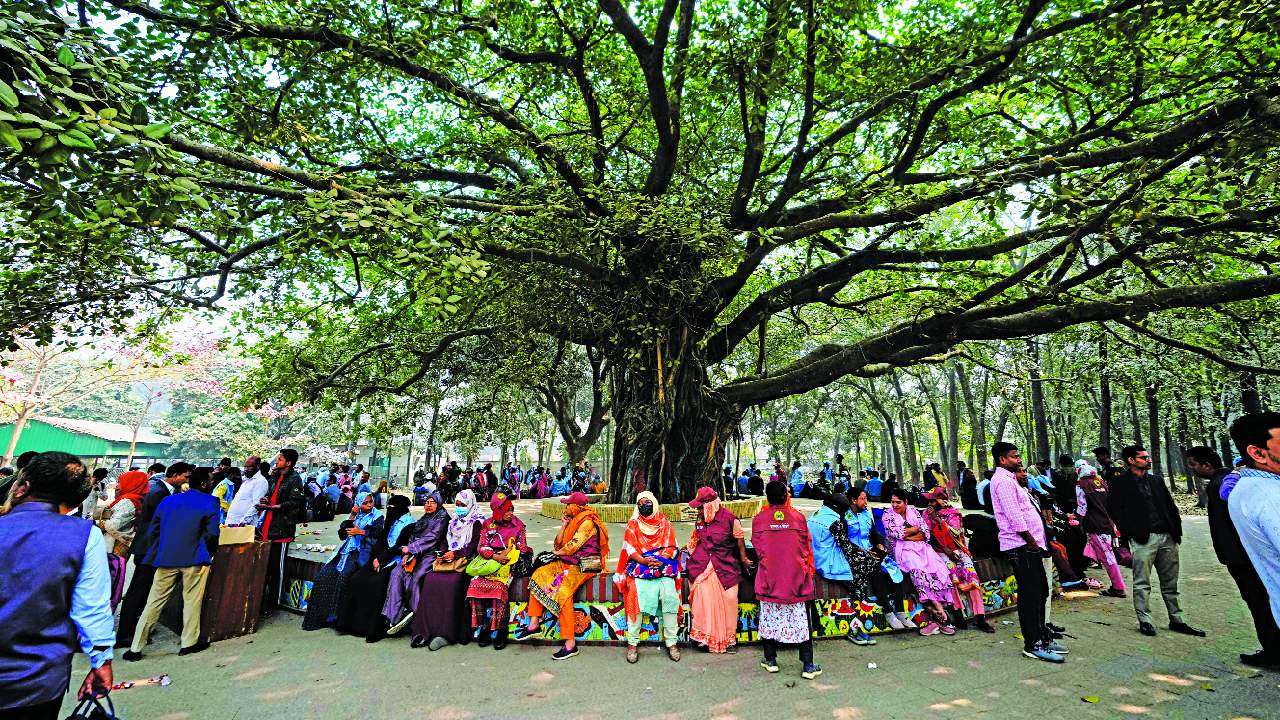
Supporters of the current leadership argue that it was a “necessary corrective” during political turmoil. Do you see what happened as a democratic intervention—or as a soft coup that bypassed the will of the people? Was your absence forced by circumstances, chosen strategically, or imposed by political pressure?
Sheikh Hasina: There was nothing democratic about what happened. What began as peaceful student protests over public sector job quotas was hijacked by radical elements who turned legitimate grievances into coordinated destruction. Police stations were set alight, officers lynched and burned alive, weapons looted, state infrastructure destroyed, and the homes of Awami League members burned down. This was not civic expression but a violent insurrection. Hundreds of people died whose identities could not even be established.
This became clear when Yunus immediately dissolved the judicial inquiry I had established to investigate the violence, the very mechanism that would have revealed who was behind it. In his first weeks in power, Yunus released convicted terrorists, granted blanket immunity to those responsible for the destruction, then celebrated them as heroes, denying the victims of these horrific acts of violence access to justice.
I did not want to leave Bangladesh, but I did so to prevent further bloodshed and loss of life. Credible threats to my life and the safety of my family were being made and leaving became a matter of necessity. My departure did not create the chaos that followed, it was exploited by those who had been waiting for exactly this opportunity.
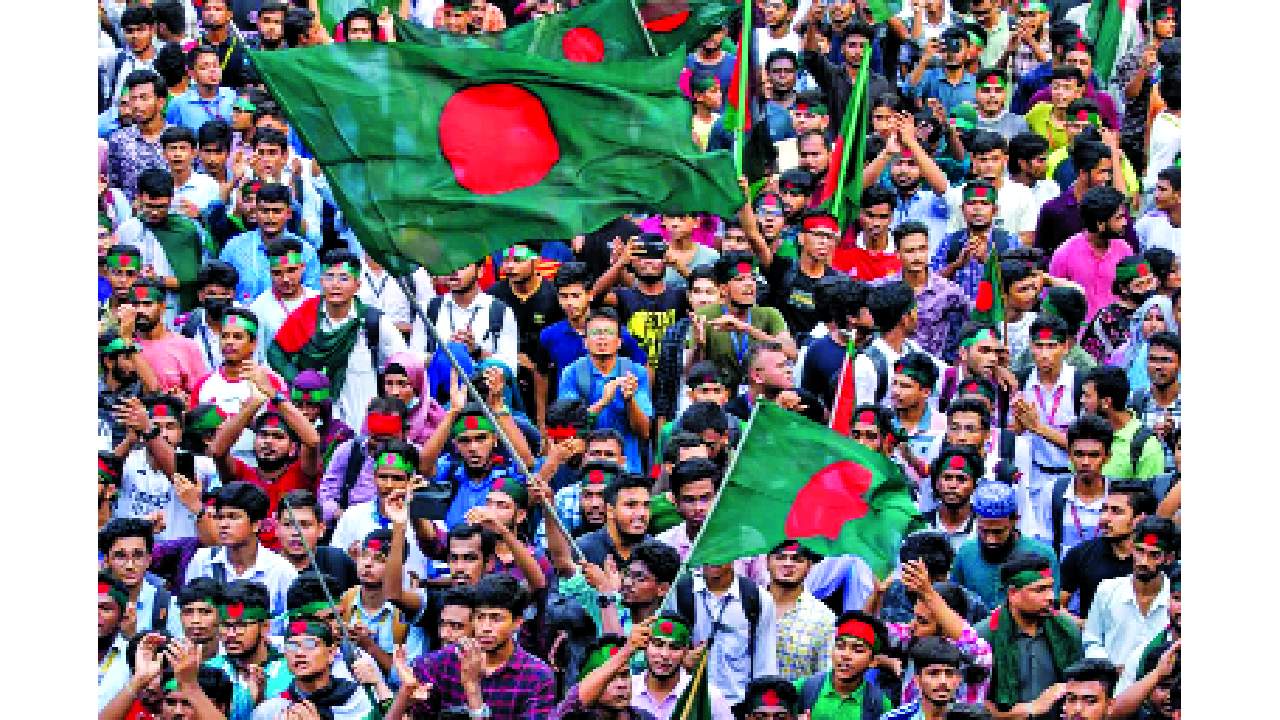
Dr. Muhammad Yunus enjoys significant international goodwill, yet faces criticism at home for governing without electoral legitimacy. Can international approval ever substitute for constitutional authority in a republic like Bangladesh?
Sheikh Hasina: International goodwill is not a ballot box. It cannot confer the authority that only the people of a nation can grant.
Yunus built his reputation on microfinance and a Nobel Prize, and certain Western circles mistakenly believed he shared their democratic, liberal values. But the proof of his rule is in his willingness to crush political rivals, tear up our constitution, and silence any dissenting voice. The same man who charmed international audiences has banned the country’s largest political party, presided over the detention and torture of political opponents, and elevated extremists from proscribed terrorist organisations into his cabinet.
The people of Bangladesh have already seen through Yunus’ facade, and the international community is doing the same. Human rights organisations have condemned his actions. His own cabinet members have resigned in protest. Even the President of the United States has spoken critically of him. The goodwill that once shielded him is eroding because the world is finally seeing what ordinary Bangladeshis have experienced from the start: a man without a mandate losing control over the radical forces he has unleashed.
Over the past year, Bangladesh has witnessed rising political disorder, attacks on institutions, and growing ideological radicalism. Has the state, in your assessment, lost its monopoly over authority, and is Bangladesh drifting toward a dangerous normalization of chaos?
Sheikh Hasina: What we are witnessing is a total decline in the rule of law, replaced by mob terrorism. The state has not lost control by accident. It has surrendered authority willingly to the radical forces it empowered that are now tearing the country apart.
Consider what we have witnessed in recent weeks alone. A youth leader was killed over electoral rivalries between BNP, Jamaat, and NCP candidates. Instead of a serious investigation, the government allowed mobs to burn newspaper offices with journalists still inside and attack diplomatic missions. A Hindu garment worker was publicly lynched by his colleagues over accusations of blasphemy. Journalists have been imprisoned for reporting the truth, lawyers disbarred, diplomats harassed, and cultural institutions attacked, while the perpetrators of these acts of violence face no consequences. Instead, our jails are filled with those whose only offence is to criticise the interim government.
During our years in government, we worked to build a Bangladesh where criticism was welcomed, not prosecuted, where people of all faiths could live without fear, where extremism was contained, and where the economy created opportunity for millions. That progress did not vanish overnight, but it is being systematically dismantled by those who benefit from division and disorder. But I refuse to believe this is permanent. The values we fought for in 1971 are woven too deeply into our national character. Regimes built on fear and exclusion do not endure.
Many legal experts argue that courts, law enforcement, and civil administration have become politicized or ineffective. Do you believe Bangladesh’s institutions are merely weakened—or fundamentally broken?
Sheikh Hasina: Our institutions are not weakened; they have been deliberately destroyed.
In Bangladesh today, the judiciary has become a tool of political persecution aimed at eliminating political opposition ahead of the election. I am deeply concerned that some of my former colleagues who are currently imprisoned may be executed in the near future on the orders of the ICT-BD, the tribunal that sentenced me to death in absentia. That same tribunal now prosecutes only Awami League members while ignoring the atrocities committed by those aligned with the government. Senior judges have been forced to resign through mob intimidation, replaced with inexperienced and blatantly partisan puppets of the state.
Over 160 journalists have lost their credentials for reporting critically. When mobs burned the offices of Prothom Alo and the Daily Star, no one was held accountable. Police arrest citizens for purchasing election nomination forms unless they belong to approved parties, yet when minorities are lynched, there are no consequences.
During our time in government, these institutions served the public. Police maintained order, and journalists were free to write and investigate without fear of intimidation or repression. Broken institutions can be rebuilt, but that requires a legitimate, democratically elected government with the authority to do so.
Looking back, do you believe there were decisions during your tenure that indirectly paved the way for the current crisis?
Sheikh Hasina: No government is without flaws, and I have never claimed otherwise. Democracy is founded upon debate and constructive criticism. Indeed, the 2024 protests began with constructive demands from students over civil service job quotas; frustrations surrounding limited economic opportunities that we listened to. These protests were their civic right, and we approached their demands with openness and a commitment to respond to their frustrations within a practical framework.
We could never have foreseen that these protests would be usurped by radical groups who would seize power and undermine our country’s democratic institutions. The responsibility lies with them alone.
Is national reconciliation still possible in Bangladesh, or has polarization crossed a point of no return?
Sheikh Hasina: Reconciliation will only be possible when Bangladesh returns to legitimate, democratic governance with a mandate to rule, not an unelected authority that believes it can rewrite the history of Bangladesh. You cannot heal a nation while criminalizing opposition, detaining politicians who disagree with you, arresting journalists who write the truth, and disenfranchising millions of Bangladeshis.
Try as he might, Yunus has not succeeded in hoodwinking the Bangladeshi people. Over half of Bangladeshis have confidence in the Awami League and would vote for us if we were allowed to participate.
Reconciliation begins with restoring democratic conditions: lifting the ban on the Awami League, releasing political prisoners, allowing a free press, and holding genuinely inclusive elections.
Former Bangladeshi Prime Minister Sheikh Hasina has strongly condemned the elections scheduled for February 12, 2026, following the exclusion of her party, the Awami League, the country’s most popular political force. In an exclusive email interview with veteran journalist Dr. Waiel Awwad, Hasina described the elections as lacking legitimacy and constitutional basis, warning of a serious setback to Bangladesh’s democratic trajectory.
On Constitutional Legitimacy:
- Hasina asserts the interim government headed by Dr. Muhammad Yunus lacks any electoral mandate and was “foisted on the people” through an unconstitutional power seizure
- She claims Yunus has rewritten Bangladesh’s constitution without authority and banned the Awami League, a party elected nine times in the country’s history
- Over 152,000 citizens have been detained based on political affiliation, while religious minorities and media institutions face attacks
On the August 2024 Events:
- Hasina describes what happened as a “violent insurrection,” not a democratic intervention, with peaceful student protests hijacked by radical elements
- She states she left Bangladesh to prevent further bloodshed after credible threats to her life and family
- Yunus immediately dissolved the judicial inquiry she had established to investigate the violence
- Convicted terrorists were released and granted blanket immunity in Yunus’s first weeks in power
On Dr. Yunus’s International Standing:
- While Yunus enjoys international goodwill, Hasina argues this cannot substitute for electoral legitimacy
- She accuses him of crushing political rivals, tearing up the constitution, and elevating extremists from proscribed terrorist organizations into his cabinet
- Human rights organizations have condemned his actions, and even U.S. President Trump has spoken critically of him
On State of Law and Order:
- Hasina describes “total decline in the rule of law, replaced by mob terrorism.”
- Recent incidents include: a youth leader killed over electoral rivalries, newspaper offices burned with journalists inside, Hindu garment worker lynched over blasphemy accusations, and diplomatic missions attacked
- Over 160 journalists have lost credentials for critical reporting; mobs attacking minorities face no consequences
On Institutional Breakdown:
- Hasina claims institutions have been “deliberately destroyed,” not merely weakened
- The International Crimes Tribunal (ICT-BD) prosecutes only Awami League members while ignoring government-aligned perpetrators
- Senior judges forced to resign through mob intimidation, replaced with “inexperienced and blatantly partisan puppets.”
- Hasina herself was sentenced to death in absentia; she fears imprisoned colleagues may be executed before elections
On Responsibility and Reconciliation:
- Hasina acknowledges no government is without flaws, but insists the 2024 protests began with legitimate demands her government was willing to address
- She maintains that radical groups “usurped” peaceful protests to seize power
- Reconciliation requires lifting the Awami League ban, releasing political prisoners, allowing free press, and holding genuinely inclusive elections
- She claims that over half of Bangladeshis have confidence in the Awami League and would vote for it if allowed to participate
On the Disenfranchisement:
- Hasina warns that the interim government has “knowingly disenfranchised over half of the electorate” by banning the Awami League
- She predicts many will simply not vote if they cannot vote for her party
- The February elections, she argues, will grant the authorities “no democratic legitimacy to govern, nor even the credibility to speak on behalf of the people”
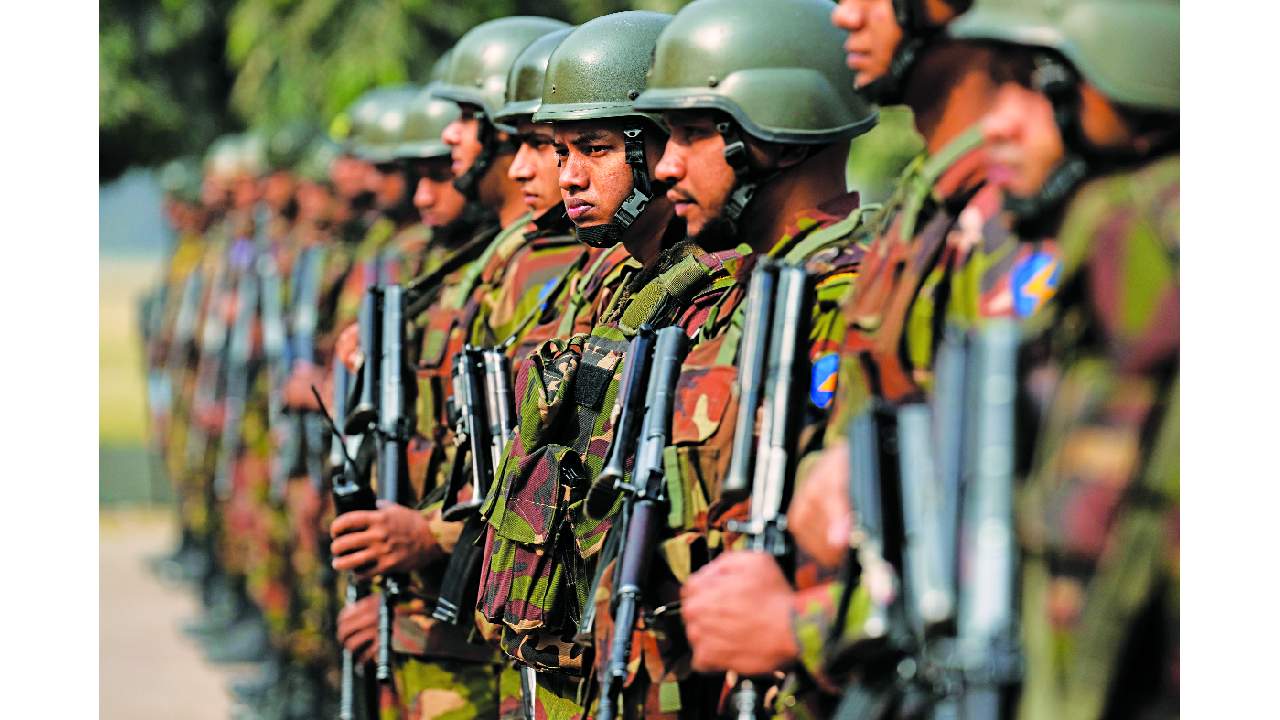
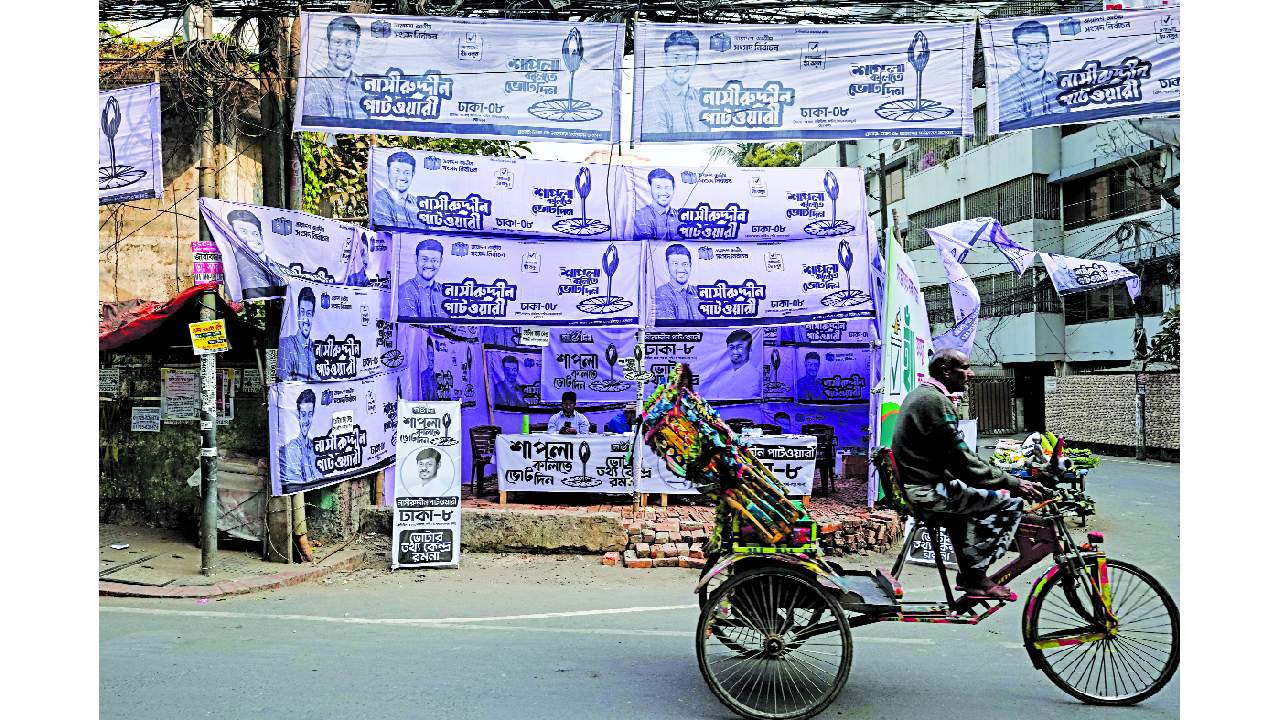
Election officials wait to collect election materials at Dhaka Residential Model College on the eve of the national election in Dhaka, Bangladesh, Wednesday, A rickshaw driver pedals through a street passing party workers sitting inside a makeshift temporary election booth on the eve of the national election in Dhaka, Bangladesh, Tuesday. Bangladesh army personnel assemble at Dhaka Residential Model college where election materials are distributed on the eve of the national election in Dhaka, Bangladesh, Wednesday.

