


India’s bronze medal at the latest edition of the Thomas Cup once again underlined the country’s growing stature in international badminton. While it did not replicate the historic gold medal triumph of 2022 compared by many observers as Badminton’s equivalent to India winning the 1983 Cricket World Cup, the podium finish reinforced India’s strong standing in the world game at the highest level.
Yet, this bronze medal, a credible feat in its own right, quickly gave way to a familiar debate about India’s sporting culture.
Leading doubles pair Satwiksairaj Rankireddy and Chirag Shetty, both recipients of the Khel Ratna award, expressed their disappointment over social media on the relatively muted reception this feat received in India. This disappointment brought back a consistent theme that is so prevalent across Indian sports, are we truly a multi-sports nation.
The sentiment is hardly new. Two years ago, Indian hockey player Hardik Singh recounted a incident on a podcast. A member of India’s bronze medal-winning hockey teams at both the 2020 Summer Olympics and the 2024 Summer Olympics, Hardik described how public attention at an airport was directed more towards a social media influencer than athletes who had represented the country on the Olympic stage. The anecdote captured a frustration many non-cricket athletes have shared, many quietly while some have been vocal about it.
At the same time, cricket’s dominance did not emerge by accident, nor overnight. Its rise was built over decades through sustained success, expanding media access and unmatched commercial growth. India’s victory at the 1983 Cricket World Cup is rightly remembered as a transformative moment, but it was only the beginning. The triumph at the 1985 World Championship of Cricket, the spread of satellite television in the 1990s and the emergence of icons such as Sachin Tendulkar helped cricket penetrate every corner of the country. Over time, the sport became a commercial powerhouse unmatched by any other discipline in India.
Other sports have certainly produced defining moments of their own, but none have altered the national sporting landscape in quite the same way.
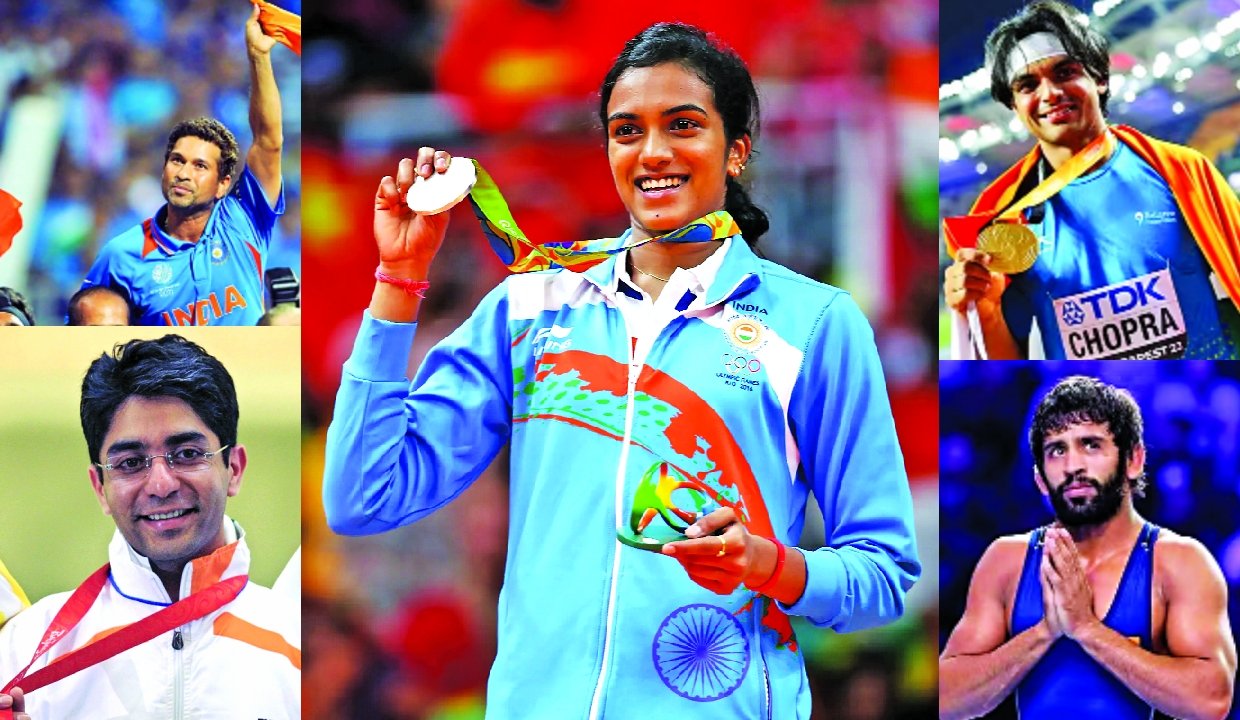
Neeraj Chopra became India’s first individual Olympic gold medallist in track and field while maintaining remarkable consistency on the global stage. India’s hockey bronze medal at the Tokyo Olympics in 2021 carried immense emotional significance, ending a four-decade wait for an Olympic medal in the sport. The Indian women’s hockey team’s inspiring semifinal run at the same Games was equally celebrated. Over the past decade, Shooting, Badminton, Wrestling, Weightlifting and Boxing have all produced world champions, Olympic medallists and landmark victories. India’s growing success at the Olympics, Asian Games, Commonwealth Games and various World Championships also reflects a country becoming increasingly competitive across disciplines.
It is fair to say that the performance of the athletes in the above-mentioned sports have not gone unnoticed, Abhinav Bindra, PV Sindhu, MC Marykom, Neeraj Chopra, Saina Nehwal, Mirabai Chanu, Bajrang Punia among others have become well-known names amongst the Indian sports following public due to their exceptional performances. But the popularity of their respective sports has not grown to match that of cricket.
In an ideal scenario, excellence across disciplines would command sustained public engagement and equal recognition. The reality, however, remains different. Cricket’s scale, financial power and relentless visibility continue to dominate India’s sporting imagination. This does not mean athletes from other sports are ignored or unsupported altogether. But in an increasingly crowded media ecosystem, public attention is finite and cricket continues to occupy the largest share of it.
The contrast becomes even sharper during years packed with major cricket tournaments. In 2024, for instance, India’s victory at the 2024 ICC Men’s T20 World Cup ended a long global title drought and generated nationwide euphoria. Barely a month later, the Paris Olympics began. Despite its significance, the focus and attention in the time period leading up to the event was evidently divided between cricket and the Olympics, very much helped by the aftermath of such a memorable and long-due title.
The concerns raised by India’s Badminton stars now and other athletes before are not isolated cases but more a reflection of how sporting success is valued across the country. There is little doubt that India today is far more diverse in its sporting achievements than it was a decade ago. The country is producing elite athletes across disciplines with increasing regularity. The challenge becomes in creating a broader sporting culture rather than restricting such triumphs across different sports as one-off celebrations.

