


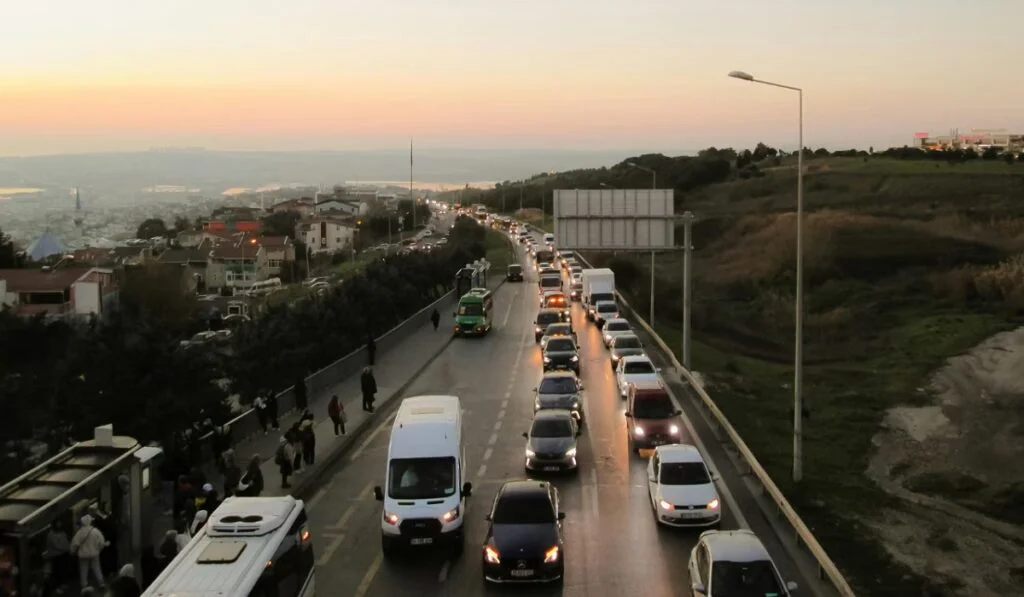
Residents of the national capital, Delhi, may soon find significant relief from the severe daily traffic jams. To streamline the capital’s traffic system, preparations are underway to replace traffic signals at 25 of the largest and busiest intersections with a U-turn-based traffic system. The objective of this new system is to reduce long queues of vehicles at intersections and maintain a continuous flow of traffic without the need for frequent stops at red lights. Instead of halting directly at a signal, this system will allow vehicles to reach their destinations via designated U-turns and well-organized routes.
According to officials, Delhi’s new U-turn-based traffic management plan has received in-principle approval, and preparations for its implementation are now being accelerated. The plan will be rolled out in phases across various parts of the capital over the coming months. Relevant departments are currently conducting technical surveys, analyzing traffic patterns, and developing the necessary infrastructure at the selected intersections.
No more long vehicle queues with the new system
Once the new traffic system is implemented, vehicles will no longer need to stop at intersections. For drivers wishing to change direction, U-turn facilities will be created at designated locations a short distance beyond the intersection. Drivers can simply take a U-turn at these points and proceed easily toward their destinations. The aim is to maintain an uninterrupted flow of traffic on the main road. Congestion caused by signals or turns at intersections will decrease, preventing long queues and reducing travel time. Additionally, the reduction in traffic jams will lead to fuel savings and help lower pollution levels.
Decision taken to alleviate traffic congestion
The government and traffic police assert that the implementation of this new traffic system will significantly transform the traffic landscape on Delhi’s roads. The initiative aims to ensure seamless vehicular movement at intersections and mitigate the problem of traffic congestion. According to officials, this system will eliminate the need for frequent stops at traffic signals, thereby reducing travel time and allowing vehicles to maintain their average speed without interruption. Continuous movement will also lower fuel consumption, resulting in cost savings for motorists.
Redesigning Intersections Instead of Building Flyovers
Officials state that constructing new flyovers is no longer feasible in many parts of Delhi due to space constraints and other infrastructural challenges. Consequently, instead of spending crores of rupees on new flyovers, a strategy has been adopted to streamline traffic by redesigning existing intersections. Under this new system, traffic flow will remain uninterrupted, significantly reducing congestion at these junctions.

