


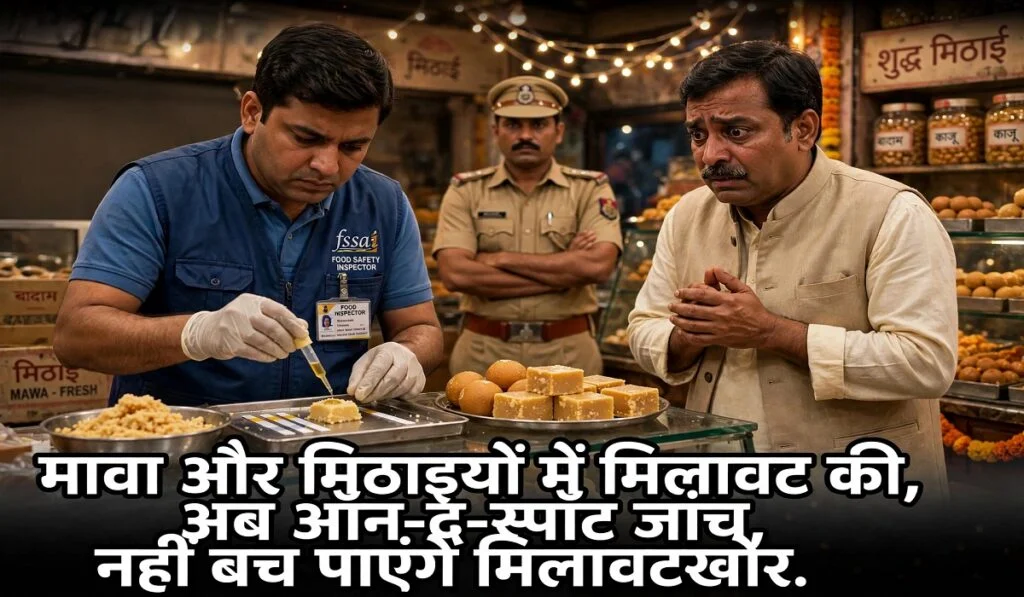
New Delhi: Amidst the rising demand for sweets, khoya (condensed milk solids), paneer (cottage cheese), ghee, edible oils, and fasting-specific flours (like buckwheat and water chestnut flour) during the festive season, the Food Safety and Standards Authority of India (FSSAI) has taken strict measures against adulteration. The FSSAI has directed Food Safety Commissioners across all states and Union Territories to conduct special surveillance and enforcement drives.
Demand for sweets, savouries, snacks, beverages, and milk-based products surges during the festive season. Taking advantage of this, some unscrupulous elements attempt to push counterfeit, unsafe, and substandard food products into the market. To curb this, food safety officials have been instructed to step up surprise inspections and sampling in markets.
Focus on Specific Food Items
The FSSAI has identified food items that are in high demand and prone to adulteration during festivals. These primarily include:
Milk and Dairy Products: Milk, khoya, paneer, butter, and ghee.
Sweets and Savouries: Various types of sweets, salty snacks, papad, and fryums.
Fasting Ingredients: Buckwheat flour (kuttu ka atta), water chestnut flour (singhare ka atta), and barnyard millet (sama ke chawal).
Edible Oils and Beverages: Edible oils, refined oils, and packaged drinks.
Mobile Food Testing Labs to be Deployed in Sensitive Areas
The FSSAI has directed the deployment of mobile food testing laboratories in major markets, crowded commercial hubs, and areas vulnerable to adulteration. Food products will be tested on-site using these mobile labs, which operate under the banner “Food Safety on Wheels.”
Through these vans, consumers and traders will be able to get the quality of food products tested on the spot. Additionally, the initiative aims to raise public awareness regarding food safety and protection against adulteration. Surprise Inspections at Shops and Markets
Food safety officers have been instructed to conduct surprise inspections at shops, food manufacturing units, and wholesale markets. Samples of food items will be collected and sent to laboratories for testing.
It will also be mandatory to upload data regarding inspections, sampling, and test results to the official FSSAI portal in real-time. If adulterated or unsafe food items are found during inspections, action will be taken against the concerned manufacturer or seller under food safety laws.
How to File a Complaint About Adulterated Food
If you suspect adulteration, poor quality, or safety issues regarding food products from any shop, company, or brand, you can file a complaint with the FSSAI.
Complaint via the ‘Food Safety Connect’ App
Download the official FSSAI ‘Food Safety Connect’ app from the Google Play Store or Apple App Store.
Log in to the app as a citizen and navigate to the complaints section.
Upload details such as the food product’s name, a photograph, a copy of the bill, and information about the concerned shop or company.
Then, submit the complaint online.
Complaint via Toll-Free Helpline
Consumers can report adulterated or unsafe food items by calling the FSSAI’s national toll-free helpline at 1800 11 2100.
Complaint via Online Portal and Social Media
Consumers can also file complaints through the official FSSAI online portal at foacos.fssai.gov.in. Additionally, complaints can be lodged via FSSAI’s official social media handles by providing a photo of the product, the bill, and complete details.
How to Avoid Adulterated Food?
The risk of adulteration can be minimized by taking certain precautions when purchasing food items.
When buying packaged food, always check the 14-digit FSSAI license number printed on the packet.
If possible, buy whole spices and grind them at home. Always obtain a proper bill from the shopkeeper when purchasing packaged food.
Avoid buying food products of questionable quality, and if any issue arises, keep the photograph and the bill safe.

