


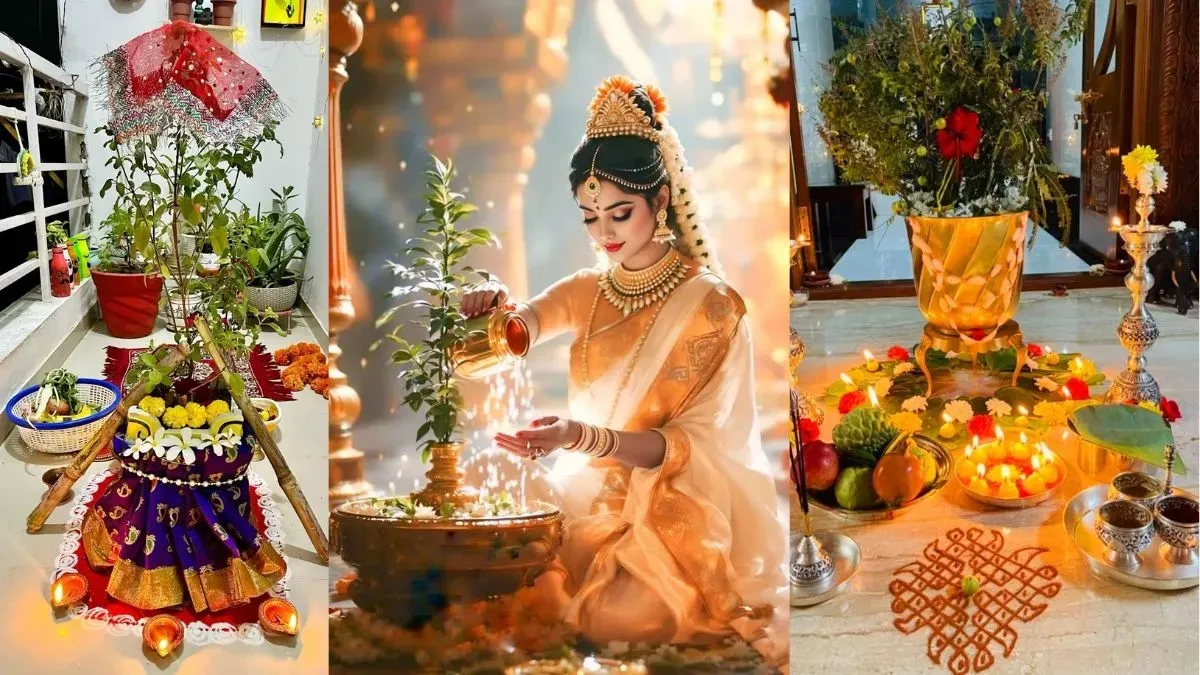
Religion Desk: In Hinduism, ‘Tulsi Vivah’ (the ceremonial marriage of the Tulsi plant) holds special religious significance. This festival is celebrated annually on the Dwadashi (twelfth day) of the Shukla Paksha (bright fortnight) in the month of Kartik. On this day, the Tulsi plant is ceremonially married to Lord Shaligram. According to religious belief, Lord Shaligram is considered a manifestation of Lord Vishnu.
The marriage of Tulsi and Lord Shaligram is conducted according to traditional Hindu customs. It is believed that performing this ritual bestows merit (punya) equivalent to Kanyadaan (the act of giving away one’s daughter in marriage). Furthermore, it is said to bring happiness and prosperity to the family and foster harmony in marital life. This year, the festival of Tulsi Vivah will be celebrated on November 21, 2026. If you are planning to perform the Tulsi Vivah ritual at home, ensure you prepare a list of the necessary items for the puja (worship) and decorations in advance.
Items required for decorating the Mandap (ceremonial pavilion)
For the Tulsi Vivah, the mandap is decorated in a traditional manner. The following items will be required:
A Tulsi plant (along with its pot)
An idol or image of Lord Shaligram or Lord Vishnu
4 to 5 stalks of sugarcane
Banana leaves
A toran (decorative hanging) made of mango leaves
Garlands of marigolds and other flowers
Two wooden platforms (chowkis)
Red or yellow cloth
Flour, turmeric, roli (vermilion powder), and colors for creating rangoli
Items for the adornment (shringar) of the Tulsi plant
On the occasion of the wedding, the Tulsi plant is adorned like a bride. Keep the following items ready for this purpose:
A new saree
A red chunri (veil/scarf)
Sindoor (vermilion) and roli
A bindi
Bangles
Mehendi (henna)
Kajal (kohl)
Mahavar (red dye for the feet/hands)
A small mirror
A comb
Toe rings, anklets, and other ornaments
Items for the worship of Lord Shaligram
The following items will be required for the adornment and worship of Lord Shaligram: Yellow-colored garment
Yellow sandalwood paste
Perfume/Fragrance (Itra)
Sacred thread (Janeu)
Two flower garlands
Red or yellow cloth
Coin
Whole turmeric rhizome
Complete ritual items for Tulsi Vivah
Gather all other necessary items in advance to conduct the ritual according to the prescribed procedures. These include sugarcane, Indian gooseberry (amla), sweet potato, radish, Tulsi leaves, coconut, Ganga water, pure water, cotton wicks, incense sticks, betel leaves, betel nuts, cloves, an earthen or copper vessel (kalash), a coconut with its husk, 5 or 7 mango leaves, Panchamrit, sacred red thread (kalava), fruits, jujube berries (ber), incense (dhup), a lamp (diya), ghee, pumpkin (sitaphal), sweets, sugar drops (batashe), ritual offerings (dakshina), coins for the ceremony, and materials for the Havan (sacrificial fire).
Auspicious timing (Shubh Muhurat) for Tulsi Vivah 2026
According to the Hindu calendar (Panchang), the Dwadashi Tithi of the Shukla Paksha in the month of Kartika will begin at 6:31 AM on November 21, 2026, and conclude at 4:56 AM on November 22, 2026.
The ‘Godhuli Bela’ (twilight period) is considered especially auspicious for Tulsi Vivah. This year, on November 21, the Godhuli Muhurat will span from 5:25 PM to 5:52 PM. The Tulsi Vivah ceremony can be performed during this time.
Religious significance of Tulsi Vivah
According to religious beliefs, performing the marriage of Mother Tulsi and Lord Shaligram bestows merit (punya) equivalent to the act of ‘Kanyadaan’ (the ritual gifting of a daughter in marriage). It is believed that performing this worship with devotion brings happiness, peace, and prosperity to the household. Furthermore, it is believed to help remove obstacles to marriage and foster happiness in one’s marital life.
Following tradition, after the Tulsi Vivah ceremony is concluded, Mother Tulsi and Lord Shaligram are worshipped with prayers and offerings. In some traditions, there is also a practice of gifting a Tulsi plant and a Shaligram to a deserving Brahmin.

