



The United States, Iran and Israel have agreed to a two-week ceasefire following a last-minute diplomatic push led by Pakistan, with both sides set to begin negotiations in Islamabad even as differences persist over the scope of the truce.
US President Donald Trump said on Tuesday, April 7 that he had agreed “to suspend the bombing and attack of Iran for a period of two weeks” after speaking with Pakistan’s leadership, which has been mediating between Washington and Tehran and had sought a pause in hostilities.
Iran indicated that the agreement could enable it to formalize a policy of charging vessels transiting through the Strait of Hormuz, a vital global oil route. However, specifics remain unclear, including how such a measure would be implemented, whether shipping companies would consider the passage safe, and whether other countries have agreed to this condition.
In a detailed statement on social media, Trump said the decision followed conversations with Pakistan Prime Minister Shehbaz Sharif and Field Marshal Asim Munir, and was contingent on Iran agreeing to the “COMPLETE, IMMEDIATE, and SAFE OPENING of the Strait of Hormuz.” He added that he had agreed to “hold off the destructive force being sent tonight to Iran” under these conditions.
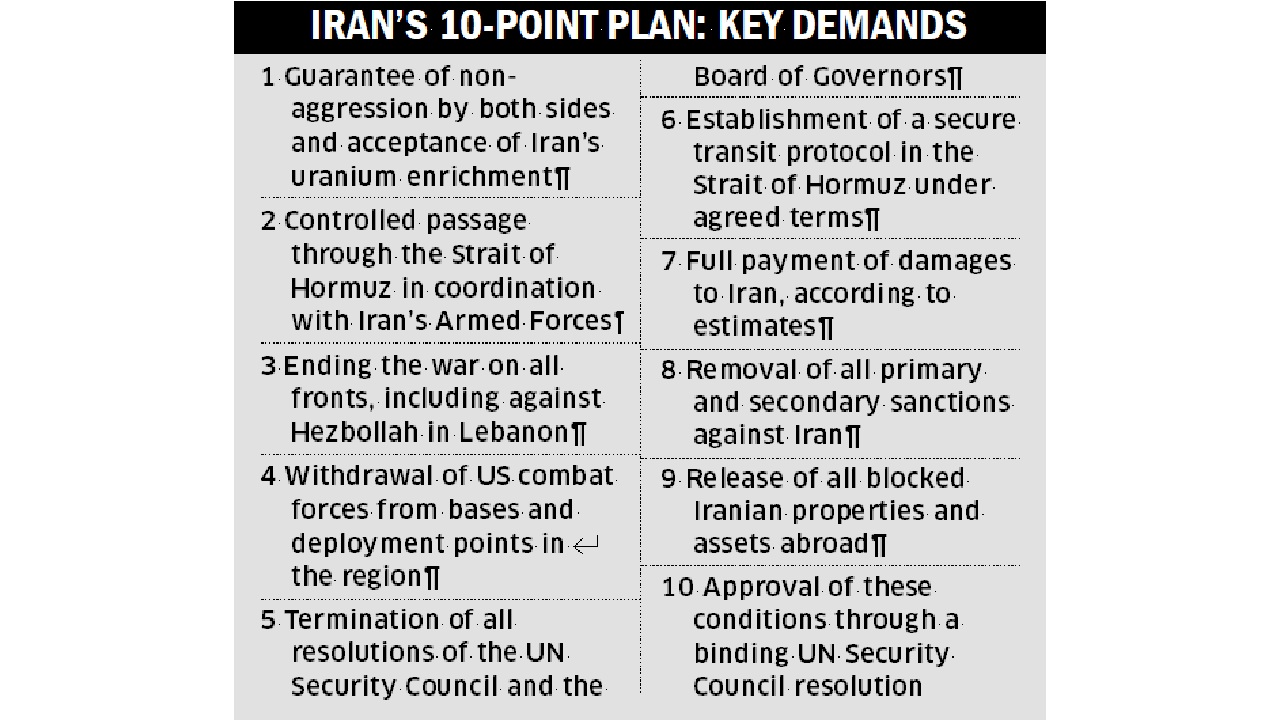
The announcement came hours after Trump warned that a “whole civilisation will die tonight” if a deal was not reached, underscoring the escalation that preceded the ceasefire. He also said the United States had received a 10-point proposal from Iran and described it as a workable basis for negotiations.
Iran confirmed it would take part in negotiations. Foreign Minister Seyed Abbas Araghchi said the move followed a “brotherly request” from Pakistan’s leadership and discussions around a US proposal as well as Iran’s own framework. He said that, for a period of two weeks, safe passage through the Strait of Hormuz would be ensured through coordination with Iran’s armed forces, subject to technical limitations.
Mediators, including Pakistan said the ceasefire would apply “everywhere, including Lebanon and elsewhere,” and invited leaders of both countries to Islamabad on April 10 for talks aimed at reaching a broader settlement.
However, there were immediate differences over the scope of the agreement. Israel said it supports the suspension of strikes against Iran for two weeks but indicated that its operations against Hezbollah in Lebanon would continue. Reports from the region indicated that strikes were recorded in parts of Lebanon after the ceasefire announcement.
The ceasefire follows weeks of military escalation that disrupted global energy supply chains and trade routes, particularly through the Strait of Hormuz, a key conduit for global oil shipments. Oil prices declined following the announcement, while equity markets in Asia moved higher, reflecting expectations of easing supply disruptions.
Officials cautioned that restoring shipping routes and stabilising supply chains could take time. There were also reports of continued incidents, including strikes and drone activity in parts of the region after the ceasefire announcement, highlighting uncertainty over implementation.
Global reactions were mixed. Several countries and organisations welcomed the pause and called for negotiations to continue, while noting that the two-week arrangement remains temporary and dependent on further diplomatic progress.

