


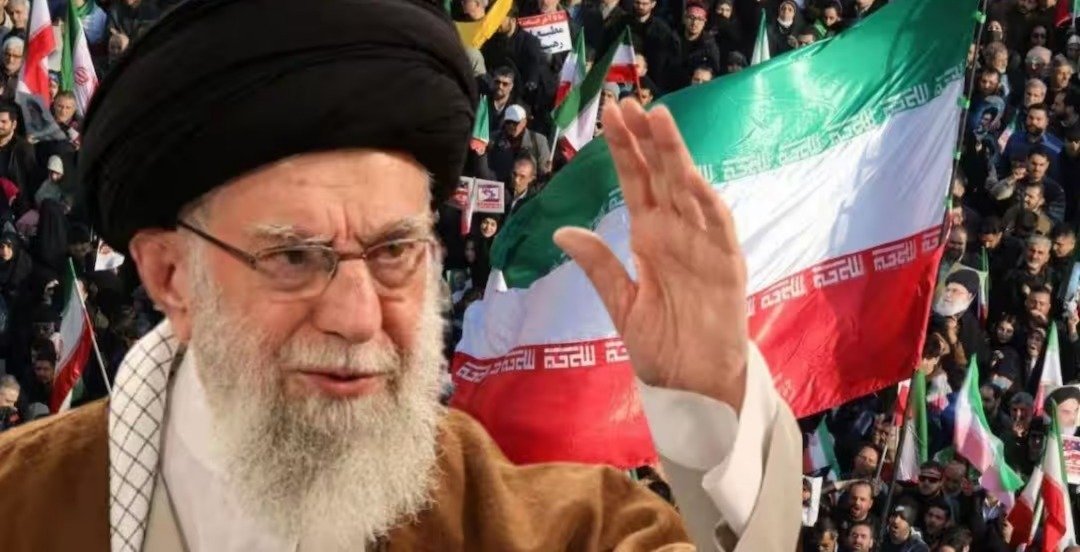
Iran coup crisis 2025: Iran is burning. For nearly three weeks, the country has witnessed nationwide protests, thousands of deaths, economic collapse, and open international pressure. Streets are filled with angry citizens. Social media is flooded with videos. Even global leaders are reacting.
Yet, Ayatollah Ali Hosseini Khamenei, Iran’s Supreme Leader, remains unmoved.
This raises a powerful question:
Why is the Iran coup crisis 2025 not turning into a regime change—despite all the chaos?
The answer lies deep inside Iran’s political structure, history, and power networks.
Table of Contents
What Sparked the Iran Coup Crisis 2025?
The crisis did not erupt overnight.
Since early 2024, Iranians have been struggling with:
- Soaring inflation
- Collapse of the Iranian Rial
- Power and gas shortages
- Severe water crisis
- Economic pressure due to sanctions
The situation worsened after a US attack reportedly damaged Iran’s nuclear facilities, triggering economic shockwaves.
On December 28, 2025, protests began in Tehran’s Grand Bazaar. Within days, universities, small towns, and major cities joined. The slogans soon turned political.
One slogan echoed everywhere:
“Neither Gaza nor Lebanon, My Life for Iran”
This reflected growing anger over Iran’s foreign conflicts while citizens suffered at home.
Death Toll Crosses 3,000 — But Fear Grows Stronger
As protests intensified, Iran’s security forces moved in.
- Government admits 2,500+ deaths
- Independent estimates suggest 3,000 to 10,000 casualties
- Over 100 security personnel killed
- Reports of public executions without trials
Despite this bloodshed, the protests remain leaderless—and that is crucial.
Why Iran’s Protests Lack a Killing Blow
1. No Single Leader Inside Iran
The biggest weakness of the Iran coup crisis 2025 is the absence of a unified leadership.
- Protests are decentralized
- Small groups organize via encrypted apps
- Internet shutdowns have not stopped mobilization
But no single face represents the movement.
Iran has a history of crushing leaders early:
- Mir-Hossein Mousavi (2009 protests) — still under house arrest
- Mehdi Karroubi — freed only in 2025 after 14 years
People have learned: be visible, and you disappear.
Who Leads the Opposition Outside Iran?
2. Reza Pahlavi — A Divisive Figure
From outside Iran, one name keeps surfacing: Reza Pahlavi, son of the last Shah.
- Supported by the US and Israel
- Promotes a post-Khamenei Iran
- Lives in exile
But here’s the problem:
- Left-wing and republican groups oppose him
- Many Iranians reject monarchy
- No consensus on restoring royal rule
So for Khamenei, Reza Pahlavi is noise—not a threat.
The Mujahideen Factor: Powerful But Untrusted
3. MEK Has History, Not Legitimacy
The People’s Mujahedin of Iran (MEK) once fought both the Shah and the Islamic regime.
However:
- They supported Iraq during the Iran-Iraq war
- This is unforgivable for many Iranians
- Their base is mostly abroad
Even today, MEK lacks mass support inside Iran.
Why 1979 Worked — And 2025 Isn’t
4. The Khomeini Difference
In 1979:
- Ayatollah Khomeini was the undisputed leader
- The Shah was sick with cancer
- Military command was fragmented
- Security agencies failed
Today:
- Khamenei controls army, police, intelligence
- Power is centralized
- No alternative leadership exists
History is not repeating itself—because the conditions are not the same.
Why Khamenei Cannot Flee Iran
5. Escape Is Not an Option
Unlike the Shah, Khamenei cannot run.
He is:
- Supreme Leader of Iran
- Symbolic leader of global Shia Islam
- Successor of the Islamic Revolution
If he flees, the message to the Islamic world would be devastating.
At 86 years old, Khamenei would rather die than be remembered as a runaway leader.
Why the US Is Watching, Not Acting
6. America Has No Successor Plan
Former President Donald Trump has openly encouraged protesters. But the US has not intervened directly.
Why?
Because Washington has no clarity on:
- Who takes over after Khamenei
- Whether Iran stays united
- What replaces the Islamic Republic
A collapse without a plan could destabilize the entire Middle East.
The Harsh Reality of the Iran Coup Crisis 2025
7. Protests Are Powerful — But Power Is Organized
This is the core truth:
– Protesters have emotion
– The regime has structure
Until leadership, unity, and military splits emerge, Khamenei remains secure.
ByNews-View: The Fire Is Burning, But the House Still Stands
The Iran coup crisis 2025 is not failing—it is unfinished.
The streets are alive. The anger is real. The economy is broken.
But revolutions do not succeed on anger alone.
Without leadership, direction, and a post-Khamenei roadmap, protests risk turning into prolonged pain rather than transformation.
Khamenei knows this.
That is why he waits.
That is why he resists.
And that is why, if forced, he may choose martyrdom over escape.
History is watching Iran—but history only turns when power truly fractures.
Also read :

