


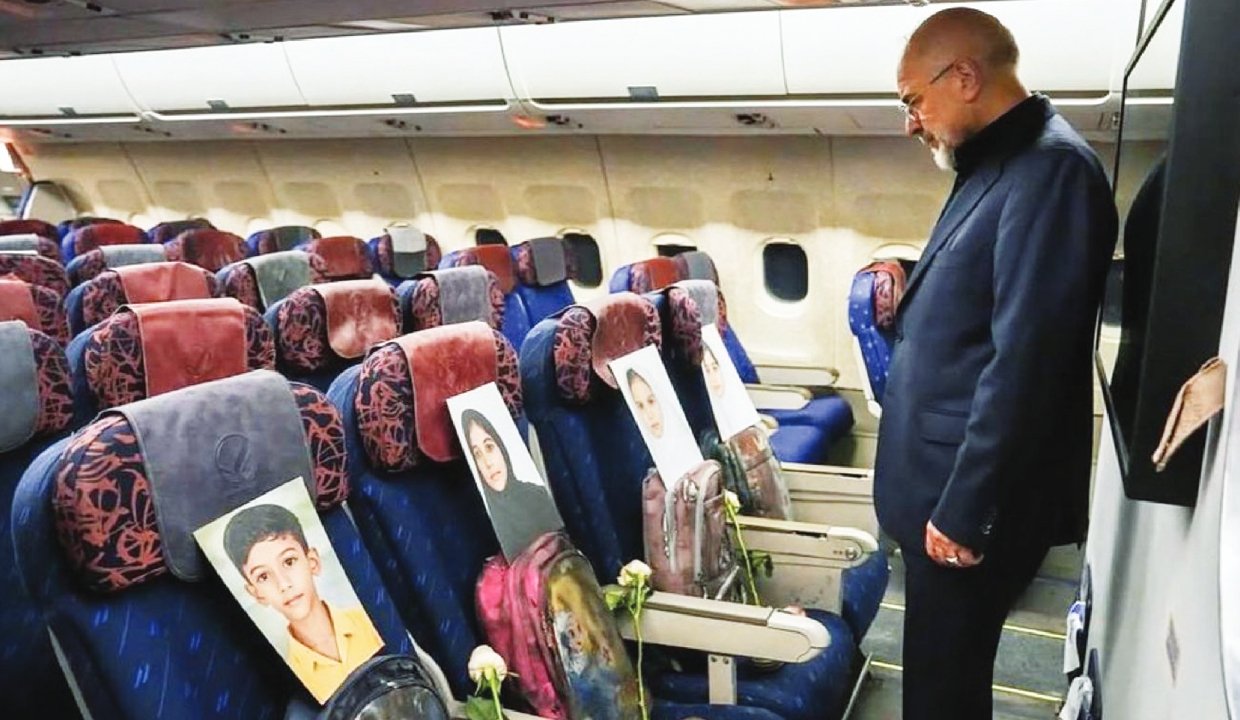
As the Iranian delegation sat down to begin high-stakes talks with the United States in Islamabad, diplomacy took on a deeply emotional tone, with Tehran invoking the memory of 168 children killed in the Minab school strike.
In a striking and symbolic gesture, just as negotiations got underway, Iran’s Parliament Speaker Mohammad Bagher Ghalibaf shared an image from his flight-rows of empty seats filled not with passengers, but with photographs of young victims. “My companions on this flight, Minab168,” he wrote, turning a routine diplomatic journey into a sombre tribute.
The message was unmistakable: before any agreement, before any handshake, there are lives that Iran says cannot be forgotten.
The Minab tragedy dates back to the early days of the US-Israel-Iran conflict, when American forces struck what they described as a military target near the Shajareh Tayyebeh school. Iranian officials, however, insist the strike was deliberate, claiming it directly hit the school and left 168 children dead-an incident that continues to cast a long shadow over any attempt at reconciliation. For many in Iran, the images of that day remain raw. By carrying the faces of those children into the very moment talks began, Tehran appeared to be reminding Washington-and the world-of the human cost behind geopolitical calculations.
Iran has since sought accountability, even naming two US Navy personnel-Leigh R Tate and Jeffrey E York of the USS Spruance-as being linked to the strike. The matter has also reached the United Nations, which has urged the US to complete its investigation and deliver justice. The delegation in Islamabad, led by Ghalibaf and including Foreign Minister Abbas Araqchi and other senior officials, entered negotiations carrying both political demands and emotional weight. Even as dialogue begins, Tehran’s distrust remains palpable. “We have good intentions but we do not trust… Our experience in negotiating with the Americans has always been met with failure and broken promises,” Ghalibaf said, underscoring the fragile ground on which the talks stand.
Iran is pressing for a ceasefire in Lebanon and the unfreezing of its assets, warning it may walk away if its demands are not met. The United States, in turn, has cautioned against escalation, signalling that military options remain on the table. As negotiations unfold in Islamabad, the image of those 168 children lingers-an emotional reminder that beyond strategy and statecraft, the outcome of these talks carries the weight of unresolved grief and a demand for justice.

