


“Live, Laugh, Love’ – and if that does not work Load, Aim and Fire”
‘With due apologies to Bassie Anderson Stanley’
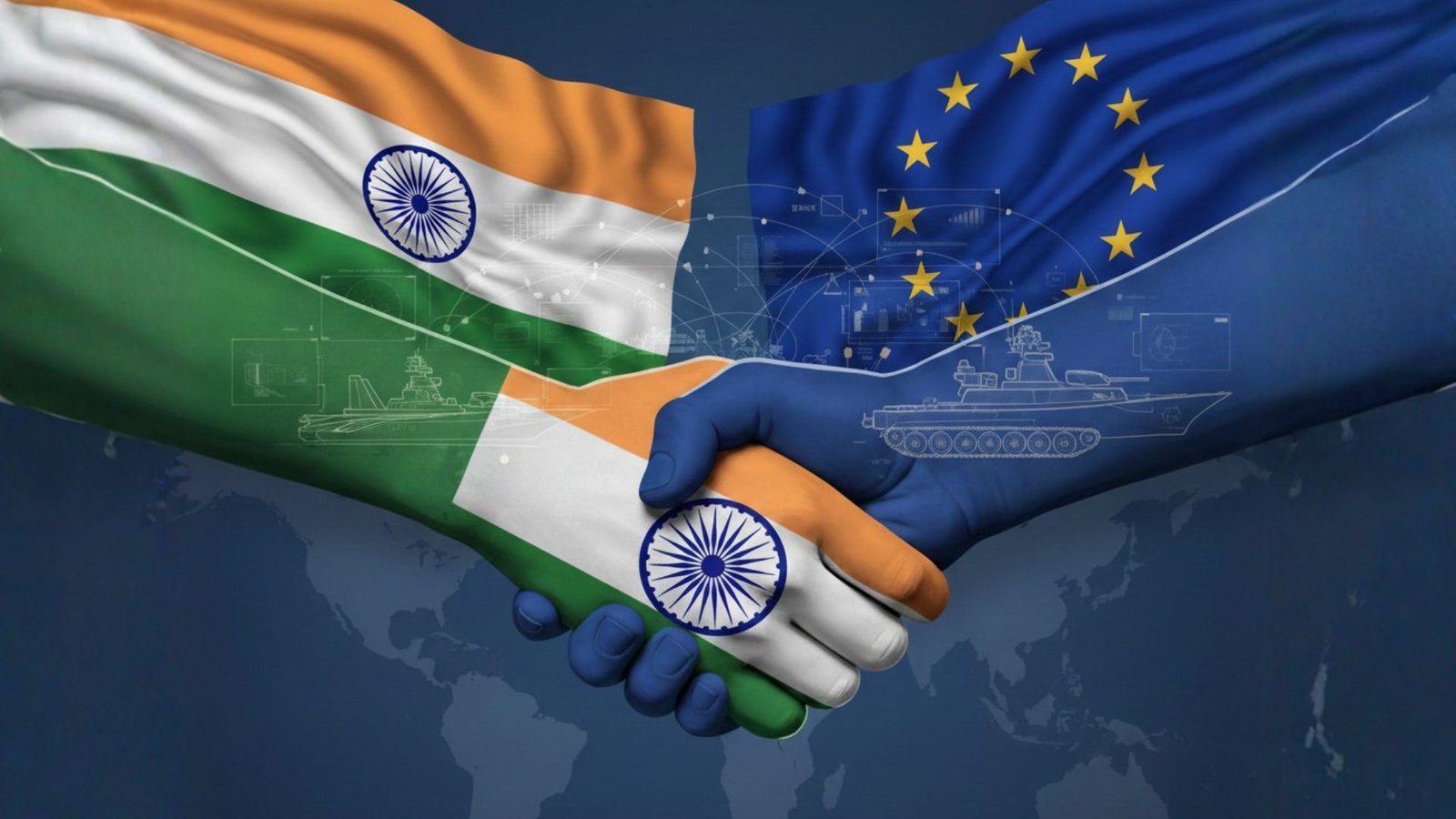
From the grandeur of the Republic Day to the FM presenting the Union Budget in parliament, it has been an exciting last few days. The Free Trade Agreement between India and the European Union under negotiation since 2007, was eventually signed with an overarching defence and security framework to deepen ties in the domain of maritime security, defence industry & technology, cyber & hybrid threats, space, and counter-terrorism, amongst others. The Union Budget’s impact on the defence outlay, in relation to the India-EU agreement on free trade, is palpable. The focus on, and enhanced outlays for, all areas favouring self-reliance amply highlight a strong resolve to safeguard our national interests.
Changing Landscape
Security environments have undergone a dramatic change with the advent of drone warfare, as exemplified during the ongoing Russia – Ukraine conflict. Small, long-range, armed and autonomous flying machines are cheap to produce and hard to counter. Long-range weapons and the advent of AI for target acquisition and engagement have forced an increase in the spatial gap between deployed forces and shortened the OODA loop. Massed deployments, static headquarters and logistic nodes have become unviable in view of the early detection and almost instantaneous neutralisation by loitering munitions and long-range, hypersonic and beyond-the-horizon missiles. Modern trends favour small, networked and highly agile forces to avoid detection and to respond to threats in real-time.
India has been experimenting with newer concepts of quick & effective response to any terrorist action or enemy misadventure. Integrated Battle Groups, Rudra Brigades and Bhairav Battalions are some of the newly created Army units and formations for quick response. There is a focus on secure communications/computing, AI, and satellite-assisted reconnaissance, surveillance, target acquisition and engagement for stealth and speed. These capabilities need heavy investment in R&D and have to be constantly upgraded to stay relevant. It is like a high-speed treadmill – you have to run to stay in the same place!
Right Timing
The unease with the USA was being felt even before Trump’s second term, but the coercive tariffs imposed on India have laid bare the true colours of the USA. A major turning point came after Operation Sindoor, which showcased our military prowess, techno-industrial superiority and political will. Sabotage of existing agreements and supply chains by the USA is a matter of grave concern as it can compromise our defence preparedness and freedom to act in our national interest. Our major defence partner, Russia, is hamstrung by their own requirements and tough sanctions against it. Even Israel is constrained by the ongoing Gaza imbroglio. There was an urgent need to get out of this triple logjam.
A Strategic Pivot
The India-EU FTA herald a transformative reconfiguration of India’s defence architecture. Realignment of our procurement paradigm, favouring self-reliance and choosing new partners without forsaking vetted allies, was indeed long overdue. Doubts about Russian constraints, Israeli preoccupations and American hostility had to catapult us toward Europe, and they have done precisely that!
It is not that we were not dealing with Europe earlier in matters of defence cooperation. France had been a trusted partner since the 1950s with fighters, submarines, and anti-tank missiles. Contemporarily, their engines are in use in Dhruv and Rudra helicopters. 114 additional Rafales are in the pipeline for the Indian Air Force to augment the existing 36, whilst the Navy will be inducting 26 Maritime Rafales in 2029.
Germany is helping build six AIP-equipped submarines. Spain is collaborating on the production of Airbus C-295s. Italy has supplied 76 mm cannons for INS Vikrant, and is participating in unmanned aerial vehicles, helicopters and Global Combat Air Programme.
Sweden has helped create 100% FDI for Carl-Gustaf M4s, offered Gripen-E, made AMCA contributions in radars, electronic warfare, cyber suites, and artificial intelligence frameworks. Poland refurbishes our T-72s, furnishes Tatra chassis; future strategic cooperation encompasses modernisation, cyber, and AI. The Czech Republic provides NATO-grade accoutrements via the Joint Defence Committee for collaborative evolution and Make-in-India imperatives. There are innumerable other smaller ventures.
The Union Budget complements the FTA as it outlays, Defence spending to be hiked by more than 15% to 7.85 lakh crores, aiming to provide a significant boost to the capability of the armed forces. A significant part of this will be utilised to execute deals with the EU countries. The list of acquisitions of new weapon systems includes fighter jets, transport planes, helicopters, warships, submarines, artillery guns, smart weapons, missiles, rockets and a variety of unmanned systems. This capital outlay is almost 24% higher than that of the previous financial year. Additional allocation is planned for the emergency procurement of arms and ammunition needed to be purchased in the aftermath of Operation Sindoor.
Tax exemption has been offered right up to the year 2047 for cloud companies setting up and operating data centres in India. Custom duty exemptions have been given on the import of parts used in the maintenance, repair and overhaul of aircraft required by the defence units. It also aims to strengthen innovation-led enablers like AI, R&D and space. The DRDO budget has also been enhanced with a focus on capital expenditure.
Infrastructure development in the border areas has received a boost with capital allocation for the Border Roads Organisation being increased to 7,394 crores. This is expected to accelerate strategic projects such as tunnels, bridges and airfields in border areas.
Notably, 1.39 lakh crore rupees have been earmarked for domestic industries, including private players. This budget is framed around the philosophy of three ‘kartavyas’, placing growth, competitiveness and inclusion at the centre of policy. As the Defence Minister observed, it seeks to transform ‘aspirations into achievement’ and ‘potential into performance’. All this will contribute to a great extent towards the achievement of the declared national aim of ‘Atmanirbhar and Viksit Bharat’ in the coming years.
Unexpectedly, President Trump announced finalisation of the trade deal with India – a direct reaction to this ‘Mother of All Deals’ with the European Union and indirectly in the light of allocations made in the Indian Union Budget 2026-27. Details of agreed terms are not fully known as I write, but it does indicate the coming down of the USA from its high horse.
The last few days have clearly showcased the indispensability of cooperation amongst ‘middle powers’ in a world where might is right and UN Institutions are becoming increasingly redundant. Commonality of interests has brought a quarter of humanity together, and the future sure seems bright for our shared growth and prosperity!

