


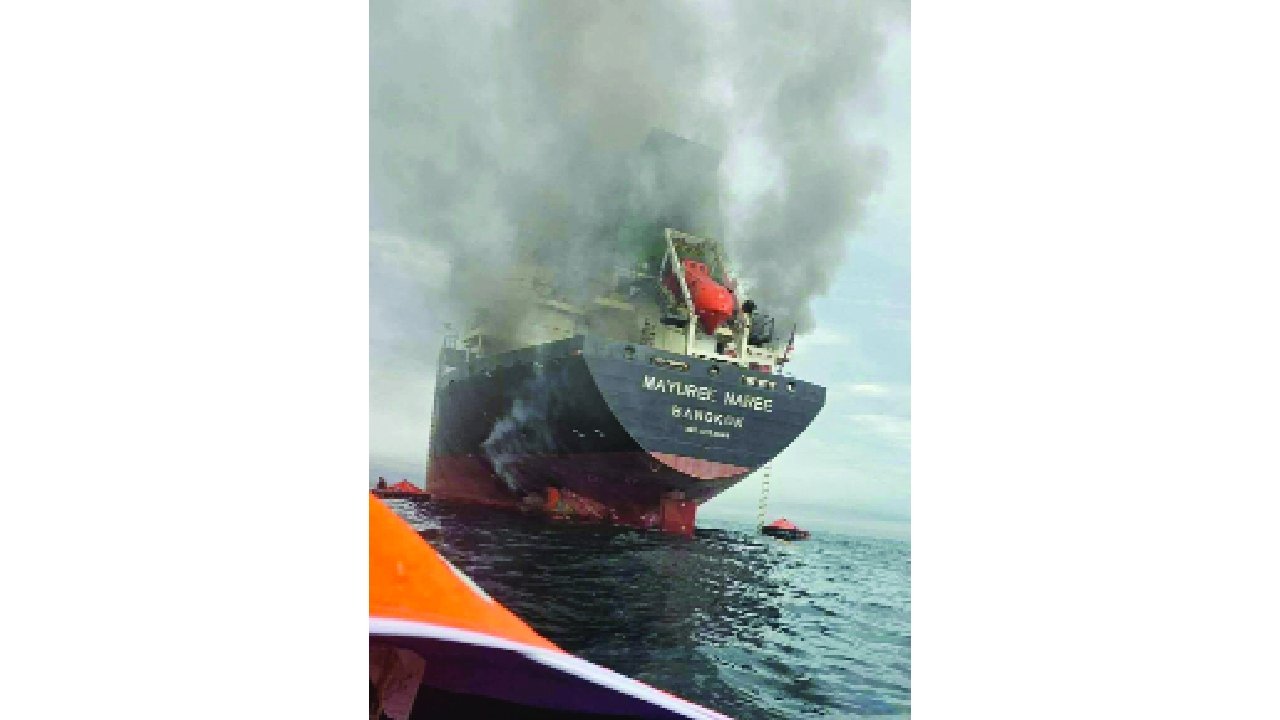
Fresh attacks were reported on commercial vessels in and around the Strait of Hormuz on Wednesday, heightening concerns over the safety of global shipping lanes amid rising tensions in West Asia.
The United Kingdom’s maritime monitoring agency, United Kingdom Maritime Trade Operations (UKMTO), said a cargo vessel believed to be linked to the United Kingdom was struck by an unidentified projectile while transiting through the strait. The impact triggered a fire onboard, forcing the crew to abandon the ship for safety.
In a separate incident hours later, a container vessel sailing off the coast of the United Arab Emirates (UAE) also sustained damage after being hit by what authorities described as a suspected projectile. The vessel’s captain informed UKMTO that the extent of the damage was still being assessed, although all crew members were reported safe. Earlier in the day, another container ship was struck by unidentified projectile near the UAE.
Iranian military authorities, including the Islamic Revolutionary Guard Corps (IRGC), have claimed that they now exercise “complete control” over the Strait of Hormuz. Iran has warned that vessels attempting to pass through the strait could be targeted. Several tankers have reportedly been damaged in recent days.
According to shipping security data compiled from the UKMTO, the International Maritime Organization, and statements from Iranian authorities, at least ten oil tankers have either been struck, targeted, or reported suspicious attacks in or near the strait between March 1 and March 10.
The Strait of Hormuz, located between Iran and Oman, is one of the most strategically significant maritime chokepoints in the world. Nearly 20 percent of the global oil supply passes through this narrow waterway each day, making any disruption a serious concern for international energy markets and trade.
Earlier this month, the IRGC announced that passage through the Strait of Hormuz would be closed to vessels linked to the United States, Israel, European nations, and their Western allies. However, on March 10 the group indicated that certain countries might still be granted transit rights under specific conditions.
Iranian authorities said that safe passage through the waterway would be allowed only to those Arab or European countries that expel Israeli and American ambassadors from their territories. The move has added a new diplomatic dimension to the maritime crisis and raised concerns among international shipping companies and Governments reliant on the route.
Security agencies have advised ships transiting the region to exercise heightened caution while passing through the Strait of Hormuz and nearby waters.

