


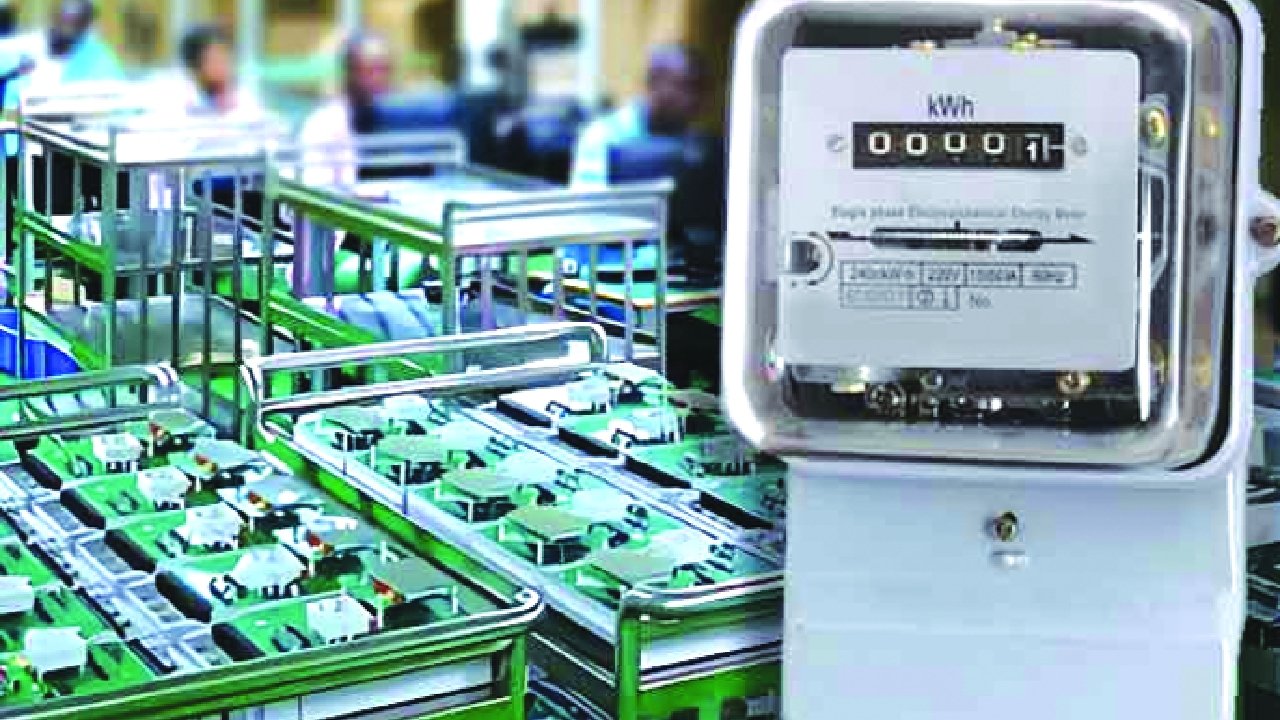
A parliamentary panel has urged the power ministry to undertake urgent measures to accelerate installation of smart metres in a structured and time-bound manner.The Eleventh Report of the Committee on ‘Demands for Grants (2026-27) of Ministry of Power’ was tabled in Parliament on Thursday.
The report said since the pace of installation of smart meters across the country has been far below the envisaged targets, the ministry should undertake urgent measures to significantly accelerate the rollout of smart meters in a structured and time-bound manner, with clearly defined state-wise and utility-wise milestones.
It noted that the Government had set a target of installation of 25 crore smart meters in the country by March 2025, against which only 5.83 crore smart metres have been installed till February 15, 2026.
The committee observed that although the rate of installation of smart meters in the country has increased to about 1,35,000 per day, it may still be insufficient to bridge the large gap between the specified target and corresponding achievements within the revised timeline i.e. up to March 2028.
Further, it noted that frequent complaints are being reported by consumers across states regarding billing inaccuracies, errors during data migration, concerns over data privacy, frequent replacements of consumer meters, etc. These issues have the potential to erode consumer confidence and undermine the very objectives of smart metering as a tool for reform, it pointed out.
The panel suggested that robust mechanisms should be put in place to address the concerns of consumers and stringent testing, certification and quality assurance of smart meters before installation should be ensured.
Moreover, it suggested that a Quality Monitoring Mechanism should be devised to ensure accountability of Advanced Metering Infrastructure Service Providers and discoms in this regard.
It also suggested that discoms be directed to establish transparent and responsive consumer grievance mechanisms, including time-bound resolution of billing disputes and mandatory installation of check meters, in case of complaints.
It also recommended comprehensive and adequate safeguards should be instituted to ensure consumer data privacy and cyber security of the smart metering infrastructure, including clear guidelines on data ownership, access, storage and grievance redressal.
The panel noted that Revamped Distribution Sector Scheme (RDSS) aims to reduce the AT&C losses to 12-15 per cent and eliminate the gap between Average Cost of Supply and Average Revenue Realized (ACS-ARR).
It observed that although AT&C losses and gap between ACS-ARR have shown promising trends, AT&C losses have increased for Himachal Pradesh, Mizoram, Nagaland, Punjab and Telangana from financial year 2020-21 to 2024-25. Discoms in 16 States/UTs have failed to achieve their AT&C loss targets for financial year 2024-25 and the gap between ACS-ARR has widened for 11 discoms in 8 states during the same period, it pointed out.
It noted that there have been perceptible improvements in AT&C losses and gap between ACS–ARR at national level, but this improvement is uneven across states and utilities, which indicates that structural inefficiencies and inadequate implementation of reforms persist in several states despite availability of financial support under the RDSS. Further, it noted that billing and collection efficiencies at pan-India level stand at 87.60 per cent and 97 per cent, respectively, which will continue to adversely impact revenue realization and reflects deficiencies in metering, billing systems and energy accounting.
Believing that RDSS should deliver structural transformation of the distribution sector as opposed to only temporary Scheme driven improvements, it recommend that the ministry should adopt State specific strategies to address persistently high loss geographies, with special focus on states and discoms that have shown deterioration or persistent underperformance so as to ensure improvement in governance and accountability of distribution utilities in the long run.
It suggested Third-party Quality Assessment of works executed under the RDSS.
It recommended that ministry, in coordination with states and discoms should formulate and enforce comprehensive National Electrical Safety and Cable Management Framework to address the issue of unsafe overhead hanging wires.
In addition, it stated complaint redressal mechanisms should also be strengthened to enable citizens report hazardous wiring conditions, with time-bound action by the concerned Authorities.
Noting that AI is highly energy intensive, it suggested that ministry and Central Electricity Authority should review the extant National Electricity Policy and corresponding National Electricity Plan in order to suitably incorporate the issues related to increasing use of Artificial Intelligence in the Power Sector, rapid growth of large-scale data centers and their increasing demand on the National Grid.
It also suggested that the ministry should ensure that annual capacity addition targets are finalized well in advance of the financial year, based on realistic assessment of actual progress of the projects.
It also suggested the ministry should strengthen its expenditure forecasting assessment at the Budgetary Estimates stage so as to minimize its dependence on supplementary grants and internal re-appropriation.

