


The Lok Sabha on Monday will discuss “efforts to free the country from left-wing extremism” as Union Home and Cooperation Minister Amit Shah’s self-imposed deadline of March 31, 2026 to completely eliminate the Naxal menace draws approaches.
The discussion, which does not involve voting but requires a formal reply from the Government, will be initiated by TDP MP Byreddy Shabari and Shiv Sena MP Shrikant Shinde.
Shah had publicly announced that the Naxal threat would be eradicated by March 31 this year. In the run-up to the deadline, security forces have intensified operations, launching a coordinated drive to neutralise the remaining armed Maoist cadres.
A fresh review of Naxal violence-affected regions has reduced the number of Left Wing Extremism (LWE) hit districts in the country to seven from eight. “A comprehensive review of the ‘National Policy and Action Plan to address LWE’ was recently carried out by the Union Government in consultation with nine affected states covering 38 districts,” officials said.
These states include Jharkhand, Bihar, Andhra Pradesh, Chhattisgarh, Madhya Pradesh, Maharashtra, Odisha, Telangana and West Bengal.
Official sources indicated that the Centre is finalising an “Operations and Development” blueprint for the post-deadline phase. The plan is expected to include the withdrawal of approximately five battalions of Central Armed Police Forces (CAPFs), alongside the rollout of welfare and development schemes to prevent any resurgence of extremism.
Since assuming charge, Amit Shah has pushed a unified, data-driven counter-LWE campaign. The cornerstone remains the National Policy and Action Plan approved in 2015, emphasising a multi-pronged strategy of security, development and dialogue.
This has evolved into intelligence-led operations, inter-state coordination, and efforts to choke Maoist financing, along with infrastructure expansion in affected areas.
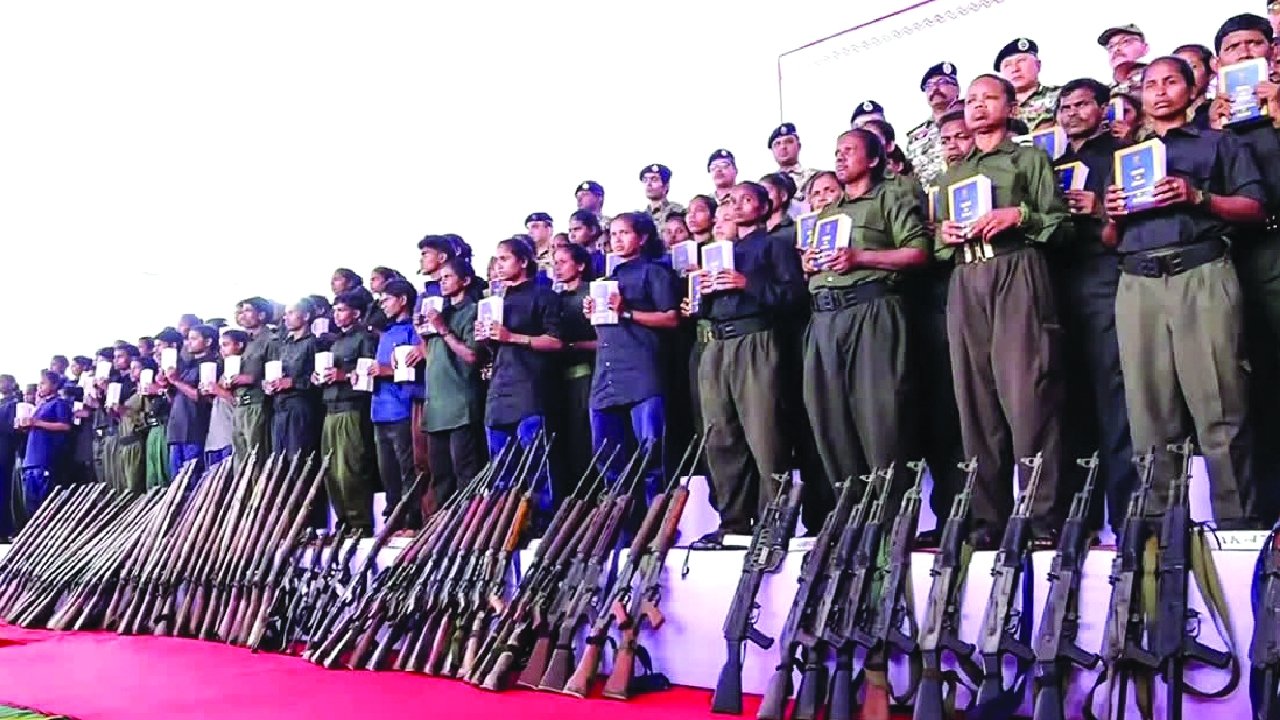
According to Government data, between 2004 and March 26, 2026, a total of 16,496 Naxals have surrendered. The year 2025 alone saw the highest number of surrenders at 2,337.
The number of affected districts has steadily declined-from 126 in 2014 to 90 (2018), 70 (2021), 38 (April 2024), 18 (April 2025), 11 (late 2025), and further to 7-8 by early 2026. Currently affected districts include Bijapur, Narayanpur, Sukma, Kanker and Dantewada in Chhattisgarh; West Singhbhum in Jharkhand; and Kandhamal in Odisha. Of these, only three are categorised as “most affected.”
Violent incidents have dropped sharply-by 81-88% from the 2010 peak of 1,936 to 374 in 2024 and around 234 in 2025. Police stations reporting LWE violence declined from 465 in 2010 to 119 in 2025.
Civilian and security force fatalities have also fallen by 85-91%, from 1,005 in 2010 to about 150 in 2024 and roughly 95-100 in 2025. Between 2014 and 2024, security force casualties declined by 73% compared to the previous decade.
In 2025 alone, 317 Naxals were neutralised, including top leadership; over 800 were arrested, and nearly 2,000 surrendered-marking a turning point in the Government’s “Naxal Mukt Bharat” campaign.
Nationwide, about 220 armed Maoist cadres remain active as of early 2026, down from over 2,000 in 2024.
From May 2014 to September 2025, 8,751 Naxals surrendered and 1,801 were killed. Chhattisgarh accounted for the highest numbers.
In May 2025, a major operation in the Karregutta hills along the Chhattisgarh-Telangana border led to the killing of 31 Naxals, including CPI (Maoist) General Secretary Nambala Keshava Rao.
In November 2025, senior Maoist commander Madvi Hidma was eliminated.
In February 2026, multiple encounters reportedly led to the deaths of senior leaders, including Prabhakar Rao and Parkal Veer.
High-profile surrenders included Politburo member Mallojula Venugopal Rao, along with Central Committee members such as Thippiri Tirupathi and Malla Raji Reddy.
Officials say fortified camps-377 set up since 2019-and advanced intelligence networks have weakened the Maoist command structure, reducing it to a skeletal presence.
The discussion in the Lok Sabha is expected to provide an update on progress, the status of remaining LWE-affected areas, and the roadmap for long-term peace and development.The Lok Sabha on Monday will discuss “efforts to free the country from left-wing extremism” as Union Home and Cooperation Minister Amit Shah’s self-imposed deadline of March 31, 2026 to completely eliminate the Naxal menace draws approaches.
The discussion, which does not involve voting but requires a formal reply from the Government, will be initiated by TDP MP Byreddy Shabari and Shiv Sena MP Shrikant Shinde.
Shah had publicly announced that the Naxal threat would be eradicated by March 31 this year. In the run-up to the deadline, security forces have intensified operations, launching a coordinated drive to neutralise the remaining armed Maoist cadres.
A fresh review of Naxal violence-affected regions has reduced the number of Left Wing Extremism (LWE) hit districts in the country to seven from eight. “A comprehensive review of the ‘National Policy and Action Plan to address LWE’ was recently carried out by the Union Government in consultation with nine affected states covering 38 districts,” officials said.
These states include Jharkhand, Bihar, Andhra Pradesh, Chhattisgarh, Madhya Pradesh, Maharashtra, Odisha, Telangana and West Bengal.
Official sources indicated that the Centre is finalising an “Operations and Development” blueprint for the post-deadline phase. The plan is expected to include the withdrawal of approximately five battalions of Central Armed Police Forces (CAPFs), alongside the rollout of welfare and development schemes to prevent any resurgence of extremism.
Since assuming charge, Amit Shah has pushed a unified, data-driven counter-LWE campaign. The cornerstone remains the National Policy and Action Plan approved in 2015, emphasising a multi-pronged strategy of security, development and dialogue.
This has evolved into intelligence-led operations, inter-state coordination, and efforts to choke Maoist financing, along with infrastructure expansion in affected areas.
According to Government data, between 2004 and March 26, 2026, a total of 16,496 Naxals have surrendered. The year 2025 alone saw the highest number of surrenders at 2,337.
The number of affected districts has steadily declined-from 126 in 2014 to 90 (2018), 70 (2021), 38 (April 2024), 18 (April 2025), 11 (late 2025), and further to 7-8 by early 2026. Currently affected districts include Bijapur, Narayanpur, Sukma, Kanker and Dantewada in Chhattisgarh; West Singhbhum in Jharkhand; and Kandhamal in Odisha. Of these, only three are categorised as “most affected.”
Violent incidents have dropped sharply-by 81-88% from the 2010 peak of 1,936 to 374 in 2024 and around 234 in 2025. Police stations reporting LWE violence declined from 465 in 2010 to 119 in 2025.
Civilian and security force fatalities have also fallen by 85-91%, from 1,005 in 2010 to about 150 in 2024 and roughly 95-100 in 2025. Between 2014 and 2024, security force casualties declined by 73% compared to the previous decade.
In 2025 alone, 317 Naxals were neutralised, including top leadership; over 800 were arrested, and nearly 2,000 surrendered-marking a turning point in the Government’s “Naxal Mukt Bharat” campaign.
Nationwide, about 220 armed Maoist cadres remain active as of early 2026, down from over 2,000 in 2024.
From May 2014 to September 2025, 8,751 Naxals surrendered and 1,801 were killed. Chhattisgarh accounted for the highest numbers.
In May 2025, a major operation in the Karregutta hills along the Chhattisgarh-Telangana border led to the killing of 31 Naxals, including CPI (Maoist) General Secretary Nambala Keshava Rao.
In November 2025, senior Maoist commander Madvi Hidma was eliminated.
In February 2026, multiple encounters reportedly led to the deaths of senior leaders, including Prabhakar Rao and Parkal Veer.
High-profile surrenders included Politburo member Mallojula Venugopal Rao, along with Central Committee members such as Thippiri Tirupathi and Malla Raji Reddy.
Officials say fortified camps-377 set up since 2019-and advanced intelligence networks have weakened the Maoist command structure, reducing it to a skeletal presence.
The discussion in the Lok Sabha is expected to provide an update on progress, the status of remaining LWE-affected areas, and the roadmap for long-term peace and development.

