


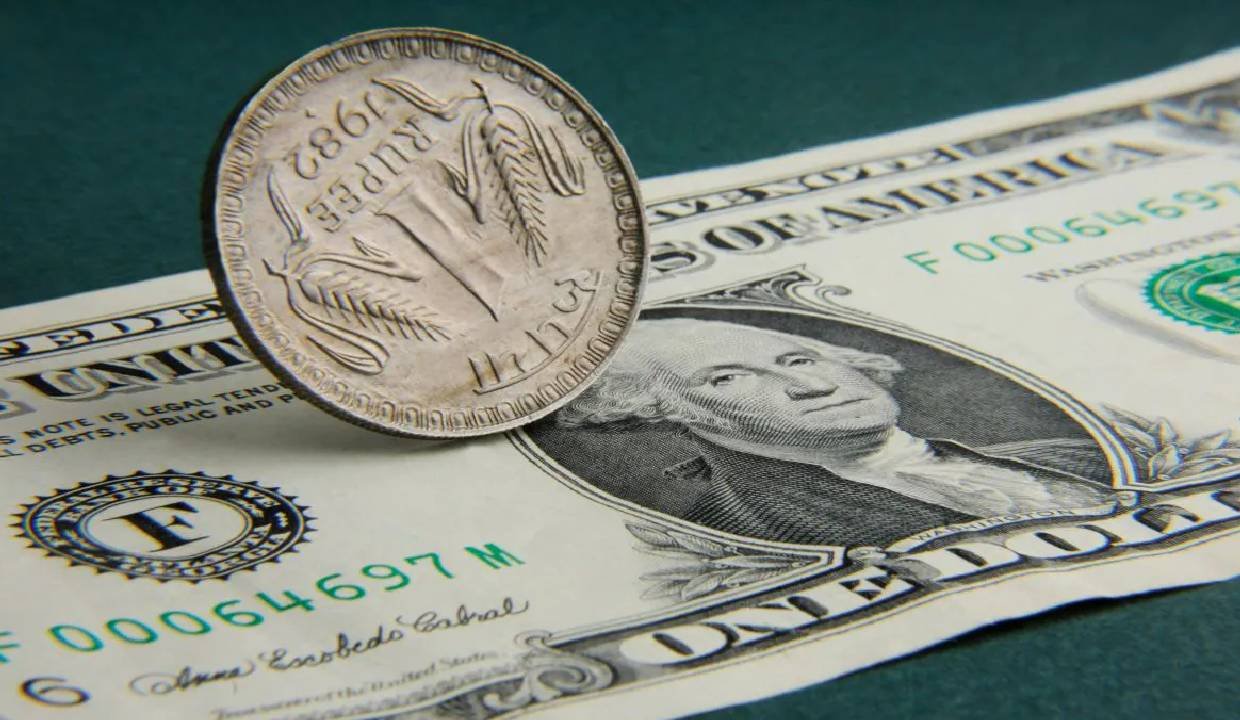
The Indian rupee registered its sharpest single-day decline since March on Monday, weakening by 83 paise to close at 95.31 against the US dollar amid concerns over rising crude oil prices and pressure on India’s import bill.
On Friday, the domestic currency had settled at 94.48 per dollar. Market analysts linked the sharp fall in the rupee to concerns triggered by Prime Minister Narendra Modi’s recent remarks regarding the economic impact of the ongoing West Asia conflict, particularly its effect on crude oil imports and foreign exchange reserves.
According to analysts, elevated crude oil prices and fears of a widening trade deficit weighed heavily on investor sentiment in the currency market.
Jateen Trivedi, Vice President Research Analyst (Commodity and Currency) at LKP Securities, said the Prime Minister’s speech heightened concerns about the impact of a rising import bill on India’s economic stability.
The PM Modi speech has raised concerns about the pressure of a higher import bill on India’s economy and currency stability, especially with elevated crude prices continuing to strain the external balance, Trivedi said.
He added that while the government’s message focused on promoting self-reliance and reducing non-essential imports in the long run, the immediate market reaction remained cautious. The near-term outlook suggests the rupee may trade in the 94.75–95.75 range. A sustained close below 95.50 could potentially open the path towards the 96 level, he added.
The rupee’s decline comes amid growing geopolitical tensions in West Asia, which have disrupted global energy markets and pushed oil prices higher. Currency traders are also closely monitoring global risk sentiment, crude price movements and possible intervention measures by the Reserve Bank of India to stabilise the rupee.

