


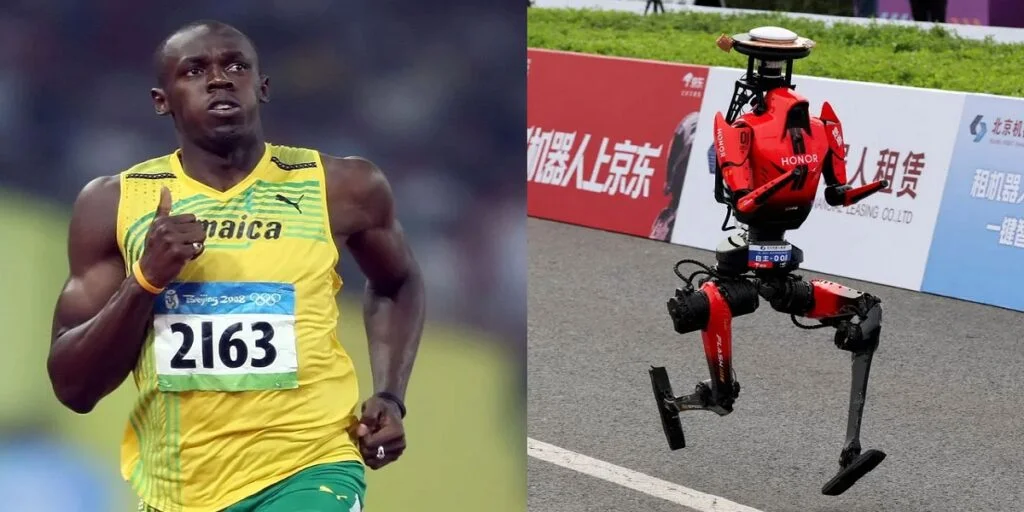
A Chinese robot has surpassed the human world record for the 100-meter dash. This feat was achieved by a humanoid robot developed by the Chinese company Tianzhuo. According to Chinese media reports, the robot set a new record by completing the 100-meter race in just 9.39 seconds during the preliminary heat of the second World Humanoid Robot Games held in Beijing. In doing so, the robot outperformed the human world record for the 100-meter sprint. Notably, this time is faster than Usain Bolt’s 100-meter world record of 9.58 seconds, set at the 2009 World Athletics Championships in Berlin.
Fierce Competition Among Robots from the Start
Three humanoid robots competed in the preliminary race held on Saturday evening at Beijing’s “Ice Ribbon” stadium. As soon as the starting signal was given, all three robots surged forward. Footage from CCTV News shows the robots developed by the Tianzhuo team and the Wind-Fire Lightning team running in close proximity right from the start. As the race progressed, the robots’ stride speed increased, and their arms began moving back and forth more rapidly.
Tianzhuo Team’s Robot Takes the Lead
Ultimately, the humanoid robot developed by the Tianzhuo team crossed the finish line first, leading by a margin of approximately one robot’s length.
It completed the 100-meter distance in 9.39 seconds. This performance not only surpassed the record from the previous World Humanoid Robot Games but also beat Usain Bolt’s human world record of 9.58 seconds. However, this achievement by the robot does not alter the official human world record; it is a performance recorded within a separate category for humanoid robots. Tremendous Improvement in Speed Within a Year
At last year’s World Humanoid Robot Games, the best time recorded in the 100-meter race was 21.50 seconds. Now, just a year later, that time has dropped to 9.39 seconds, marking a rapid improvement in the running capabilities of humanoid robots. According to reports, all eyes are now on the competition’s final; given the swift pace at which the robots’ running speed has increased, even better times are expected in the final round.

