


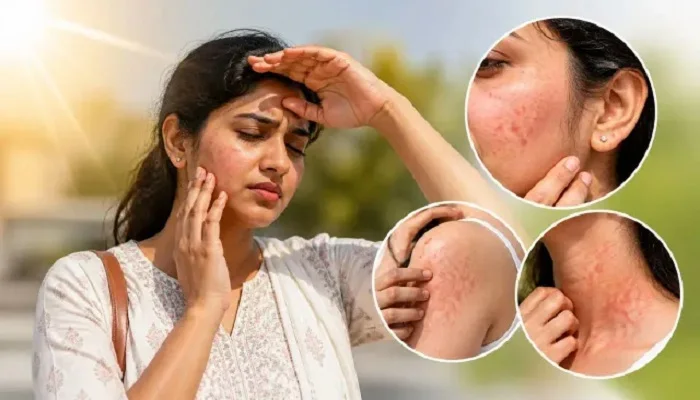
New Delhi: Some people experience more than just the usual discomfort when stepping out into the sun; it is not merely about sweating, as their skin reacts in a distinct way. If you notice that exposure to sunlight causes more than just mild irritation, do not ignore it. These are signs of a sun allergy, indicating that extra precautions are needed when going outdoors. Let us explore sun-induced skin allergies in detail:
What is Polymorphous Light Eruption?
Polymorphous Light Eruption is an allergic reaction of the skin triggered by exposure to the sun’s ultraviolet (UV) rays. This reaction does not occur immediately; instead, symptoms appear a few hours or days after exposure. A specific pattern is observed in individuals with this allergy: when the skin is exposed to sunlight, their immune system mistakenly identifies certain molecules formed within the skin as harmful. Consequently, the body mounts a reaction against them, leading to itchy red rashes on the skin.
Symptoms and Risk Factors
Symptoms of Polymorphous Light Eruption typically appear on the arms, chest, neck, legs, and back:
Small, raised bumps
Itchy red or white hives
Eczema-like patches
Blisters
Redness and intense itching around the bumps
Women aged 20–40 with a history of sun-sensitive skin
How to manage Polymorphous Light Eruption?
This skin allergy is most likely to occur following sun exposure between 11 AM and 3 PM, and it often resolves on its own. Several measures can help prevent the allergy:
Use high-SPF, broad-spectrum sunscreen
Wear full-sleeved clothing when stepping out in the sun
Phototherapy (exposure to natural or artificial UV light)
When should you see a doctor? Polymorphous light eruption is a common allergic reaction that does not require treatment; however, there are certain situations where immediate medical advice is needed. These include a skin rash accompanied by painful bumps and fever. Such symptoms could indicate a serious skin condition.

