


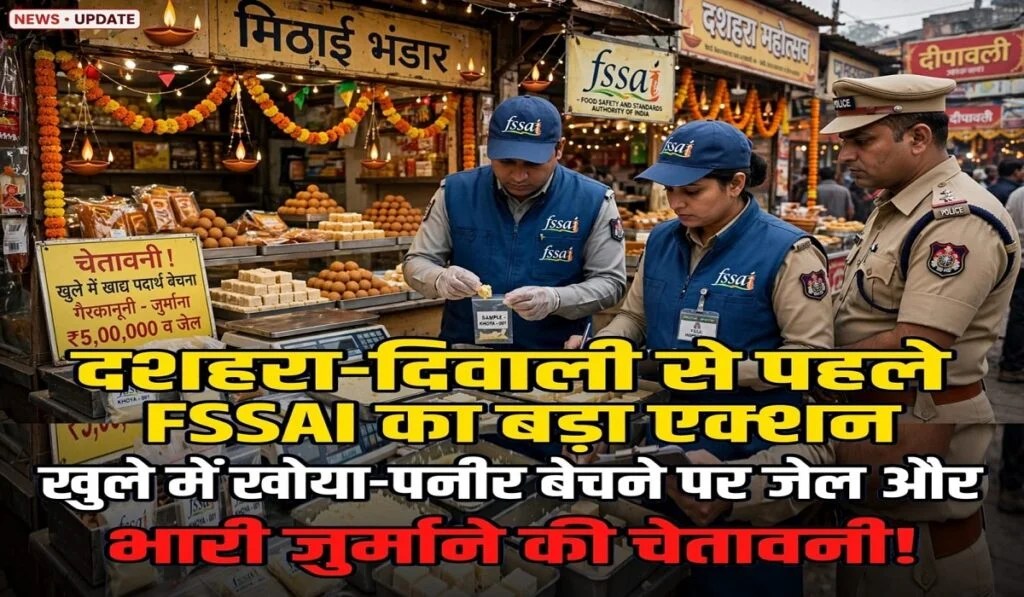
FSSAI Guidelines: Ahead of festivals like Dussehra, Karwa Chauth, and Diwali, the strict stance taken by the Food Safety and Standards Authority of India (FSSAI) regarding the quality and hygiene of food products has become a subject of discussion. It is mandatory to adhere to prescribed standards for the storage, packaging, and transportation of perishable food items such as khoya (milk solids), paneer (cottage cheese), raw meat, and fish. Legal action may be initiated against food business operators and transporters found to be in violation of these regulations.
Why are food safety regulations necessary?
According to FSSAI guidelines, perishable food items like khoya, paneer, raw meat, and fish must be kept at appropriate temperatures and under hygienic conditions. Failure to maintain the prescribed temperature can lead to the growth of harmful bacteria, thereby increasing the risk of foodborne illnesses.
Therefore, it is essential to maintain hygiene throughout the procurement, storage, transportation, and sale of food products. Furthermore, these items must be protected from dust, moisture, insects, and potential contamination from other food products.
Regulations for transportation and packaging
For the safe transport of food products, it is mandatory to use clean and suitable vehicles. Products such as khoya and paneer must be covered properly during transit to protect them from dust and dirt. It is also crucial to maintain the specific temperature required for perishable food items, depending on their nature.
Packaging materials that come into contact with food must be safe and compliant with established standards. It is essential to avoid any materials that could contaminate the food products.
Additionally, food business operators must maintain records of purchase and sale invoices, supply chain details, and other relevant documentation, so that the source and transportation history of the products can be verified if necessary.
Penalties and legal action for violations
Under the Food Safety and Standards Act, 2006, provisions exist for penalties in the event of food safety violations, with the severity of the punishment depending on the nature and gravity of the offense. Action can be taken against the sale of unsafe or contaminated food products, as well as other violations, under the relevant legal provisions.
However, a uniform penalty—such as six months of imprisonment and a fine of several lakh rupees—does not apply to every case. The nature of the punishment and the amount of the fine depend on the category of the violation and the specific legal provisions involved. Therefore, business operators should familiarize themselves with the applicable regulations and ensure compliance.
Monitoring food quality during festivals
During festive seasons, the demand for sweets and dairy products increases. In such times, inspections and monitoring by food safety officials play a crucial role in curbing adulteration, as well as unhygienic practices related to the storage and transportation of food items.
Products that fail to meet food safety standards may be subject to action in accordance with the law. Consumers, too, should be mindful of quality, hygiene, and the reliability of the source when purchasing items such as khoya (milk solids), paneer (cottage cheese), and other food products.
Note: To verify instructions issued in specific FSSAI advisories, details regarding inspection drives, or claims concerning penalties, it is essential to consult the relevant official orders.

