


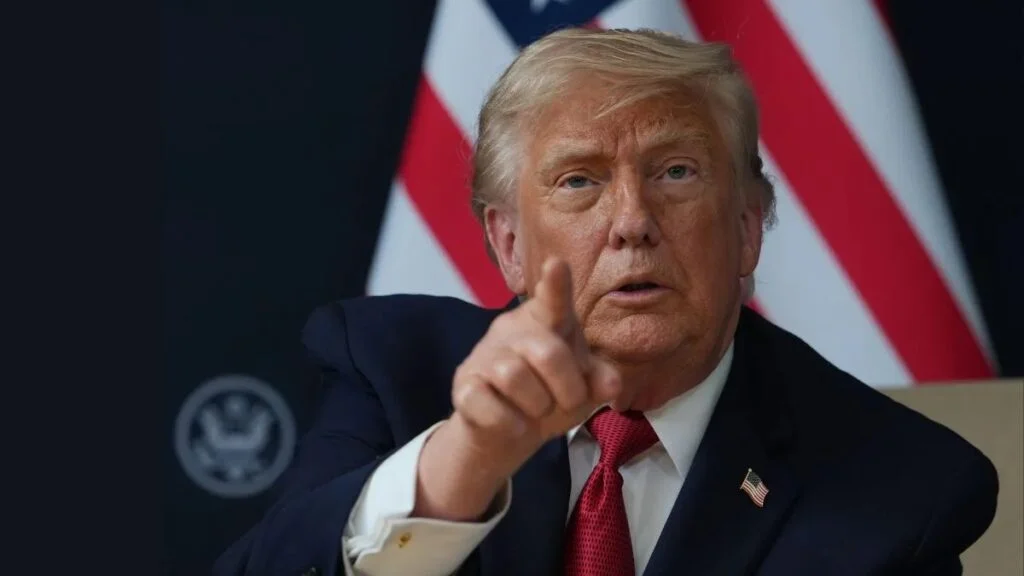
Tensions between the United States and Iran appear to be escalating once again. US President Donald Trump has issued a warning to Tehran, suggesting that if Iran remains unwilling to reach an agreement, the US could launch another major military operation against it. Just hours before Trump’s statement, a US envoy had expressed concerns that significant attacks on Iran could take place as early as this weekend.
During a rally in Florida on Friday, Trump remarked, “We could have another ‘Epic Fury’.” This is the same name previously used for a US military operation against Iran. Following Trump’s warning, Iranian officials have adopted a firm stance, threatening retaliatory action. Iran has indicated that if the US and Israel launch further attacks, it could target the undersea internet cables running through the Gulf region.
What is Iran’s retaliatory strategy?
Iran claims to have devised a strategy to respond in the event of potential attacks. According to Yadollah Javani, the deputy head for political affairs of the Iranian Revolutionary Guards, if Iran’s infrastructure is targeted, Tehran could strike seven major undersea internet cables located beneath the Strait of Hormuz.
Javani warned that an escalation in the conflict could lead to damage ranging from undersea communication networks to military installations. He asserted that Iran has access to these cables and possesses the capability to destroy them. However, these claims and the possibility of such an action remain to be independently verified.
What would be the global impact of severing these internet cables?
Undersea fiber-optic cables are considered the backbone of the global internet infrastructure. Approximately 99 percent of the world’s intercontinental data traffic is transmitted through these cables. In such a scenario, if several key cables in the Gulf region were to be damaged, the impact would not be limited to regional internet services alone.
A cable severance could lead to slower internet speeds and disruptions in data transfer. Furthermore, international financial transactions, online commerce, cloud services, and digital communications could also be affected.
Repairing these cables during war-like conditions could prove highly challenging. Security risks in the maritime domain, rising insurance costs, and delays in obtaining authorization for repair vessels could all hinder the restoration of services.
Uncertainty Grows Following Trump’s Statements
Before threatening fresh strikes against Iran, Trump remarked that the United States could bring the war to an end very quickly. However, he also questioned whether the conflict should be concluded immediately or allowed to gradually subside.
Trump stated that the U.S. possesses the capability to end the war, but a decision must be made regarding how exactly to bring it to a close. He further claimed that the U.S. is receiving everything it requires, and that oil supplies continue to flow through the Strait of Hormuz.
Amidst these statements from Trump, uncertainty persists regarding a potential agreement between the United States and Iran. While Washington has hinted at the possibility of military action, Tehran has warned that it would retaliate if its infrastructure were attacked. Consequently, the international community will be closely monitoring the stances of both nations in the coming days.

