


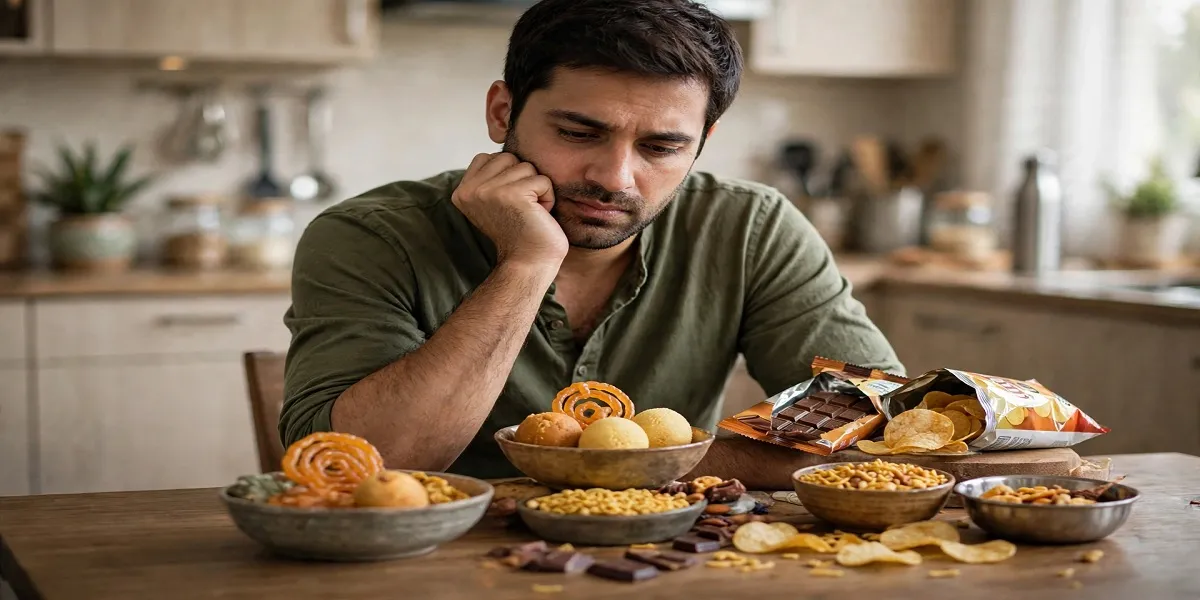
Lifestyle Desk. It is common to feel hungry between meals or to crave something savory or sweet. In such situations, most people turn to snacks—some prefer savory treats, while others opt for chocolate, cake, or crunchy items. But did you know that your snacking habits might be linked to your physical and mental state? There can be various reasons behind cravings for specific types of food. It is important to understand the signals your body is sending and to identify better, healthier snacking options.
Why do we crave sweet, savory, or chocolatey foods?
Cravings for sweets: When your body feels low on energy or fatigued, you may often find yourself craving something sweet.
Cravings for savory foods: Stress, dehydration, or specific eating habits can trigger a desire for savory snacks.
Cravings for chocolate: Mood swings, stress, and hormonal fluctuations can increase the desire for chocolate.
Cravings for crunchy foods: You might feel the urge to eat something crunchy when working continuously, feeling bored, or experiencing stress.
Late-night snacking: This can be caused by not eating enough throughout the day, irregular eating patterns, or a disrupted sleep routine.
Choose these healthy options for snacking
If you frequently feel the urge to snack, consider replacing unhealthy options with more nutritious choices.
Crunchy snacks: Raw vegetables, apples, nuts, seeds, and whole-grain crackers are excellent choices.
Creamy foods: Yogurt, paneer (cottage cheese), hummus, and avocado make for great snack options.
Cravings for sweets: You can opt for sliced fruits or a limited amount of dark chocolate. Savory snacks: Including roasted chickpeas, black chickpeas, or nuts can be a good choice.
How much should you snack?
It is important to be mindful of portion sizes when snacking. Aim to eat just enough to satisfy your hunger between two main meals, without affecting your appetite for the next meal. As a general guideline, a snack can range from 150 to 250 calories. However, individual needs may vary based on age, activity level, and dietary habits.
Do not ignore frequent cravings
Cravings for specific foods can stem from various physical, mental, or lifestyle-related factors, including:
Nutrient deficiencies in the body
Fluctuations in blood sugar levels
Hormonal changes
Stress or emotional factors
Lack of adequate sleep
Dehydration
Therefore, it is not always accurate to assume that a craving is simply hunger. It is important to pay attention to your diet, sleep patterns, and daily routine.
When to seek expert advice
If you experience persistent, intense cravings for a specific food, especially when accompanied by other health concerns, it is best to consult an expert. Additionally, if frequent eating is driven by stress or emotional factors, seeking support from a mental health professional may be helpful.

