


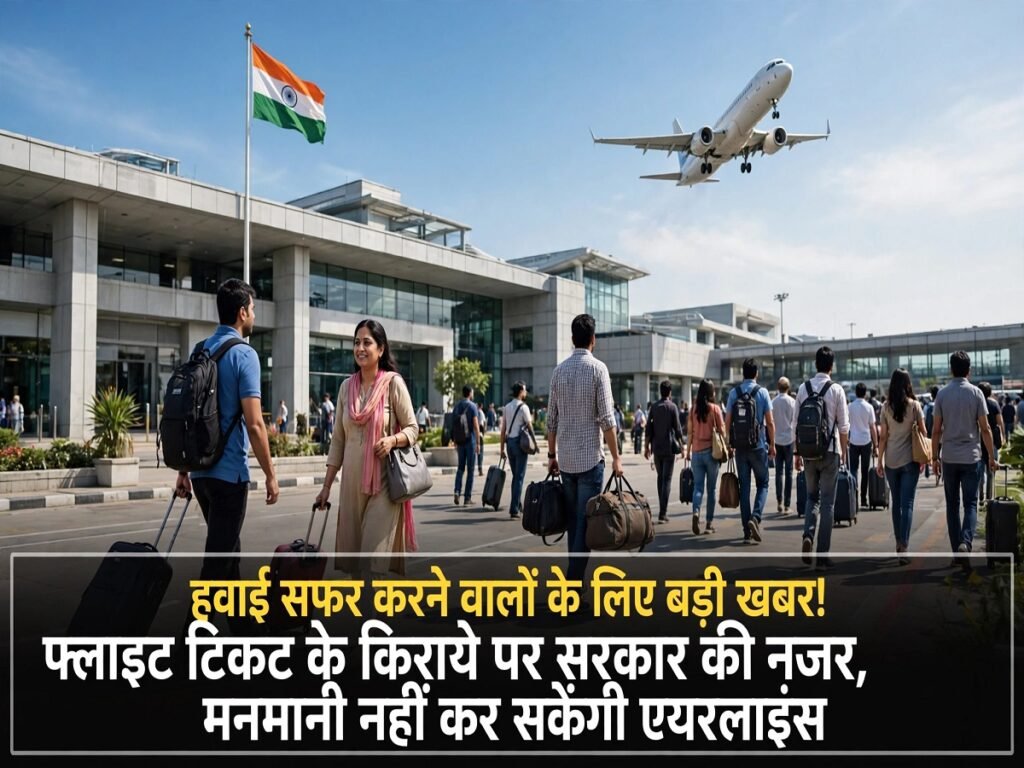
New Delhi: There is welcome news for air travelers. The central government has notified the ‘Aircraft Rules, 2026.’ Under these new regulations, the government will be able to intervene directly in airfares during extraordinary circumstances. This means that if airlines arbitrarily raise ticket prices during an emergency, the government can issue directives to regulate them.
The primary objective of these new rules is to enhance transparency in airfares and ensure that passengers are clearly informed about all charges incurred during the ticket-booking process. Amid rising operational costs and fuel prices, this step has been taken with the interests of passengers in mind. Let’s look at what will change for air travelers once these new rules come into effect.
Government intervention in airfares during emergencies
Under Rule 192 of the Aircraft Rules, 2026, the government is empowered to regulate airfares during extraordinary circumstances. If the government deems it necessary to intervene in ticket pricing to protect the interests of the general public in a specific situation, it may issue written directives to the airlines.
However, any directives issued by the government will be tailored to the specific circumstances and will remain in effect only for a defined period. This will help curb arbitrary pricing by airlines during emergency situations.
Airlines must disclose the basis for fare determination
According to the new rules, airlines operating scheduled flights must take into account operational costs and other relevant factors when determining ticket prices. Furthermore, airlines are required to provide comprehensive information regarding their fares to the Directorate General of Civil Aviation (DGCA).
Airlines must also make fare information publicly available on their official websites and other digital platforms. The DGCA will monitor these fares to ensure a transparent system for passengers. Breakdown of All Charges Must Be Displayed at the Time of Ticket Booking
The new regulations place a strong emphasis on making the ticket-booking process more transparent. Airlines are now required to provide a detailed breakdown of all charges alongside the total ticket price.
This includes, primarily:
The base fare (the original cost of the ticket).
Taxes payable to the government.
Service charges levied by the airline.
Cancellation fees.
Terms and conditions related to refunds.
Other applicable fees and additional charges.
This system will allow passengers to know the total amount they are required to pay before finalizing their booking. It will also help mitigate issues related to hidden charges.
Airlines Have Determined Their Own Fares Since 1994
In India, the government-regulated system for setting airfares was abolished in 1994. Since then, airlines have determined ticket prices based on market demand and operational conditions.
According to the Ministry of Civil Aviation, several factors—such as passenger demand, operational costs, and the timing of the booking—play a crucial role in determining airfares. This is why ticket prices for the same flight can vary depending on when they are booked.
How Does the New Provision Differ from the Previous Rules?
Under Rule 135(4) of the earlier Aircraft Rules, 1937, the Directorate General of Civil Aviation (DGCA) already held the authority to issue directives regarding airfares when necessary. The previous provision specifically addressed scenarios such as excessive or predatory pricing and the dominance of certain carriers in the market.
In contrast, Rule 192 of the new Indian Aircraft Rules, 2026, does not explicitly list these specific grounds. Instead, it grants the government the authority to intervene in airfares under extraordinary circumstances, with the primary objective of safeguarding the interests of the general public. Overall, the new regulations mark a shift towards monitoring airfares and increasing transparency in ticket booking. This will allow passengers to be informed in advance about the actual price of a ticket and all the charges applicable to it.

