


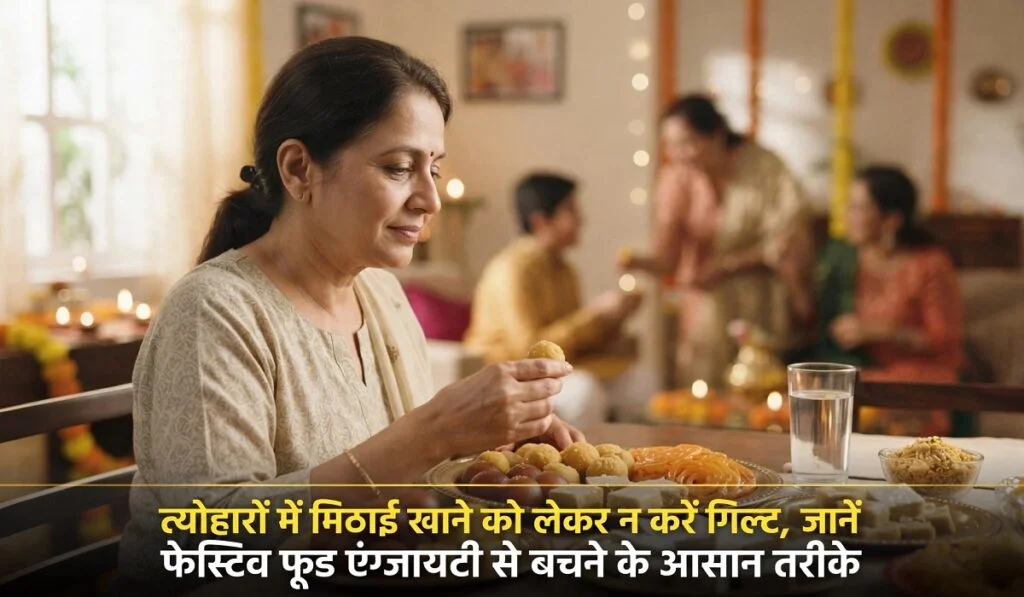
During festivals like Diwali, homes are often filled with an abundance of sweets and delicacies. In the pursuit of enjoying these treats, we frequently overeat, only to regret it later. Some people try to compensate by skipping meals beforehand to “make room” for sweets, or by fasting after the festival. However, such fear and stress surrounding food can actually be detrimental to one’s health.
What is “festive food anxiety”?
The stress related to eating and food consumption during festivals is known as “festive food anxiety.” It manifests in behaviors such as obsessively counting calories, fearing the consumption of sweets, avoiding social gatherings or feasts, and skipping meals in anticipation of overeating.
Often, people attempt to “make up” for overeating by fasting or drastically reducing their calorie intake after the festival. This can be particularly stressful for individuals managing diabetes or those trying to lose weight. Furthermore, many people feel uncomfortable or awkward when they have to decline food offered by hosts.
Unhealthy attitudes toward food can backfire
Excessive stress regarding food can often prove counterproductive. If you remain hungry from the morning of a festival, you are likely to experience intense hunger later, which may lead to overeating.
It is important to understand that consuming a sweet treat on one occasion does not immediately alter your HbA1c levels. An HbA1c test reflects your average blood sugar levels over the preceding three months. That said, consistently consuming large quantities of sweets and sugary dishes—even after the festival—can indeed impact your blood sugar and overall health.
How can you avoid “festive food anxiety”?
Maintain your regular eating routine during the festival. Start your day with a protein-rich breakfast to help keep your appetite in check. Pay attention to when and how much you eat, but avoid imposing overly rigid or excessive restrictions on yourself. When eating, prioritize options rich in protein and fiber, such as lentils (dal), paneer, and vegetables. You can have dessert afterward. According to some studies, consuming vegetables and protein before carbohydrates can help keep blood sugar levels under control.
Additionally, taking a 10-minute walk after each meal can be beneficial. Individuals with diabetes should exercise caution regarding their diet and physical activity, in accordance with their specific health condition.
When should you be concerned?
If anxiety about food leads you to withdraw from social interactions, eat in secret, or attempt to “compensate” for overeating—by fasting for days, inducing vomiting, or engaging in excessive exercise—do not ignore these signs.
In such cases, it is essential to seek advice from a professional. Remember, you do not need to starve yourself or feel guilty after eating to enjoy the festivities. You can fully enjoy the celebrations by maintaining a balanced diet and a healthy daily routine.

