


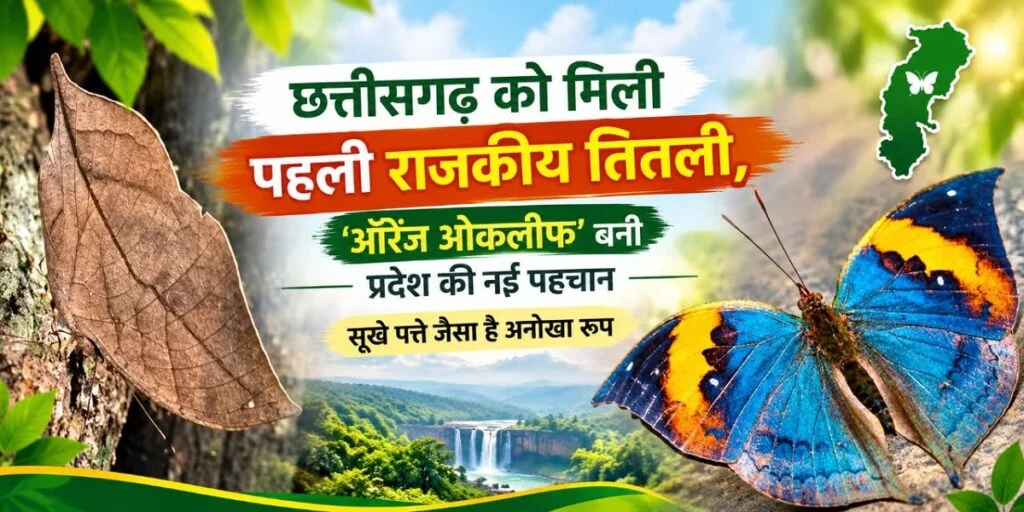
Raipur: Chhattisgarh’s rich biodiversity has gained a new identity. The ‘Orange Oakleaf’ butterfly, renowned for its unique camouflage and striking colors, has been designated as the state’s first official state butterfly. This selection was approved during a high-level meeting of the State Wildlife Board. This initiative will not only help recognize the state’s natural heritage but also foster greater awareness regarding wildlife conservation.
Resembles a dry leaf when its wings are closed
The Orange Oakleaf butterfly—also known as the ‘Dead Leaf’ or ‘Indian Oakleaf’—is most notable for its unique appearance. When it closes its wings, their color, shape, and markings make it look exactly like a dry, withered leaf.
Its natural ability to blend in among dry leaves in the forest makes it difficult to spot, which helps it evade birds and other predators. However, the moment it spreads its wings, vibrant shades of orange and deep blue are revealed.
Selected through an online public poll
The Chhattisgarh Department of Forest and Climate Change ensured public participation in the selection of the state butterfly. An online poll was conducted via a Google Form from July 24 to August 31.
Researchers, wildlife enthusiasts, and the general public from across the state took part in this process. Other butterflies, such as the ‘Common Banded Peacock’ and the ‘Spot Swordtail,’ were also in the running. Ultimately, following strong public support and the recommendation of experts, the Orange Oakleaf was chosen as the state butterfly.
Obtains nutrients from fruit and soil, in addition to flower nectar
The diet of the Orange Oakleaf butterfly is not limited to flower nectar; it also derives nutrition from the juices of ripe fruits. Additionally, it absorbs mineral salts from damp soil. This process is known as ‘mud-puddling.’
A Boost for Wildlife Conservation
The selection of the ‘Orange Oakleaf’ as the first state butterfly of Chhattisgarh marks a significant step toward giving new recognition to the state’s biodiversity and natural heritage. It is expected to foster greater public interest in butterflies, their natural habitats, and environmental conservation. Furthermore, it could help bring wider recognition to the state’s unique wildlife wealth.

