


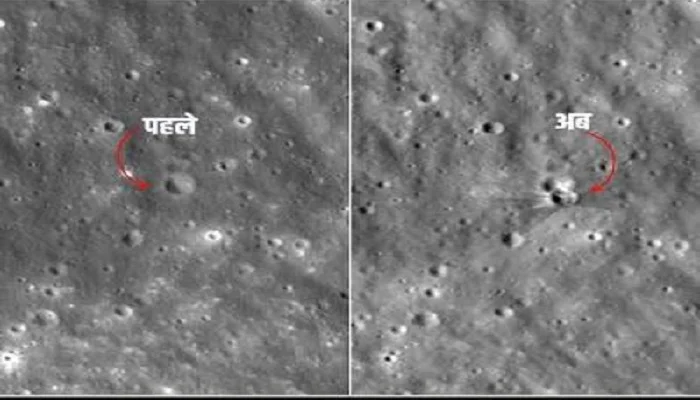
New, high-definition images have emerged of the crater formed when a massive SpaceX rocket crashed into the Moon on August 5. NASA’s Lunar Reconnaissance Orbiter (LRO) captured the crater from various angles. The images clearly show the impact marks on the lunar surface and the light and dark streaks radiating from the site. Taken on August 11 and 12, these images clearly reveal the crater created by the impact of the upper stage of the SpaceX Falcon 9 rocket.
60-Foot-Wide Crater
NASA scientists stated that the crater is approximately 60 feet (18 meters) wide and less than 10 feet deep. Scientists estimated these dimensions based on the length of the crater’s shadow. It is worth noting that the Falcon 9 rocket was launched in January 2025, carrying Firefly Aerospace’s Blue Ghost-1 lunar lander. This was a private mission that successfully achieved a soft landing on the Moon.
Why Did It Take NASA So Long?
NASA’s LRO has been operational since 2009. It orbits the Moon from pole to pole every two hours while the Moon rotates beneath it. NASA explained that capturing this image was not easy; to photograph a specific location on the Moon, the spacecraft must wait until that spot comes into the camera’s field of view. In this instance, that process took six days. Additionally, the spacecraft had to be tilted at a precise angle so that its camera would be aimed directly at the crater as it passed about 60 miles above the lunar surface. NASA noted that timing was also a major challenge. Had the camera captured the image just 10 seconds earlier or later, the crater would have appeared about 10 miles away from its actual location.
Images taken from various angles clearly revealed distinct features surrounding the crater, including light and dark streaks radiating outwards. NASA explained that the dark streaks consist of surface dust and rock fragments. Over time, these materials have been altered by solar wind, cosmic rays from the galaxy, and impacts from micrometeoroids. During the impact event, this material was ejected from a depth of approximately 1.5 feet below the surface and scattered across the surrounding area.

