


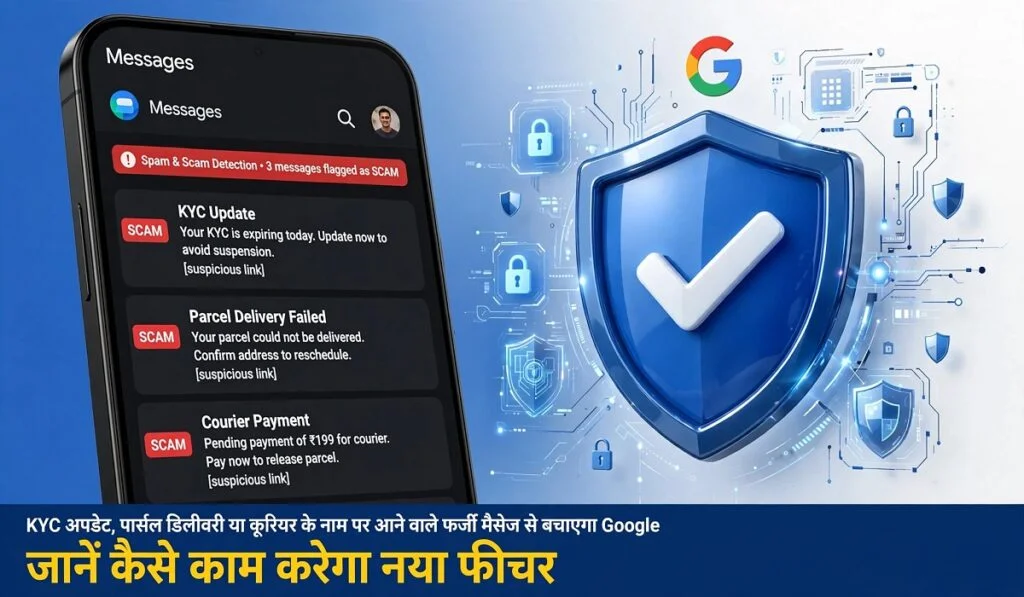
If you receive messages on your phone regarding bank KYC updates, parcel deliveries, or electricity bill payments, Google’s new security feature could prove helpful. Cybercriminals often use such messages to trap individuals, attempting to steal OTPs, banking details, or money. In this context, the new ‘Enhanced Protection’ feature in Google Messages helps identify suspicious conversations and signs of potential fraud.
What is the ‘Enhanced Protection’ feature in Google Messages?
Google Messages is the app used on Android phones for sending and receiving SMS and RCS messages. It already includes built-in security features to protect users from spam and suspicious messages. The ‘Enhanced Protection’ feature aims to further strengthen these existing safeguards.
This feature is particularly useful in scenarios where cybercriminals reach out from unknown numbers, gradually gaining the user’s trust before soliciting personal information or money.
Identifying signs of fraud with the help of Gemini AI
A key aspect of the ‘Enhanced Protection’ feature is its ability to understand the context of a conversation, rather than relying solely on the text of an individual message. It leverages Google’s cloud-based Gemini AI model to achieve this.
For instance, a scammer might pose as a courier company employee, claiming that a parcel could not be delivered, and then provide a link to pay a small fee. Similarly, fraudsters may attempt to deceive users by citing issues like the need for a bank KYC update or an outstanding electricity bill.
If the feature detects signs of fraud within such a conversation, it can alert the user—giving them a chance to exercise caution before clicking on suspicious links or making hasty payments.
Will this completely put an end to cyber fraud?
While security features like ‘Enhanced Protection’ can help reduce the risk of cyber fraud, they cannot guarantee the detection of every single fraudulent message. Therefore, it is essential to avoid clicking on links received from unknown numbers, sharing OTPs, or providing banking information at someone else’s request.
If any message—purportedly from a bank, courier company, or electricity department—requests payment or personal information, verify it through the official channels of the respective organization. While this Google feature can provide an extra layer of security, remaining vigilant is equally important to protect yourself from online fraud.

