


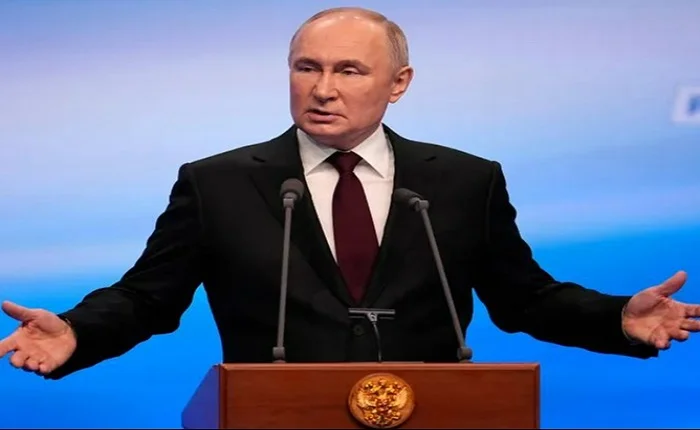
Japan has lodged a strong protest against Russian President Vladimir Putin’s visit to the disputed Iturup Island. Japanese Prime Minister Sanae Takaichi described Putin’s visit on Thursday as “absolutely unacceptable.” She stated that the Russian President’s visit causes serious damage to Japan-Russia relations and further fuels public resentment in Japan against Russia. According to Russia’s state news agency TASS, Putin visited Iturup Island on Thursday. In Japan, this island is known as Etorofu. It is one of the four disputed islands in the Southern Kuril chain that are controlled by Russia but claimed by Japan.
Putin visits the disputed island for the first time
Putin’s visit to Iturup is significant because it marks the first time he has set foot on any of the four islands controlled by Russia but claimed by Japan. Citing video footage from the Kremlin’s press service, TASS reported that Putin visited the Yasny fish processing plant on Iturup. Japan states that it had repeatedly requested Russia to refrain from presidential-level visits to these islands. According to Prime Minister Takaichi, Putin had expressed his intention to visit the area in January 2024; since then, Tokyo has consistently urged Moscow not to take such a step.
‘It goes against Japan’s stance’
In an official statement, Prime Minister Takaichi said that Japan considers Iturup Island to be its inherent territory under both historical and international law. Therefore, the visit by the Russian President runs completely counter to Japan’s long-standing position. Takaichi added that the visit has hurt the sentiments of the Japanese people and that the move is “absolutely intolerable.”
What is the Kuril Islands dispute?
In Japan, the Kuril Islands are referred to as the “Northern Territories.” This dispute concerns four islands: Iturup (or Etorofu), Kunashir (or Kunashiri), Shikotan, and the Habomai group. These islands are situated between Japan’s Hokkaido and Russia’s Kamchatka Peninsula. Both Japan and Russia lay claim to them. Japan maintains that, under the 1855 Treaty of Shimoda, these islands were historically recognized as Japanese territory; however, Soviet troops seized them in August 1945, during the final days of World War II. Subsequently, approximately 17,000 Japanese residents were expelled from the area.

