


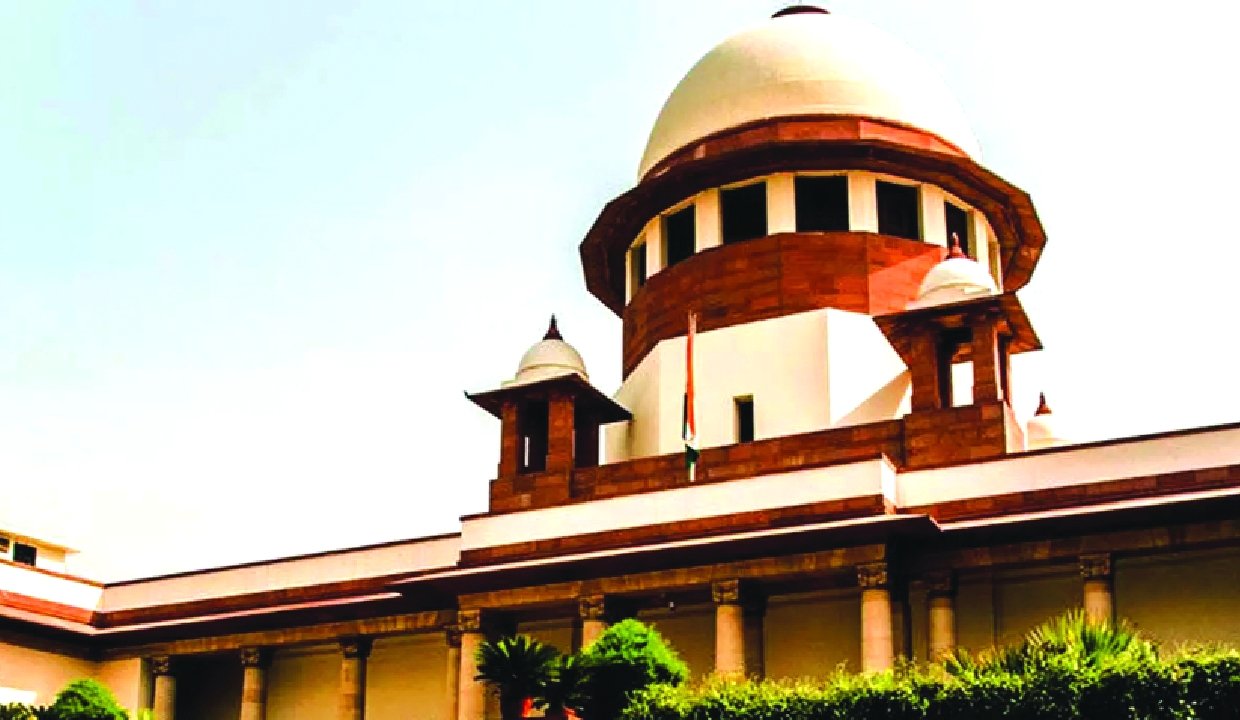
In an unprecedented, landmark action, a Bench comprising of Chief Justice Surya Kant, J Bagchi and J Pancholi, on 23rd May, 2026, took, suo motu, cognizance in Twisha Sharma’s alleged suicide case. As per Section 194 of the Bhartiya Nagrik Suraksha Sanhita, 2023, whenever Police receive information regarding committal of suicide by a person, animal, machinery or accident and has died under suspicious circumstances…. then they are required to immediately give information to the nearest Magistrate empowered to hold inquest.
It was alleged that in the evening of 12th May, 2026, Twisha Sharma hanged herself and committed suicide. In spite of the fact that her mother-in-law, Giribala, who had served as District & Sessions Judge, and presumably, aware of the legal position, did not report the unnatural death to the nearest empowered Magistrate, but instead supervise the removal of the dead body. The local police started investigation.
It was found that after the incident, Giribala made about 46 calls to various influential persons including, Senior Police Officials, Judicial Officers, CCTV Technicians, etc. Her son (husband of deceased) absconded. The first post-mortem was carried out in a hurried manner in the morning of 13th May, 2026. The post mortem report revealed several discrepancies, including that of height of the deceased and ante mortem injuries, etc., which led to further suspicion and the family members demanded for second post mortem report, which was declined.
However, in an appeal, the High Court of Madhya Pradesh ordered for conducting of second post-mortem. All the above circumstances shook the conscience of the people. Looking into the seriousness of the issue and the cry for justice, the Government of Madhya Pradesh ordered CBI investigation.
In the matter of Babu Bhai Vs State of Gujarat, 2010 (XII) SCC 254, the Supreme Court has held that investigation into a criminal offence must be free from objectionable features or infirmities which may legitimately lead to a grievance on part of the accused that the investigation was unfair or carried out with an ulterior motive.
It further held that “not only fair trial but fair investigation is also part of Constitutional rights guaranteed under Articles 20 and 21 of the Constitution of India. Therefore, investigation must be fair, transparent and judicious as it is the minimum requirement of rule of law.” In Twisha Sharma’s case there were overwhelmings circumstantial material, such as, Giribala (Former District and Sessions Judge), involved in removing the dead body from the scene of occurrence, not informing nearest empowered Magistrate as required u/s 194 of BNSS, 2023, the Local Police hurriedly getting the post mortem done, the first post mortem report having several major discrepancies, Giribala admittedly calling 46 influential persons. All these circumstances were grievous.
In this background, without going into the merits of the case, a three member bench led by Justice Surya Kant, J Bagchi and J Pancholi took a salutary action of taking suo motu, cognizance of case and in the shortest possible time, and gave balanced directions ie (i) the accused persons, witnesses, lawyers and family members should avoid from giving statements to media or conducting “Media Trial”. (ii) The parties were directed to place the material before the Investigating Agency. By issuing the directions, the Supreme Court has ensured that the Fundamental Right of Citizen as contained under Article 21 of the Constitution of India, is supreme and protected. The trial by media is not done. The directions given by the Supreme Court were need of the hour for keeping the faith of the Citizens in the Constitution of India and the Administration of the criminal justice system.

