


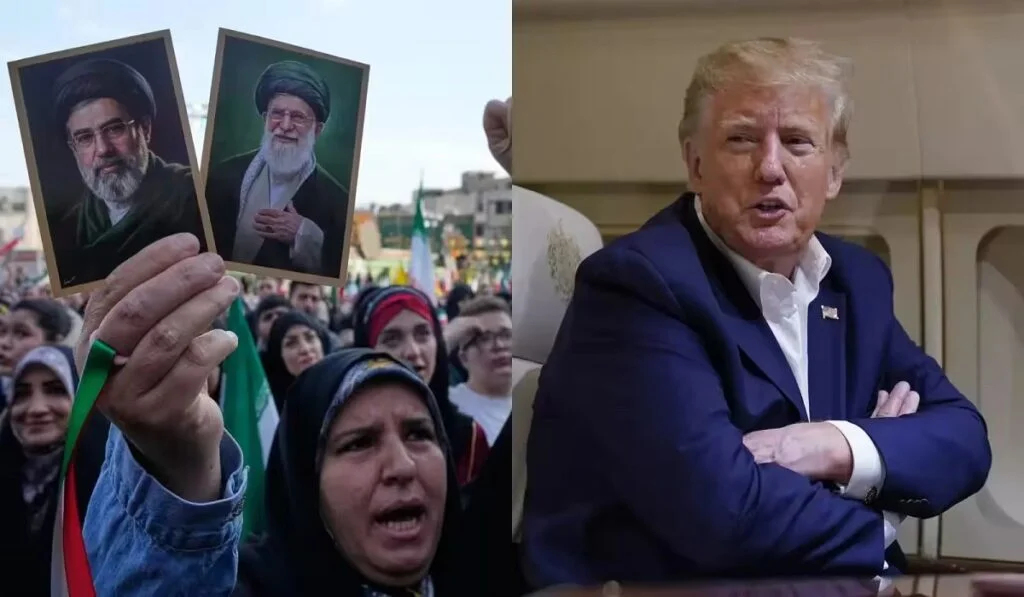
US President Donald Trump expects the ongoing conflict with Iran to end “very soon.” Responding to questions from journalists regarding global and domestic energy prices, he said, “I initiated very important talks with the Islamic Republic of Iran; these talks were crucial because they must not possess nuclear weapons… I think this conflict will end soon; I don’t believe they can drag it out for much longer…”
Situation in Hormuz turns critical again
After a brief period of de-escalation, the situation in the Strait of Hormuz has once again become critical. Sounds of explosions have been heard near Iran’s Qeshm Island. Iranian state media reports that these explosions are linked to operations being conducted against enemy targets.
No shortage of weapons for the US
Dismissing claims of an ammunition shortage, Trump stated that the US possesses an “unlimited stockpile” of weapons. Speaking to reporters in Washington, he said the country is in a “very good position” and holds “vast quantities of ammunition.”
Statement by the Iranian President
Iranian President Masoud Pezeshkian states that the US has exerted “maximum” economic pressure. He noted that Iran loses approximately 230 million cubic meters of gas daily due to attacks by the US and Israel.
Saudi Crown Prince and France hold talks
According to the Saudi Press Agency (SPA), Saudi Crown Prince Mohammed bin Salman discussed the situation in the Middle East and freedom of navigation in the Red Sea during a phone call with French President Emmanuel Macron. The agency reported that following attacks on Saudi targets by the Iran-backed Houthi group in Yemen, the two leaders discussed joint efforts to enhance regional stability and ensure security.
Will Saudi Arabia also join the war? According to media reports, Saudi Arabia is bracing for potential coordinated attacks by Iran-backed groups. Intelligence reports indicate that Yemen’s Houthis and Iraqi militias could target Saudi Arabia under the supervision of Iran’s Islamic Revolutionary Guard Corps (IRGC). A senior Saudi official told the media that Riyadh has received intelligence from Saudi, US, and other regional sources suggesting that civilian and economic targets—including energy infrastructure, ports, and airports—could be attacked.

