


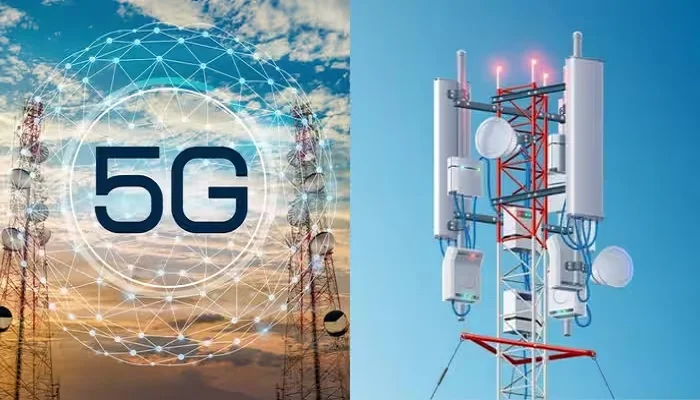
There is welcome news for telecom operators like Jio and Airtel and their customers. The Government of India has doubled the prescribed limit for radiation emitted by 5G radios. This move by the government will significantly assist Indian telecom operators in rapidly expanding their 5G network coverage. Telecom companies in the country had long been demanding an increase in the Electromagnetic Field (EMF) limits for mobile networks. Previously, the EMF limits enforced in India were considerably lower than global standards, which directly impacted the network coverage experience for users. With the EMF limits now doubled, users will enjoy a much better network experience from existing towers. Furthermore, companies will be able to optimize their 5G networks without the need to install additional towers or incur significant extra capital expenditure (capex).
Limit Doubled
According to a report by Telecom Talk, under the revised regulations, the power limit for 5G Base Tower Stations (BTS) has been raised from the current 5 watts per square meter to 10 watts per square meter. This effectively means that network signals from a single BTS tower will now reach twice the distance compared to before. Consequently, users will see a marked improvement in indoor coverage—inside homes and buildings. Additionally, the overall cost of network expansion for telecom companies will decrease significantly.
Improved 5G Coverage
The telecom industry had long argued that the old EMF limits were hindering the delivery of adequate 5G coverage to users. With the number of 5G devices in the market rising rapidly, this change was considered essential. This new decision will be particularly beneficial for Vodafone Idea (Vi), enabling them to extend their 5G network to a larger user base with lower capital investment. Airtel and Jio will also derive direct benefits from this move; once these regulations come into effect, their existing users will experience significantly better network connectivity and speeds. This increased radiation limit will officially come into effect next month. The International Commission on Non-Ionizing Radiation Protection (ICNIRP) had recommended a power density of 10 watts per BTS, whereas the Government of India had previously capped it at 5 watts.

