


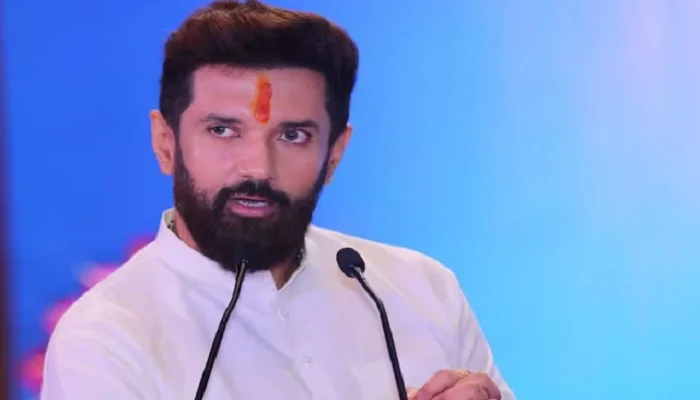
Raipur: Chirag Paswan, National President of the Lok Janshakti Party (LJP) and Union Minister, has signaled the party’s active entry into Chhattisgarh politics. Upon his arrival in Raipur on Sunday, Paswan received a rousing welcome from party workers at the airport, accompanied by the beating of drums. He had come to participate in the ‘Yuva Samvad’ (Youth Dialogue) program organized in the capital.
Speaking to the media, Chirag Paswan stated that the LJP’s state unit in Chhattisgarh would be formed soon. Following this, appointments would be made at various organizational levels, and work to strengthen the party at the grassroots level would commence. He also hinted at the party playing an active role in upcoming elections.
Emphasis on Engaging Youth in Politics
Chirag Paswan stated that engaging the youth of Chhattisgarh in politics is a priority for him. The ‘Yuva Samvad’ program was organized in Raipur with this very objective—to interact directly with young people and understand their issues and expectations.
Regarding the LJP’s participation in upcoming elections, Paswan said that the organization would be strengthened first, and a decision on contesting elections would be taken subsequently. He did not provide specific details at this stage regarding how many seats the party would contest.
What Did Chirag Say About an Alliance with the BJP?
When asked about a potential alliance with the Bharatiya Janata Party (BJP), Chirag Paswan said that a decision on this matter would be taken when the time is right. He noted that the opinion of the state unit regarding an alliance would also be given due importance. Paswan added that the LJP is working towards independently strengthening its organization in several states.
Views on the Election Commission and the SIR Process
Chirag Paswan offered a balanced response regarding questions raised about the Election Commission and the SIR process. He stated that if even the slightest doubt arises in the mind of an ordinary voter regarding the impartiality of the Election Commission, it is the Commission’s responsibility to restore public trust. Regarding the removal of names from the electoral roll under the SIR process, he stated that the individuals whose names were deleted were not merely ordinary voters. He remarked that had that been the case, a massive public agitation would have erupted on the streets over the issue.

