


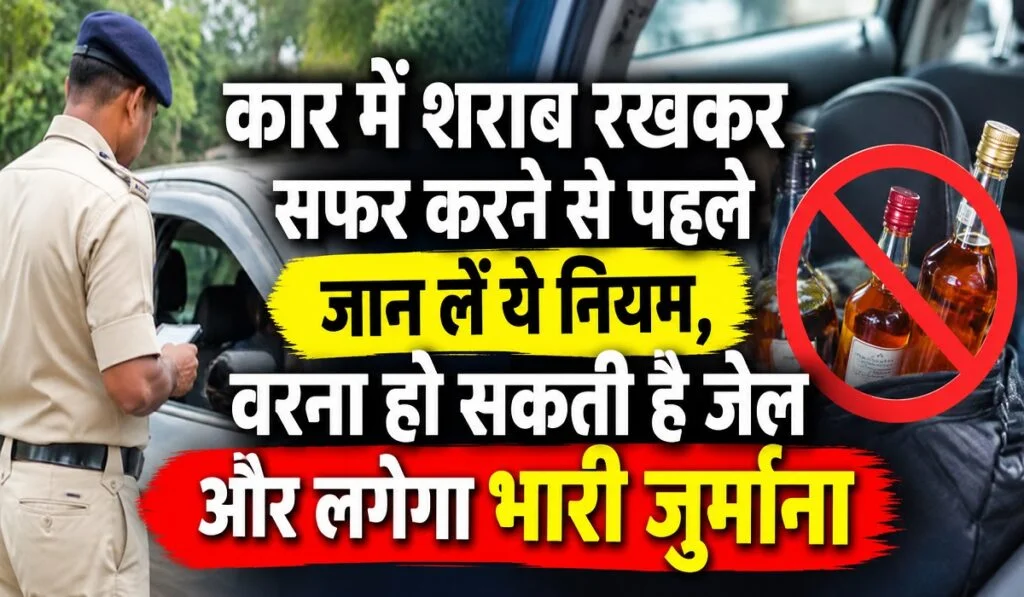
New Delhi: During festivals and holidays, many people travel between cities in their private cars. Often, they carry bottles of alcohol in their vehicles. However, are you aware that transporting alcohol in a private vehicle requires compliance with the regulations set by the Excise Department? Ignoring these rules can lead to heavy fines. In certain circumstances, it could even result in the seizure of your vehicle and imprisonment.
In India, regulations concerning alcohol are governed by the excise laws of individual states rather than the central government. Consequently, the rules regarding the possession and transport of alcohol can vary significantly from one state to another. Therefore, it is crucial to be well-informed about the excise regulations of your destination state before traveling there by car.
Know the rules before taking alcohol into another state
If you are traveling from one state to another in your private car, you must exercise particular caution when carrying alcohol. Many states prohibit bringing in alcohol from other states, while others may permit it, provided it is within a specified quantity and accompanied by a valid permit.
Simply having a sealed bottle of alcohol or a purchase receipt does not grant permission to transport it into another state. For instance, purchasing alcohol in Delhi or Haryana and bringing it into Uttar Pradesh could lead to legal action if it violates the excise laws of that state. Such consequences may include fines, the confiscation of the alcohol, and the seizure of the vehicle.
How much alcohol can you carry within your own state?
If you are traveling within the same state in your private car, the maximum permissible limit for carrying alcohol depends on the local excise regulations. These limits vary from state to state. Some states allow the possession and transport of alcohol only in limited quantities, while others may require a specific permit to do so. Therefore, it is incorrect to assume that one can easily carry 1.5 to 2 liters of alcohol in their car across the entire country. Before traveling, ensure you are informed about the specific limits and regulations of the state you are visiting or passing through.
Consequences of Carrying Alcohol in a ‘Dry State’
Some states in the country have imposed bans or strict controls on the sale and consumption of alcohol. These include Bihar, Gujarat, Nagaland, and Mizoram.
Transporting alcohol into these states without valid authorization can lead to serious legal trouble. If alcohol is discovered in your vehicle during a check, action may be taken under excise laws. Depending on the severity of the case and the laws of the specific state, this could result in fines, seizure of the vehicle, or even imprisonment.
What Are the Penalties for Drunk Driving?
In addition to regulations regarding the transport of alcohol in vehicles, there are strict provisions concerning driving under the influence. Under Section 185 of the Motor Vehicles Act, it is considered an offense if the alcohol content in a driver’s blood exceeds 30 milligrams per 100 milliliters.
For a first-time offense, the penalty can include a fine of up to ₹10,000, imprisonment for up to six months, or both. For a repeat offense, the law provides for a fine of up to ₹15,000, imprisonment for up to two years, or both. Furthermore, action may also be taken against your driving license as per the applicable rules.
Points to Keep in Mind When Carrying Alcohol in a Car
Before transporting alcohol into another state, ensure you are aware of its specific excise rules and permit requirements.
Do not carry more than the permitted quantity of alcohol.
Always keep the purchase receipt for the alcohol with you.
Where permitted, ensure that alcohol is kept in sealed bottles.
Avoid keeping open bottles of alcohol in the car or consuming alcohol inside the vehicle.
Under no circumstances should you drive after consuming alcohol. Note: Regulations regarding the transportation of alcohol, permitted quantities, and penalties may vary according to state excise laws. Therefore, be sure to check the official rules of the relevant state before traveling.

