


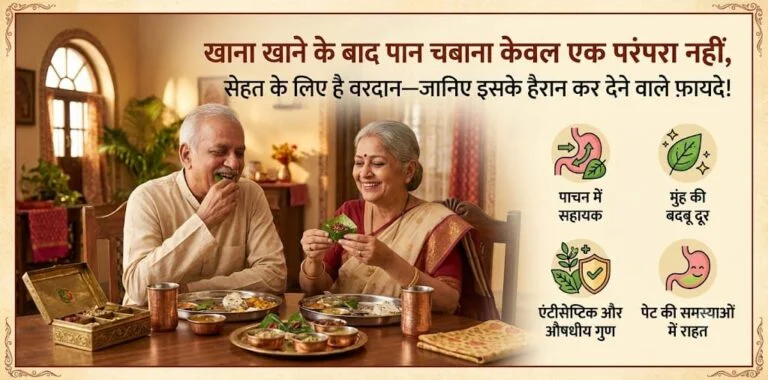
The tradition of consuming paan (betel leaf) after a meal has existed in India for centuries. While often viewed merely as a palate cleanser or mouth freshener, Ayurveda considers paan—when consumed correctly—to be akin to medicine. Consuming plain or sweet paan (without tobacco) offers numerous miraculous health benefits. Here, we explore the advantages of eating paan after a meal.
Boosts Digestion
Chewing paan after a meal immediately stimulates saliva production. This saliva contains specific digestive enzymes that facilitate the quick and easy breakdown of food. Consuming paan after a heavy meal helps prevent that uncomfortable sensation of heaviness in the stomach.
Immediate Relief from Acidity and Gas
Spicy or heavy meals often lead to issues like heartburn, acid reflux (sour belching), and bloating. Betel leaves possess alkaline properties that neutralize stomach acid, providing instant relief from acidity and gas.
Eliminates Bad Breath and Infections
Betel leaves have anti-bacterial and anti-microbial properties. Chewing paan after a meal kills the bacteria lurking in the mouth that cause cavities and bad breath. It is a natural way to strengthen gums and keep the mouth feeling fresh for hours.
Improves Metabolism
Betel leaves help boost the body’s metabolic rate. An efficient metabolism ensures food is rapidly converted into energy, reducing the likelihood of excess fat accumulation. It also detoxifies the body by cleansing the intestines.

