


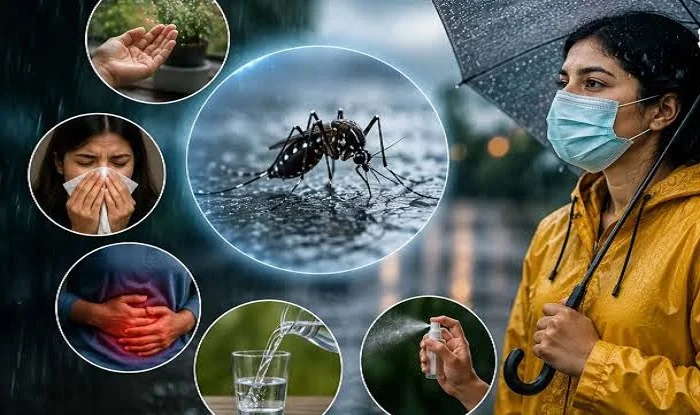
While the rainy season offers relief from the scorching heat of the sun, it also brings an increased risk of illness. Bacteria, viruses, and fungi thrive in this weather, spreading infections and making us sick. We are vulnerable to various diseases during the monsoon because humidity and stagnant water create ideal breeding grounds for disease-causing microorganisms. Conditions like jaundice, typhoid, and diarrhea are common, alongside cases of viral fever, the common cold, dengue, and malaria.
Most common diseases during the monsoon:
- Viral Fever-
Viral fever is one of the most common ailments during the rainy season. It can cause fever, headache, body aches, fatigue, a sore throat, and a mild cough. People often assume it will resolve on its own, but if the fever persists for more than 2–3 days, one should consult a doctor.
- Dengue Fever-
Dengue is a mosquito-borne viral infection. According to the WHO, common symptoms include high fever, severe headache, pain behind the eyes, muscle and joint pain, nausea, vomiting, swollen glands, and rashes. Symptoms usually appear 4–10 days after infection and can last for 2–7 days.
- Malaria-
Malaria is another mosquito-borne disease that can escalate during the rainy season. The WHO states that early symptoms typically include fever, headache, and chills, with symptoms appearing 10–15 days after the bite of an infected mosquito. Severe symptoms may include confusion, seizures, breathing difficulties, dark urine, jaundice, or abnormal bleeding. If you experience chills, sweating, weakness, or recurrent fever, consult a doctor and get tested promptly. 4. Stomach Infections and Gastroenteritis-
The risk of stomach infections increases during the monsoon due to contaminated food, unsafe water, and a lack of hygiene. Symptoms may include diarrhea, vomiting, stomach cramps, nausea, fever, and dehydration.
Consult a doctor if you notice blood in the stool, high fever, repeated vomiting, extreme weakness, or signs of dehydration.
- Typhoid Fever-
Typhoid can spread through contaminated food and water. It can cause prolonged fever, headache, abdominal pain, constipation or diarrhea, weakness, and loss of appetite. Do not delay medical consultation if the fever persists for several days or recurs. Based on symptoms and an examination, a doctor may recommend blood tests and appropriate treatment.
- Skin and Fungal Infections-
Humidity, damp clothes, and sweat during the monsoon can increase the risk of fungal infections. Common symptoms include itching, redness, rashes, peeling skin, fungal patches (such as between the toes or in the armpits), and a burning sensation.
How to Prevent Seasonal Illnesses-
Avoid eating outside food; consume only fresh, home-cooked meals.
Wash your hands before every meal.
Drink only clean or boiled water, or use a water purifier.
Wear clothing that protects you from mosquito bites.
Use mosquito nets, repellents, etc., to protect against mosquitoes.
Prevent children from playing in dirty water.
Cover your mouth with a handkerchief while coughing or sneezing.
Eat plenty of fresh fruits and green vegetables.
Prevent mosquito breeding; do not allow water to stagnate in your surroundings.

