


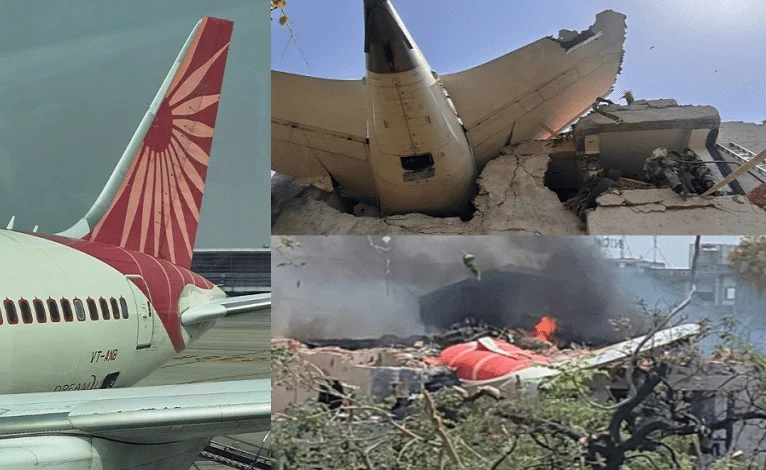
Air India AI-171 Crash: The Federation of Indian Pilots (FIP) has sent a detailed letter to the Aircraft Accident Investigation Bureau (AAIB) regarding the investigation into the Ahmedabad aircraft incident. The organization has demanded an expansion of the investigation’s scope and a thorough examination of all technical evidence related to the Boeing 787’s electrical and electronic systems.
The FIP asserts that to determine the root cause of the incident, the investigation should not be limited merely to the circumstances on the day of the event; a detailed review of the aircraft’s past technical condition and maintenance history is also essential.
Scrutiny of Maintenance Records and Technical Logs
The pilots’ association has requested a meticulous examination of the aircraft’s past maintenance records, technical logbooks, previously reported technical glitches, repair work undertaken, and details of replaced components.
According to the FIP, reviewing these records could help determine whether there was a pre-existing technical issue—one that had been recurring and remained active prior to the incident.
Special Focus on the Boeing 787’s Electrical System
The FIP has demanded a detailed investigation into the Boeing 787’s electrical system. This includes a review of the electrical power generation system, main and standby power distribution systems, avionics, flight management systems, flight control computers, data communication networks, battery systems, electronic monitoring systems, and power control units.
The organization has also called for an examination of records related to power supply interruptions, abnormal voltage fluctuations, data transfer anomalies, software resets, processor reboots, loss of communication, and erroneous fault messages.
Cross-referencing Flight Data with Maintenance Records
The FIP has suggested cross-referencing information obtained from ACARS, the Aircraft Health Monitoring System, the Flight Data Recorder (FDR), and the Cockpit Voice Recorder (CVR) with the aircraft’s maintenance records. According to the organization, such a joint investigation could help determine whether there were signs of technical malfunctions in the aircraft prior to the accident or if a pattern of specific faults was consistently emerging.
Demand for review of Boeing 787 simulator test data
In its letter, the FIP has also requested a review of data from Boeing 787 simulator tests. The organization has specifically called for comparing findings related to fuel supply interruptions, hydraulic system availability, and electrical power status with the preliminary investigation report.
The FIP states that if any discrepancies arise between the simulator test results and the initial investigation findings, the reasons behind them must be investigated.
Demand for interim safety recommendations if technical flaws are found
The Federation of Indian Pilots has further stated that if any technical or operational flaw capable of affecting flight safety comes to light during the investigation, interim safety recommendations should be issued without waiting for the final investigation report.
The organization clarified that its objective is not to endorse any single conclusion. The FIP emphasized the need for an impartial and scientific investigation that encompasses technical, operational, human, maintenance, and regulatory aspects.
Additionally, the FIP has requested the AAIB to include its letter in the official investigation record and to share information regarding significant safety suggestions that emerge during the course of the investigation.

