


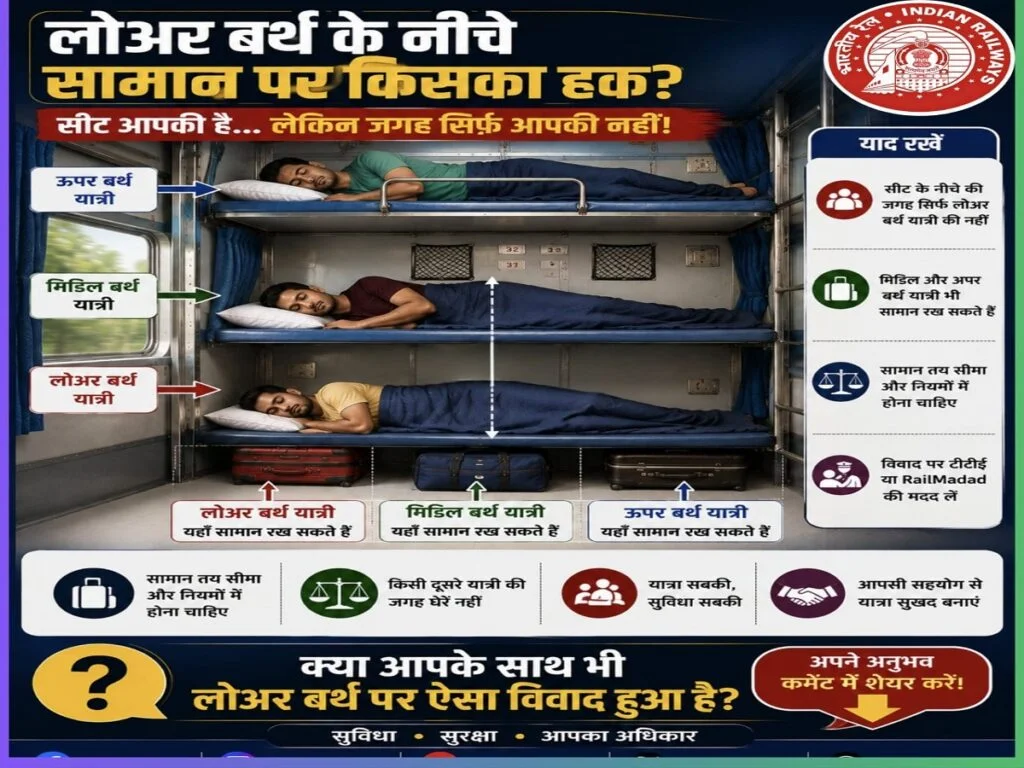
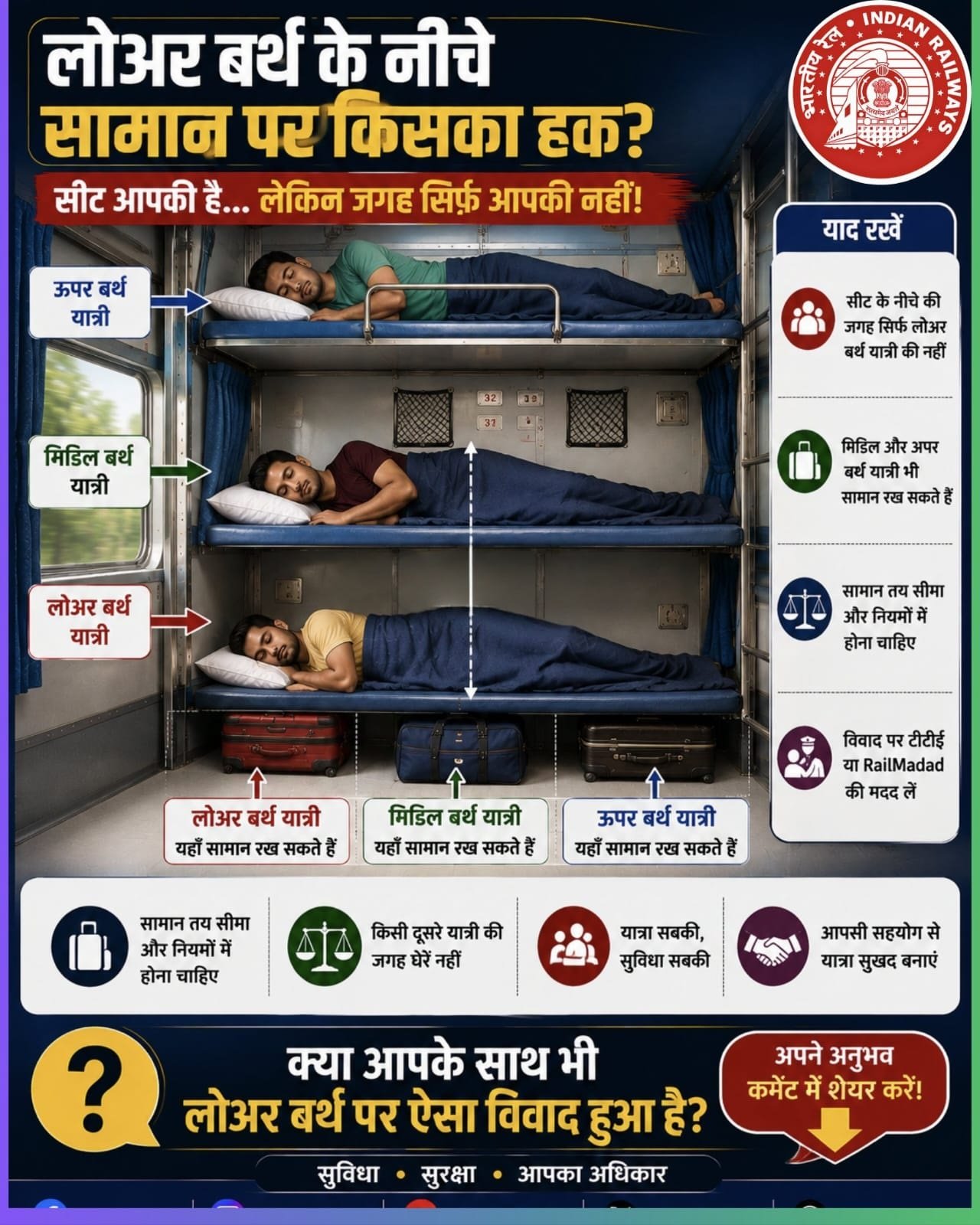
As soon as passengers are allotted a lower berth, many assume they have exclusive rights to the space beneath it. This often sparks disputes over luggage storage, as passengers in the middle and upper berths also wish to store their bags there. This raises the question: does the space beneath the lower berth belong solely to the passenger occupying that berth?
What is the actual rule?
Indian Railways’ regulations contain no explicit provision stating that the luggage space beneath the lower berth is the exclusive right of the passenger occupying that berth. Passengers traveling in the same section should arrange for luggage storage based on mutual convenience and agreement. In other words, occupying a lower berth does not entitle a passenger to claim sole authority over the entire space underneath. Conversely, passengers in the upper and middle berths should also be considerate of the convenience of other passengers when storing their luggage.
How much luggage can you carry?
The Railways has set free luggage allowance limits based on the class of travel:
AC First Class: 70 kg
AC 2-Tier: 50 kg
AC 3-Tier: 40 kg
Sleeper Class: 40 kg
Second Class: 35 kg
Carrying luggage in excess of the prescribed limit may attract charges in accordance with railway rules.
What to do in case of a dispute?
If a dispute arises regarding the storage of luggage under the lower berth, passengers should seek assistance from the TTE or train staff instead of quarreling. If necessary, a complaint can also be lodged via the railway helpline at 139.
Keep in mind
Instead of arguing over the space beneath the lower berth, it is better for passengers in the same section to share the space through mutual understanding.

