


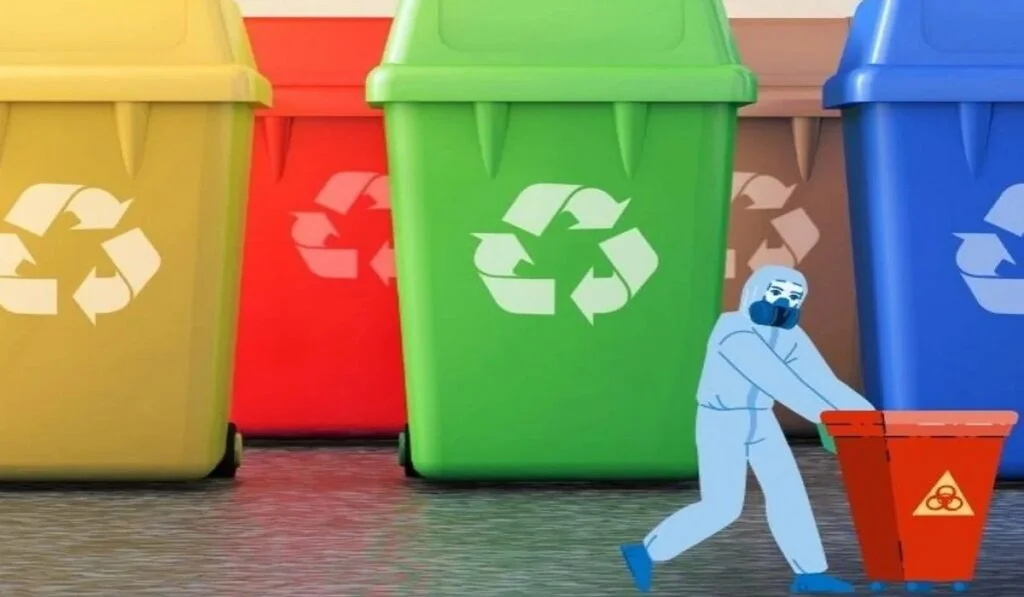
New Delhi: The New Delhi Municipal Council (NDMC) has approved new regulations to improve the waste management system in Lutyens’ Delhi. The proposed system mandates the segregation of waste into four distinct categories at the source itself. Provisions have been made for higher penalties for rule violations compared to the existing system.
The new rules also propose an increase in monthly user charges for waste collection. Additionally, there is a provision to form community patrollers and sanitation committees to monitor compliance.
Following approval by the NDMC Council, the new rules will be sent to the Union Ministry of Home Affairs for final notification. They will be implemented once the necessary procedures are completed.
Auto-tippers to have four separate compartments for waste
According to NDMC officials, auto-tippers used for door-to-door waste collection have been designed with four separate compartments to accommodate the different categories of waste. A helper will also be deployed with each auto-tipper to ensure waste is segregated into the designated categories at the time of collection.
The new rules also clarify the primary collection mechanism. Under this system, waste segregated at the source—from households and other waste-generating sites—will be collected directly and transported to secondary storage or transfer points.
Monthly charges to rise for everyone, from households to restaurants
Under the proposed rules, monthly user charges will be increased across various categories. The fees will be determined based on the category of the waste-generating entity and the services provided. Residential houses up to 50 sq. meters: Increased from ₹50 to ₹100
50 to 200 sq. meters: Increased from ₹100 to ₹200
Houses larger than 200 sq. meters: Increased from ₹200 to ₹300
Roadside vendors: Increased from ₹100 to ₹200
Guest houses and Dharamshalas (pilgrim rest houses): Increased from ₹2,000 to ₹3,000
User charges for restaurants to increase as well
There is a proposal to raise the monthly user charge for restaurants with a seating capacity of up to 50 from ₹2,000 to ₹3,000. Meanwhile, the fee for restaurants with more than 50 seats will be increased from ₹3,000 to ₹4,500.
According to officials, the fee structure will be based on the category of the waste-generating unit and the waste management services provided to it.
Fine of ₹500 to ₹15,000 for failure to segregate waste
The new rules also increase the penalty amounts for failing to segregate waste at the source. The fine for not segregating waste in households is proposed to rise from ₹200 to ₹500.
Additionally, the fine for commercial establishments like clubs and cinema halls will increase from ₹5,000 to ₹7,500, and for wedding and banquet halls, it will rise from ₹10,000 to ₹15,000.
Fine of ₹7,500 for burning waste in the open
The proposed rules also impose stricter penalties for burning waste in the open. The fine for this violation will increase from ₹5,000 to ₹7,500. Vendors who fail to dispose of waste properly may also face a fine of ₹500 instead of ₹200.
Furthermore, provisions for higher fines have been made for large-scale waste-generating institutions and establishments. Fines of up to ₹15,000 for RWAs, ₹30,000 for market associations, and ₹74,000 for hotels may be imposed for non-compliance with the rules.
Focus on recycling and waste processing
The objective of the NDMC’s new system goes beyond merely collecting and transporting waste to a disposal site. It will emphasize waste segregation at the source, the recovery of useful materials, recycling, and decentralized processing.
According to officials, the aim is to extract the maximum amount of useful resources from the waste and ensure that as much material as possible is reused or recycled. Only waste that cannot be reused or processed will be sent for final disposal.
This system aims to reduce the volume of waste reaching landfills and…

