


The United Arab Emirates (UAE) has announced its decision to leave the Organisation of the Petroleum Exporting Countries (OPEC). According to a report, the Gulf nation’s energy minister said the move would give the country greater flexibility in managing its oil production, freeing it from the collective obligations imposed by the group.
“This is a decision that we took after a very careful and long review of all our strategies,” UAE’s Energy Minister Suhail Al Mazrouei said. “The decision is taken at the right time in our view because it’s not going to hugely impact the market: the market is undersupplied.” He added that supply shortages linked to the conflict require faster responses to demand — something easier to achieve outside OPEC’s collective framework.
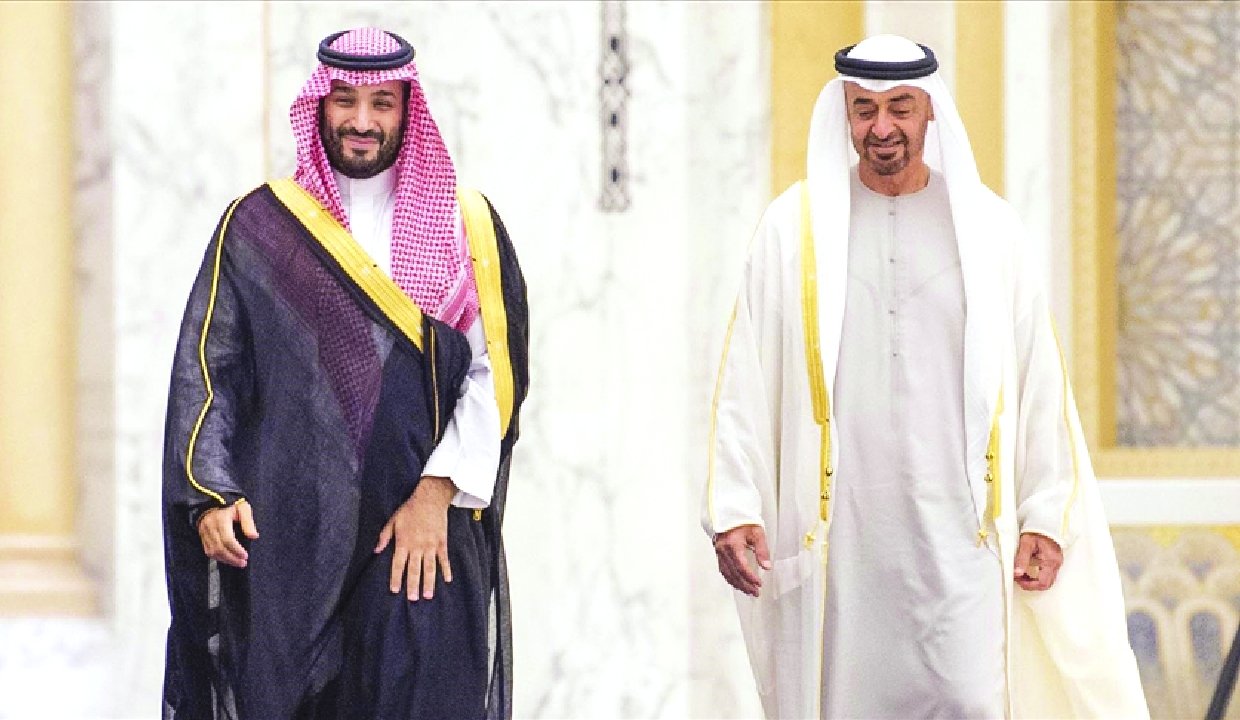
The departure follows prolonged friction with Saudi Arabia, OPEC’s de facto leader, particularly over oil production strategies and regional influence. Disagreements between the two nations have surfaced repeatedly at OPEC meetings, where the UAE pushed to increase output using its expanded capacity, while Saudi Arabia advocated for tighter supply controls to stabilise prices. These disputes had previously brought Abu Dhabi close to exiting the alliance.
Energy analysts say the move could have far-reaching consequences. Saul Kavonic, head of energy research at MST Financial, described the exit as “the beginning of the end of OPEC.” “With the UAE leaving, OPEC loses about 15 per cent of its capacity and one of its most compliant members,” he noted, warning that other countries might follow suit.
Kavonic added that Riyadh may now struggle to maintain cohesion within the group and could be forced to shoulder a greater burden in managing supply and market stability. According to OPEC data, the UAE produces around 2.9 million barrels of oil annually, compared to roughly nine million barrels from Saudi Arabia.
Robinder Sachdeva, India’s overseas affairs expert, said the UAE’s exit from OPEC after nearly six decades is less a sudden rupture than the formalisation of a divergence that has been building for years. Abu Dhabi has long chafed at quotas that kept it producing around three million barrels per day despite having capacity closer to five million.
For India, Sachdeva described the development as “unambiguously good news.” He pointed out that the UAE had been producing nearly 1.5 million barrels per day below capacity to comply with OPEC quotas. Once Hormuz reopens, an unconstrained UAE moving toward five million barrels per day by 2027 would mean more oil entering the market based on commercial logic rather than cartel discipline.
“With India importing over 85% of its oil and the UAE already a key supplier, a producer freed from quota constraints-especially within the CEPA framework-is exactly the kind of partner India needs,” he said, adding that with countries like Qatar and Angola having already exited, OPEC’s centre of gravity is shifting back toward market fundamentals in what could be the most consumer-friendly structural shift in a generation.”
In recent years, the United Arab Emirates has increasingly pursued an independent foreign policy, occasionally diverging from Riyadh’s positions. Tensions have also intensified as Saudi Arabia, under Crown Prince Mohammed bin Salman, ramps up efforts to attract foreign investment-putting it in direct competition with the UAE.
The UAE has been a member of OPEC since 1967, initially through Abu Dhabi before joining as a unified nation following its formation in 1971. The decision to exit was announced through the state-run WAM.

