


The UK’s development finance institution and a Danish global fund manager on Tuesday launched a project to support India’s clean energy transition.
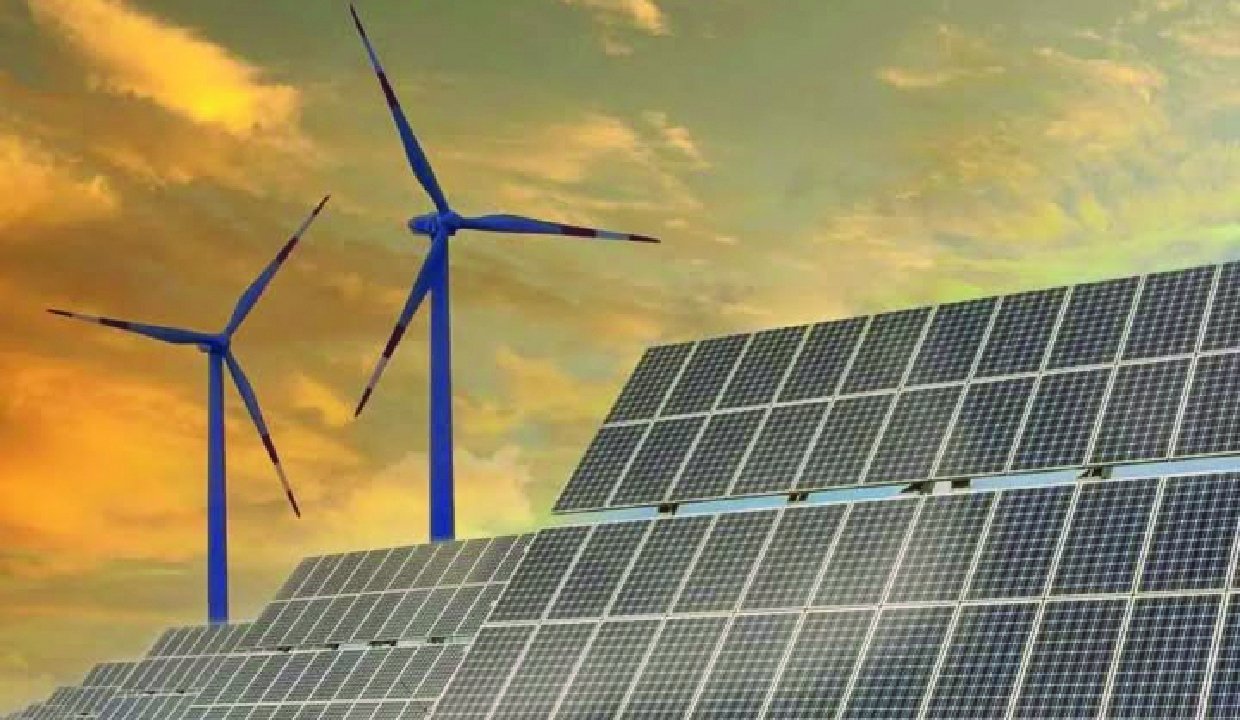
British International Investment (BII) joined hands with Copenhagen Infrastructure Partners (CIP) for the 300-million-dollar renewable energy platform, North Star, that will invest across solar, wind and hybrid as well as storage projects.
BII and CIP, through their Growth Markets Fund II (GMF II), will each commit up to $150 million for the platform designed to address the funding gap required to build and scale renewable projects in India and crowd in additional private Capital.
This marks the first investment made through British Climate Partners (BCP), a 1.1 billion pounds climate finance initiative launched by BII last month as part of its new five-year strategy.
“British Climate Partners is about mobilising institutional capital at scale to accelerate the energy transition in developing Asian economies, including India, where the need and opportunity are greatest,” said Rohit Anand, BII’s MD and Head of Asia Infrastructure.
“Building on BII’s extensive experience in both energy investing and India, the launch of North Star reflects the country’s strong renewable growth, supportive policy momentum, and the role catalytic capital can play in delivering clean power at pace,” he said. North Star is expected to generate more than 4 million MWh of clean energy annually and avoid about 4 million tonnes of carbon emissions each year.
Peter Jannik Sjontoft, Partner in CIP’s Growth Markets Funds, said: “India is one of the most important renewable energy markets globally. m” Partnering with British International Investment allows us to build on our existing India investments and combine deep local insight with global investment expertise to accelerate project delivery and support the build-out of renewable energy infrastructure at scale.”
BII’s British Climate Partners (BCP) is designed to mobilise large-scale institutional capital into climate solutions across fast-growing and coal-dependent economies in Asia, including India, as well as the Philippines, Indonesia, Vietnam and other South-East Asian countries.

