


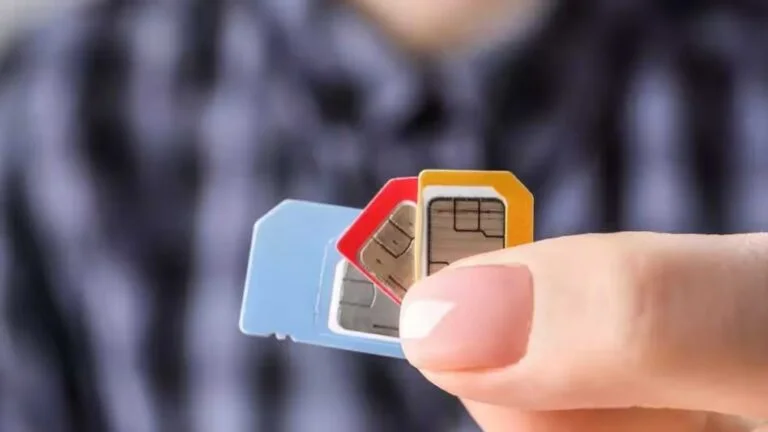
SIM Rule: There is a fixed limit on the number of SIM cards an individual can hold in India. However, scammers exploit loopholes to get SIM cards issued in their names even after reaching the maximum limit. The Department of Telecommunications (DoT) has now tightened measures to curb this practice. Under DoT regulations, Indian citizens can hold a maximum of 9 SIM cards in their names; however, this limit is set at 6 SIM cards for Jammu & Kashmir, Assam, and certain regions in the Northeast. The government has now advanced the implementation process for this rule. On August 17, 2026, the DoT issued relevant information and instructions to telecom companies.
10th SIM Card Will Be Blocked Immediately
If an individual already holds 9 SIM cards and attempts to acquire a 10th, the government will identify such cases using the Digital Intelligence Platform (DIP). DoT directives state that no new SIM card should be issued to an individual once the maximum limit has been reached. Telecom companies are required to investigate such cases based on information received from the DIP. If an individual is found to possess more than 9 SIM cards, any additional cards issued beyond the initial nine will be blocked. According to the DoT circular, this information will be made available to telecom companies via the DIP starting August 23, 2026. Companies will then use this data to prevent the issuance of excess SIM cards.
Real-Time Verification Starting November
Initially, telecom companies will not be able to instantly determine whether a person is acquiring a 10th SIM card at the time of issuance; they will have to take action subsequently based on information available on the DIP. However, telecom companies have been instructed to implement this process in real-time by November 30, 2026. This means that, moving forward, it will be possible to verify how many SIM cards are already registered to an individual’s name at the very moment a new SIM is being issued. The government’s objective is to curb the use of fraudulent SIM cards. In many instances, SIM cards obtained in other people’s names are used to commit fraud, withdraw money from bank accounts, and carry out other cybercrimes.
The government has also implemented the CNAP system.
The government is taking additional measures to curb SIM card-related fraud, including the implementation of the Calling Name Presentation (CNAP) system. With CNAP, the caller’s name appears on the screen when a call is received, even if the number is not saved in your phone. This feature is somewhat similar to Truecaller; however, while Truecaller displays names based on user-contributed data, CNAP relies on information from the telecom companies’ own KYC records.

