


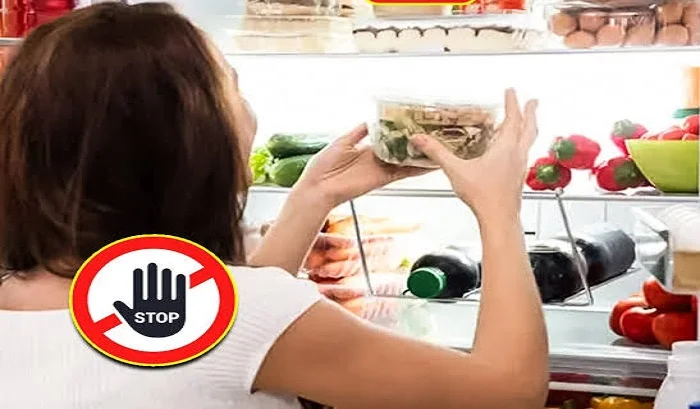
Whenever there are leftovers, people often store them in the refrigerator for later use. Furthermore, prepared foods are frequently refrigerated to prevent spoilage over time. However, refrigeration does not guarantee that food will remain safe to eat.
Recognize signs of spoilage in refrigerated food:
Slimy or sticky texture in lentils and vegetables: Do not ignore a shiny or sticky film appearing on chopped vegetables, leafy greens, or cooked lentils and vegetables. This can indicate bacterial growth—meaning the food has begun to spoil due to the proliferation of microbes. Consuming such food can lead to vomiting, diarrhea, and abdominal bloating. It becomes heavy and putrid, weakening your digestive system. Therefore, if you notice such changes on the food’s surface, it is best to avoid eating it.
Mold or discoloration: If mold appears on vegetables, lentils, or any food item, discard the entire portion; do not simply cut off the moldy section. What is visible is merely the surface layer. In reality, mold extends root-like threads deep into soft foods and releases mycotoxins and aflatoxins that spread far beyond the visible area. These substances can damage the liver and kidneys.
Changes in odor: If refrigerated food emits a sour, vinegar-like, bitter, or egg-like smell, it indicates rapid bacterial growth and the release of organic acids. If the odor has changed, discard the food. Your nose can often provide more accurate information than the expiration date label.

