


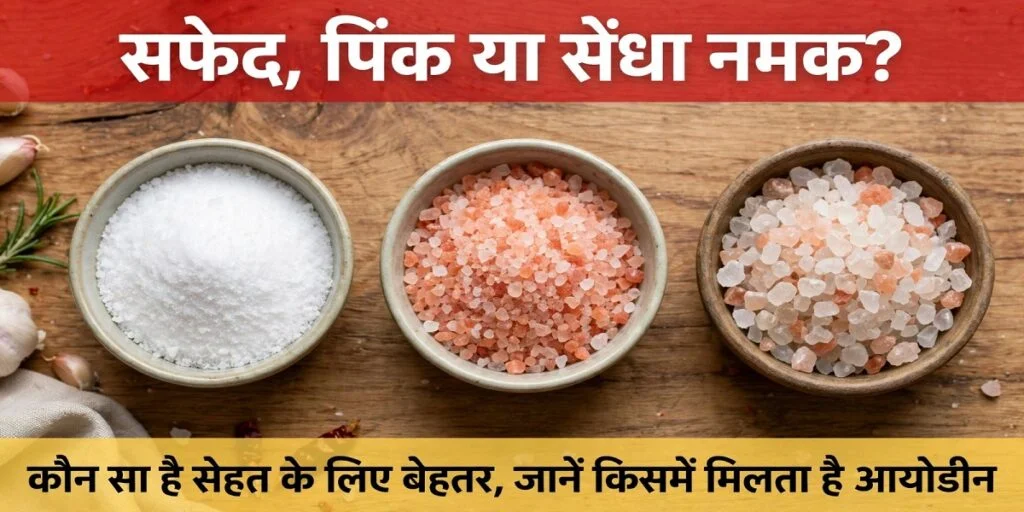
Health Tips: Salt plays a crucial role in our daily diet. It not only enhances the flavor of food but also helps provide the body with essential iodine. While iodized white salt was traditionally used in most households, pink Himalayan salt and rock salt (sendha namak) are now gaining popularity.
Many people consider these alternatives to be more natural and healthier. But are they actually better than regular salt? Do they provide the body with sufficient iodine? Let’s explore the differences between these three types of salt and what you should keep in mind for your health.
Why is iodine essential for the body?
Iodine is an essential nutrient that helps the thyroid gland function properly. This gland produces hormones that regulate the body’s metabolism, growth, and various other vital functions.
Since the body cannot produce iodine on its own, it must be obtained through one’s diet. A deficiency can lead to conditions like goiter and other thyroid-related issues. During pregnancy and childhood, a severe lack of iodine can also impair a child’s brain and physical development.
For this reason, the use of iodized salt is considered important for preventing iodine deficiency.
- White Table Salt: A Reliable Source of Iodine
Regular white table salt is the most common type used in everyday cooking. It is fortified with iodine, which helps the body obtain an adequate amount of this essential nutrient.
When purchasing salt, always check the packaging to ensure it is labeled as “iodized” or “contains iodine.” However, consuming excessive amounts of salt is not the right way to meet your iodine requirements; it should be used in balanced, moderate quantities.
- Pink Himalayan Salt: Is It Healthier? Pink Himalayan salt is quite popular due to its pink hue and natural appearance. It may contain small amounts of various minerals, which contribute to its color. However, the quantity of these minerals is so minimal that it cannot be considered a significant source of nutrition.
Most importantly, there is no guarantee that pink salt contains an adequate amount of iodine. If it is not fortified with iodine, it cannot be considered an equivalent substitute for iodized salt.
Furthermore, pink salt also contains sodium. Therefore, using it does not exempt one from the effects that sodium can have on blood pressure.
- Sendha Namak (Rock Salt): Salt Used During Fasts
Sendha namak (rock salt) is extracted from rock deposits and is primarily used during religious fasts. Because it is considered natural, many people also incorporate it into their daily diet.
However, the natural iodine content in sendha namak is typically very low. Consequently, using it regularly in place of iodized salt may lead to an insufficient intake of iodine.
If you prefer using sendha namak, it is essential to include other sources of iodine in your diet. You may also want to consider using iodized salt when necessary.
How much salt should be consumed daily?
According to the World Health Organization (WHO), adults should consume less than 5 grams of salt per day. This includes both the salt used during cooking and the salt present in packaged food products.
Keep the following points in mind for better health:
Choose iodized salt for daily use.
Limit your salt intake, as excessive sodium can raise blood pressure.
Store salt away from moisture and exposure to open air to help maintain the quality of the iodine it contains. Iodine can also be obtained from milk, yogurt, eggs, and seafood. The amount present depends on the specific food item and one’s overall diet.
So, which salt is better?
When choosing between white salt, pink Himalayan salt, and rock salt (sendha namak), focusing solely on color or claims of being “natural” is not enough. Iodized salt is a reliable option for meeting your iodine requirements. If you choose to use pink salt or rock salt, it is essential to ensure that you are obtaining sufficient iodine from other parts of your diet.
Remember, regardless of the type of salt, consuming it in excess is [harmful] to your health.

