


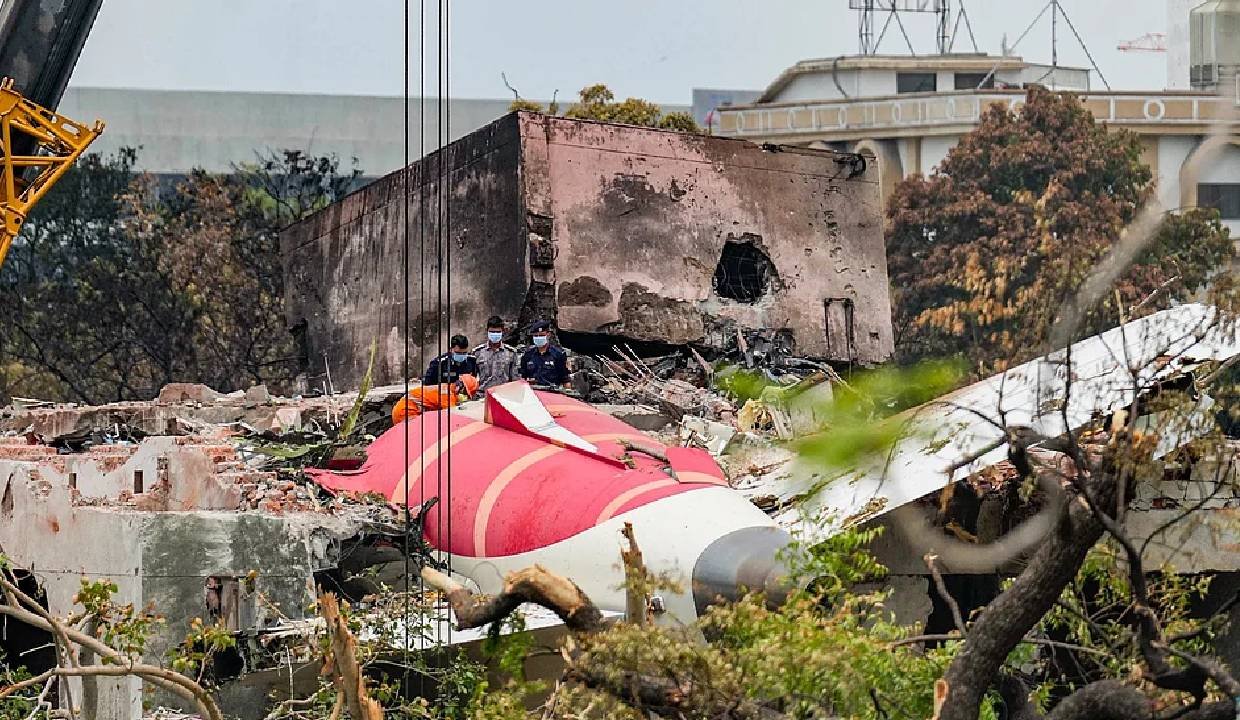
The Federation of Indian Pilots (FIP) has urged aviation investigators to conduct Boeing 787 simulator tests to verify crucial technical aspects linked to the ongoing probe into the Ahmedabad Air India plane crash, which killed 260 people in 2025.
The pilots’ body has requested the Aircraft Accident Investigation Bureau (AAIB) to carry out controlled simulator trials to better understand the relationship between Ram Air Turbine (RAT) deployment, fuel control switch movement, and possible electrical or hydraulic system behaviour during the final moments of the flight.
According to reports, the FIP said the tests should help independently validate data and sequences recorded in the preliminary investigation, including aircraft acceleration patterns and system responses noted in the crash analysis.
The group also argued that RAT activation, which typically occurs during dual engine failure or total electrical/hydraulic loss, may need to be examined more closely in relation to fuel system changes identified in the investigation.
In its communication to the AAIB, the FIP has suggested that survivor accounts, cockpit warnings, ACARS messages, and recorded flight data be collectively analysed to establish a clearer timeline of events leading up to the crash.
The appeal comes amid ongoing scrutiny of the investigation process, with pilots’ organisations previously raising concerns over technical gaps and calling for more transparent and independent examination of Boeing 787 system behaviour.
Investigators are still working on the final report of the crash, which remains one of the most serious aviation disasters involving a Boeing 787 Dreamliner. The proposed simulator tests are expected to play a key role in determining whether mechanical, electrical, or procedural factors contributed to the accident.

