


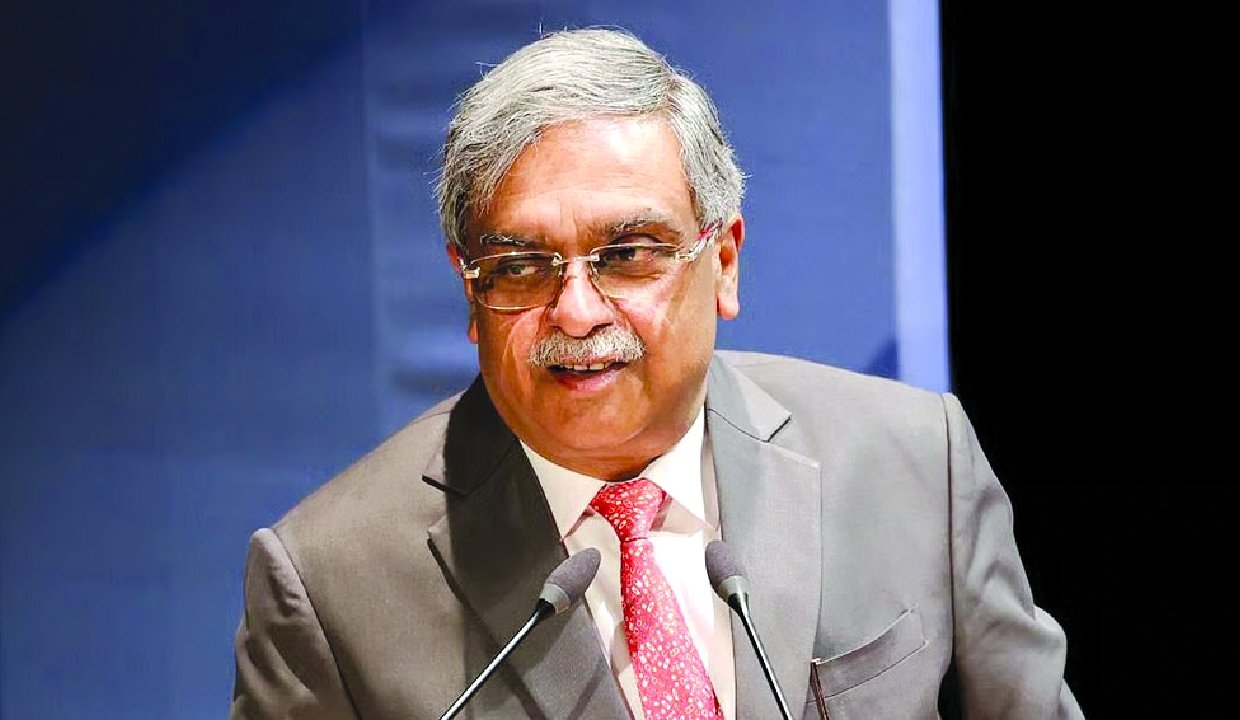
Supreme Court Judge, Justice Vikram Nath, on Saturday said legal rights must translate into accessible, coordinated, and dignified institutional support for women.
Justice Nath, who is the Executive Chairman of the National Legal Services Authority, was addressing a mega awareness programme on “Empowering Women and Strengthening Institutional Legal Support” at SKICC here, which was organised by the Jammu and Kashmir Legal Services Authority under the guidance of the National Legal Services Authority.
The programme was conceived as a common institutional platform to strengthen awareness of the legal rights of women and girl children and to improve coordination among the Legal Services Institutions, Police, Health, Education, Social Welfare, One Stop Centres, Child Welfare Committees and other authorities responsible for protection, legal assistance, compensation, rehabilitation and follow-up support.
In his presidential address, Justice Nath emphasised that the effectiveness of Legal Services Institutions must be judged by whether a person in distress is able to approach the system without fear, be heard with dignity and receive competent assistance without avoidable delay.
He called upon all stakeholders to strengthen legal literacy, institutional coordination and grassroots outreach so that constitutional and statutory safeguards become a practical reality for women and girl children.
The SC judge stressed that the proceedings and key deliberations of the conference should be translated into vernacular languages and circulated among all concerned stakeholders, so that the knowledge and guidance emanating from the conference are easily understood and effectively acted upon at the grassroots level.
Speaking on the occasion, Supreme Court Judge and Supervising Judge for the J&K Legal Services Authority, Justice SVN Bhatti, highlighted the need for functional grievance mechanisms, trained stakeholders and victim-sensitive procedures.
He observed that women and children should not be compelled to navigate a fragmented institutional system or repeatedly recount traumatic experiences before different authorities. Clear referral pathways, confidentiality and accountability, he said, are necessary for meaningful legal empowerment.
While delivering the inaugural address, Chief Justice (Acting), High Court of J&K and Ladakh and Executive Chairman, J&K Legal Services Authority, Justice Sanjeev Kumar, underscored that access to justice cannot be measured merely by the availability of laws and institutions.
Justice Kumar called for stronger grassroots outreach and effective functioning of front offices, legal aid clinics, panel lawyers and para-legal volunteers so that persons in need are guided to appropriate remedies without procedural hardships. He also stressed the importance of convergence among all stakeholder institutions dealing with women in distress.
Justice Sanjay Dhar, Judge, High Court of J&K and Ladakh and Chairperson, High Court Legal Services Committee, in his address, said that recognition of a right in law is only the beginning and that the real test of justice lies in whether the right can be understood, approached and effectively enforced.
Justice Dhar emphasised that the constitutional character of the justice system is reflected in the manner in which the first institution a woman approaches receives her. Prompt assistance, confidentiality, sensitivity and institutional follow-up, he said, are essential to prevent secondary victimisation and restore confidence in the justice system.

