


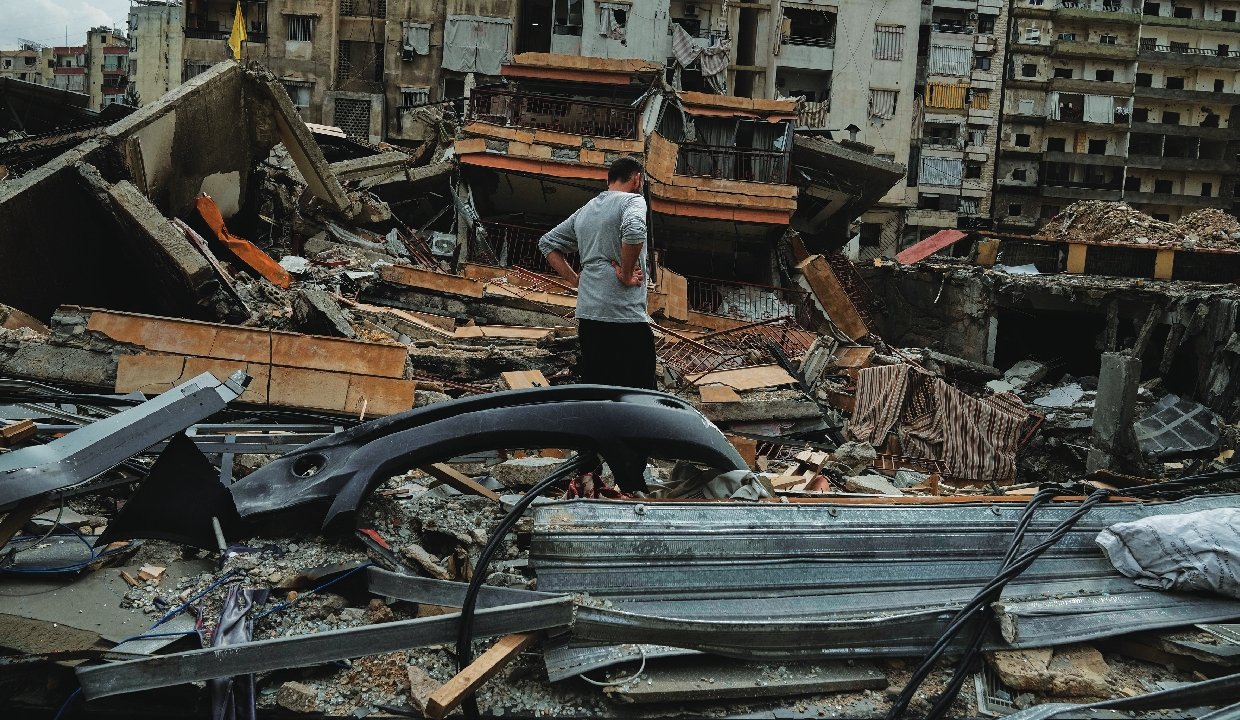
A 10-day ceasefire announced by US President Donald Trump and agreed on by Lebanon and Israel appeared to be holding in Lebanon on Friday, potentially boosting efforts to extend a truce between Iran, the United States and Israel.
It was unclear whether a lasting deal would be reached between the US and Iran before the ceasefire ends next week, but the pause in fighting between Israel and Hezbollah could be an indication that some progress has been made. An end to Israel’s war with Hezbollah was a key demand of Iranian negotiators. Israel has not been fighting with Lebanon itself, but rather with the Iranian-backed Hezbollah militant group inside Lebanon, which said in a statement that “any ceasefire must be comprehensive across all Lebanese territory and must not allow the Israeli enemy any freedom of movement”.
Israeli Prime Minister Benjamin Netanyahu said he agreed to the ceasefire “to advance” peace efforts with Lebanon, but said Israeli troops would not withdraw.
Pakistan’s army chief met Thursday with Iran’s parliament speaker as part of international efforts to press for an extension to the ceasefire that has paused almost seven weeks of war.
The fighting has killed at least 3,000 people in Iran, more than 2,100 in Lebanon, 23 in Israel and more than a dozen in Gulf Arab states. Thirteen US service members have also been killed.
Republic that the calls they took with Saudi Arabia and Pakistan were encouraging and facilitating for a ceasefire as first step.”
Fadlallah said that the militant group’s key positions – a complete ceasefire, withdrawal of Israeli troops, a return of all Lebanese displaced people, releasing prisoners held by Israel and reconstruction — have not changed.
“During these 10 days we want the continued effort from Iran to force Israel to the pathway that was imposed by the Islamabad talks,” Hassan Fadlallah told that on Friday after speaking to the press in the battered Beirut southern suburb of Haret Hreik. Fadlallah, from Hezbollah’s parliamentary bloc, warned Lebanon not to enter direct negotiations with Israel.
The Iran-backed militant group said direct talks with Israel would be a free concession to Israel as its troops remain on Lebanese soil.
“The Lebanese Government is unable, incapable, and unauthorized constitutionally and nationally for the Lebanese leadership to give such a dangerous concession that threatens Lebanon’s future,” he said.
Fadlallah warned that Hezbollah will not remain silent if Israel continues its attacks in southern Lebanon.
Al-Najda al Shaabiya Hospital in the southern Lebanese city of Nabatiyeh was reeling Friday after what officials said was one of the heaviest days of Israeli strikes since the latest Israel-Hezbollah war began.
Hospital Director Mona Abou Zeid said the wounded arrived until around an hour after the ceasefire took effect at midnight. Mahmoud Sahmarani, 33, said he stepped outside his home to buy charcoal for his shisha water pipe when an Israeli strike killed his father and cousin as they peeled potatoes for lunch.
His five-story apartment building is rubble and his family is homeless, Sahmarani said from his hospital bed, his left eye swollen shut and head swaddled in bandages. “Israel should have withdrawn from Lebanon,” he said.

