


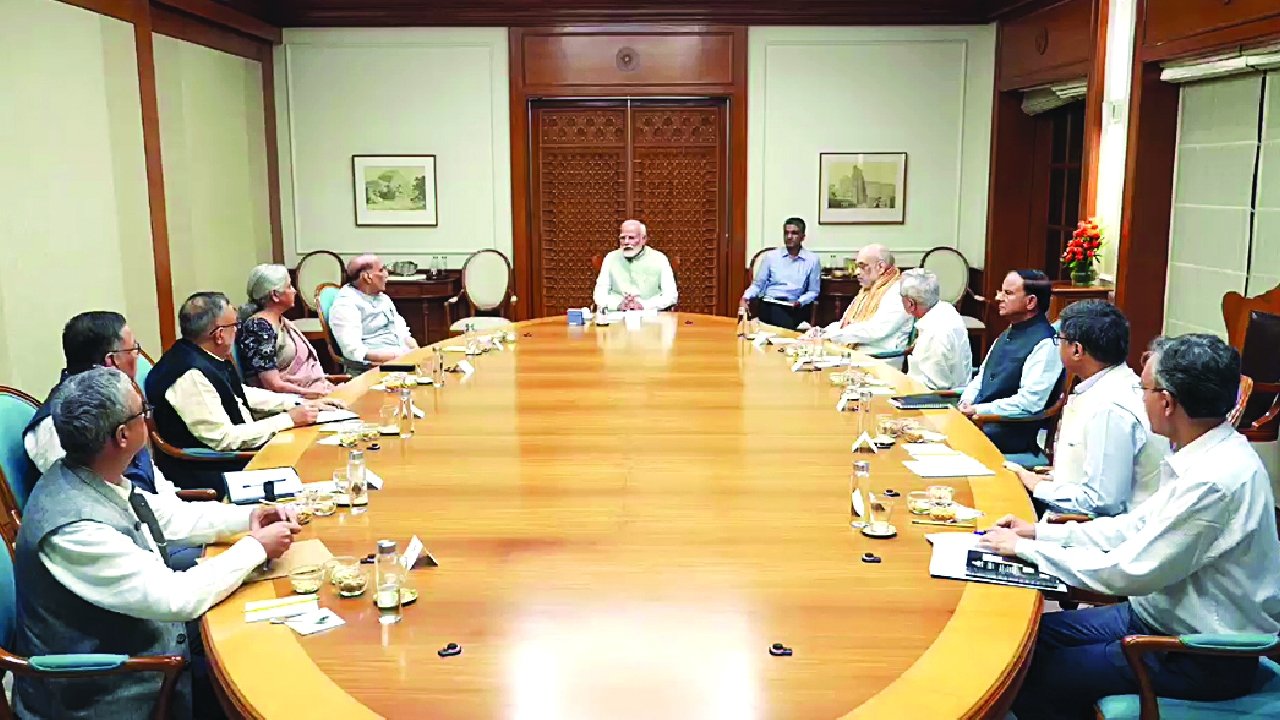
Prime Minister Narendra Modi on Wednesday chaired a special meeting of the Cabinet Committee on Security (CCS) to review measures taken by various Ministries, Departments and also discussed further initiatives to be taken in the context of the ongoing West Asia conflict, at his residence in the national Capital. This was the second special CCS meeting on this issue.
Union ministers Rajnath Singh, Amit Shah, S Jaishankar, Nirmala Sitharaman, Piyush Goyal, Shivraj Singh Chouhan, J P Nadda, Ashwini Vaishnaw, Manohar Lal Khattar, Pralhad Joshi, Kinjarapu Rammohan Naidu and Hardeep Singh Puri attended the meeting.
NSA Ajit Doval, the prime minister’s two principal secretaries, P K Mishra and Shaktikanta Das, and Cabinet Secretary T V Somanathan were also present. The meeting was held soon after PM returned from Assam, where he had gone for campaigning in the assembly election.
After the meeting PM shared on social media about holding the CCS. “Reviewed the steps being taken by various Ministries and Departments in the wake of the ongoing West Asia conflict and also discussed the next set of initiatives to be taken. Aspects relating to sectors like energy, agriculture, fertilisers, aviation, shipping and logistics were discussed,” PM stated.
Sources said Cabinet Secretary TV Somanathan briefed about the action taken to ensure supply of petroleum products, particularly LNG/LPG, and sufficient power availability. Sources are being diversified for procurement of LPG with new inflows from different countries. Similarly, Liquefied Natural Gas (LNG) is being sourced from different countries.
He further briefed that LPG prices for domestic consumers have remained the same and Anti-diversion enforcement to curb hoarding and black marketing of LPG is being conducted regularly. The meeting was also briefed about initiatives been taken to expand Piped Natural Gas connections.
Measures like exempting the gas-based power plants with a capacity of 7-8 GW from gas pooling mechanism and increasing of rake for positioning more coal at thermal power stations etc. have also been taken to ensure availability of power during the peak summer months.
Further, interventions proposed to be taken for emerging challenges in various other sectors such as agriculture, civil aviation, shipping and logistics were also discussed, sources said.
Various efforts like maintaining urea production to meet requirements, coordinating with overseas supplies for DAP/NPKS suppliers are being taken to ensure fertilizer supply.
Sources said State governments are being requested to curb black marketing, hoarding, and diversion of fertilizers through daily monitoring, raids, and strict action.
The retail prices of food commodities have been stable over the past one month. Control Rooms have been set up for constant monitoring and interaction with States/UTs on prices and enforcement of Essential Commodities Act. The prices of agricultural products , vegetables and fruits are also being monitored.
Efforts to globally diversify our sources for energy, fertilizers and other supply chains, and international initiatives for securing safe passage of vessels through the strait of Hormuz and ongoing diplomatic efforts are being taken.
Enhanced coordination, real-time communication, and proactive measures across central, state, and district levels to drive effective information dissemination and public awareness amid the evolving crisis is being undertaken.
Prime Minister assessed the availability of critical needs for the common man. He discussed availability of fertilisers in the country and steps being taken to ensure its availability in the Kharif and Rabi seasons. He said that all efforts must be made to safeguard the citizens from the impact of this conflict. Prime Minister also emphasised smooth flow of authentic information to the public to prevent misinformation and rumour mongering.
The PM directed all concerned departments to take all possible measures to ameliorate the problems of citizens and sectors affected by the ongoing global situation.
This was the second CCS meeting since outbreak of war in West Asia. On March 22, the prime minister held a similar meeting with the same set of ministers and offices and reviewed the situation arising out of the conflict in West Asia and a detailed assessment was made on the availability of critical needs of the common people, including food, energy and fuel security.
Prior to this in a senior Cabinet ministers meeting on March 12, the PM had said that the war in West Asia has triggered a worldwide energy crisis, posing a critical test of national character that requires dealing with circumstances through peace, patience and increased public awareness.
Since the conflict, Modi has had telephonic conversations with leaders from Saudi Arabia, UAE, Qatar, Bahrain, Kuwait, Jordan, France, the Netherlands, Malaysia, Israel and Iran as well as US with President Donald Trump.

