


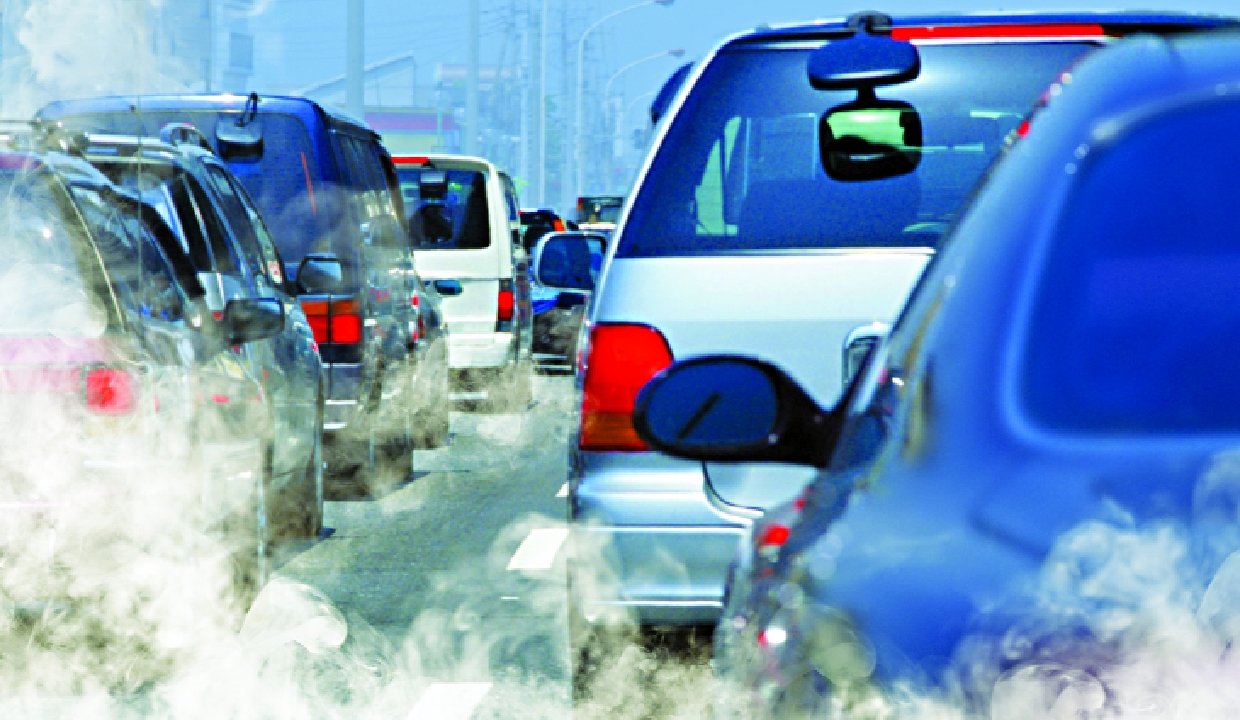
A nation, like a person, can go long periods avoiding what it would prefer not to know about itself. The avoidance is rarely deliberate; it is built into the very categories through which the nation processes its own news. The economy occupies one set of conversations and one set of professionals; the climate occupies another; the inner condition of the citizen, if it is examined at all, belongs to a third domain often dismissed as private or soft. These separations make ordinary public life manageable. They also make certain kinds of seeing nearly impossible. Now and then, usually through a small public moment, easily missed, the cost of those separations becomes briefly visible.
Such a moment arrived in India this month. When our Prime Minister appealed to Indians to drive less, take public transport, work from home where possible, delay foreign travel, and refrain from buying gold, he made a request that was reasonable, practical, and entirely correct. It was also, in a more fundamental sense, an indictment.
Not of citizens who decline to comply, not of a government managing an acute energy shock with limited instruments, but of the kind of society that requires such an appeal in the first place. Few moments in public life see the head of government essentially conceding that state instruments cannot do this work alone. The appeal is, at one level, an admission of where the actual leverage lies.
The problem runs in two directions. One is ignorance: the ordinary citizen genuinely has no idea what his petrol consumption costs the country or the climate. The other is more uncomfortable: some of what needs to be known has been encountered and set aside, heard and quietly filed away, because genuinely absorbing it would require a reckoning with one’s own habits that is harder than not absorbing it. The first failure is educational. The second is a failure of intent. A society that was genuinely seeing would not have required this appeal, because it would have already arrived, through its own honest examination, at the restraint the appeal is now requesting.
What is actually at stake when the pump is filled or the jewellery counter visited? The answer runs along two axes simultaneously, and the fact that those axes are so rarely held together reveals the full scope of what has gone unexamined.
The Two Axes of a Single Failure
The economic axis is the easier one to trace. India spent $134.7 billion on crude oil alone in the financial year ending March 2026, with combined fossil-fuel imports forming the single largest component of a national import bill totalling $775 billion. The country imports roughly 87% of the crude it consumes; domestic production meets barely one-eighth of demand. Every vehicle on the road, every industrial furnace burning diesel, every flight taking off from an Indian airport, represents a transfer of foreign exchange out of the country and into the accounts of oil exporters.
The current account deficit moves in near lockstep with the global price of crude. With the Iran war having driven Brent past $109 per barrel, Crisil has now projected the CAD to widen to 2.2% of GDP in FY27, up from an estimated 0.8% in FY26 — nearly a tripling in a single year. India’s merchandise trade deficit widened to $28.4 billion in April 2026 alone, with the overall import bill rising 10% year-on-year as crude costs surged. From a record peak of $728.5 billion in February 2026, India’s foreign exchange reserves have declined by roughly $40 billion in the months since the Iran war began, driven substantially by the need to manage currency volatility rooted in elevated import costs. The rupee has lost approximately 7% of its value against the dollar in 2026 alone, trading around ₹96 and making it Asia’s worst-performing major currency, with the central bank repeatedly intervening to arrest the fall. India is simultaneously the world’s second-largest importer of gold, spending a record $72 billion on the metal in FY 2025-26, adding a further substantial drain on foreign exchange for what is primarily a consumption and status purchase. Together, crude oil and gold account for a structural vulnerability in the current account built not out of industrial necessity alone but out of two deeply entrenched habits of a society that has not asked what drives them.
The ordinary citizen, filling his car and picking up a gold chain for the festival season, has not been told that these two habits together constitute a structural national liability. He does not know what current account deficit means. He does not know that trade deficit, rupee weakness, inflation, and rising interest rates are, in large part, downstream consequences of collective consumption choices. He behaves as though the economy happens to him, not as something he produces with every transaction.
The second axis points in the other direction: toward the atmosphere, the glaciers, the species registers, and the sea. Before the Industrial Revolution began in the mid-eighteenth century, the concentration of carbon dioxide in the Earth’s atmosphere had held stable at approximately 280 parts per million for nearly six thousand years of recorded human civilisation. It now stands at 430 parts per million, a 54% increase occurring at a pace roughly a hundred times faster than any previous natural transition. Fossil fuel combustion is responsible for approximately 90% of the carbon dioxide emissions driving this change. Average global temperatures have risen approximately 1.5 degrees Celsius above the pre-industrial baseline; sea levels are rising.
Earth’s glaciers outside the polar ice sheets lost 408 gigatonnes of mass in the 2025 hydrological year alone, the second-highest annual loss on record, and the overwhelming majority of monitored Himalayan glaciers continue to show accelerating mass loss. These glaciers, often called the Third Pole, feed the rivers that supply freshwater to nearly two billion people across South and South-East Asia. Depending on the warming trajectory, a third to two-thirds of the remaining ice could vanish by the end of this century.
Species are being driven to extinction by fossil fuel combustion at rates that climate scientists classify as the sixth mass extinction in Earth’s half-billion-year history, the first caused not by asteroid or volcanic event but by the accumulated choices of one species running on unexamined desire. India’s own carbon dioxide emissions grew by 4.6% in 2024, the highest rate among major economies, and the country has contributed nearly a third of global energy-sector emissions growth over the past decade. The physical consequences register in India’s own geography: erratic monsoons, coastal flooding, and heatwaves that now routinely exceed physiological survival thresholds across several states.
The ordinary citizen has not been told that the petrol he burns connects him to the glacier thinning above the Gangotri, or to the flood that destroyed a farmer’s crop two states away, or to the species leaving the biosphere at a rate with no parallel in recorded history. The ecological newspaper and the economics newspaper are filed in separate sections, read by separate readers, and processed in separate mental compartments by the few who read both. The business page and the science page are not reporting two different stories. They are reporting the same story in two different languages, and neither has been read carefully enough.

