


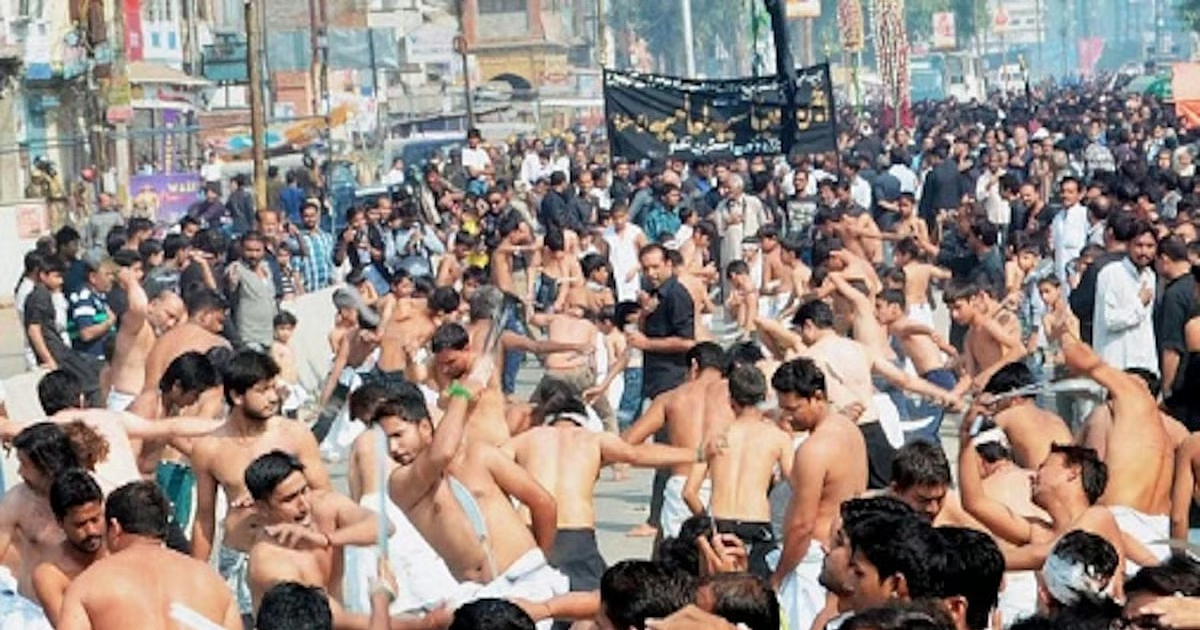
Bilaspur: The Chhattisgarh High Court has granted an interim stay on a recent notice banning the use of DJs, brass bands, Dhumal (musical troupes), and fireworks during traditional social processions held on the occasion of Muharram. Hearing a writ petition filed by the Sufi Islamic Board on an urgent basis, a single-judge bench led by Justice Amitendra Kishore Prasad stayed the implementation of the disputed order issued by the Chhattisgarh State Waqf Board until the next hearing. The Court observed that since religious rituals associated with Muharram are already underway and the main procession is scheduled for June 26, enforcing such a ban at the last minute could trigger unwanted social unrest and impact the law-and-order situation.
The matter arose from restrictive guidelines issued by the Chhattisgarh State Waqf Board regarding the upcoming Muharram festival. On June 11, 2024, the Waqf Board issued a strict order directing all Muharram committees and Tazia organizers in the state to completely refrain from using DJs, Dhumal, brass bands, and firecrackers during religious processions. The order further stipulated that any committee violating this rule would face a punitive fine of ₹50,000. The Sufi Islamic Board challenged this specific order of the Waqf Board in the High Court.
Devendra Pratap Singh, counsel for the Sufi Islamic Board, strongly argued before the Court that the notice issued by the Waqf Board was entirely illegal, arbitrary, and beyond its jurisdiction. The counsel contended that, under the law, the Chhattisgarh State Waqf Board lacks the statutory authority to issue such punitive orders or to impose bans on the practices associated with religious events. Controlling noise pollution or maintaining law and order is the responsibility of the district administration and the police, not the Waqf Board. It was submitted to the Court that religious events associated with Muharram have already commenced, with the main observance scheduled for June 26, 2026. Imposing such an order at this critical juncture would trigger widespread public outrage.
Justice Amitendra Kishore Prasad carefully examined the urgency of the matter and the arguments presented by both sides. The Court observed that, given the proximity of the main Muharram observance and the fact that preparations and events within the Muslim community are already underway, forcibly enforcing the Waqf Board’s contested order at this stage would be imprudent. The Court expressed apprehension that such enforcement could lead to deep resentment among the celebrants and potentially create law-and-order issues.
Granting relief to the petitioner society, the High Court—purely as an interim measure—stayed the operation and effect of the contested notice issued by the Chhattisgarh State Waqf Board until the next hearing. Under this order, the Waqf Board’s restrictions on committees and the rule imposing a fine of ₹50,000 during the current Muharram processions will remain inoperative. The Court granted the lawyers representing the State Government and the Waqf Board four weeks to file a detailed response to the petition. The next hearing is scheduled for next month.

